
This is the second post of my Japan series. If you haven’t read the planning hub yet, it covers how we handled reservations and Tabelog – useful background, since many of the places below require booking ahead.
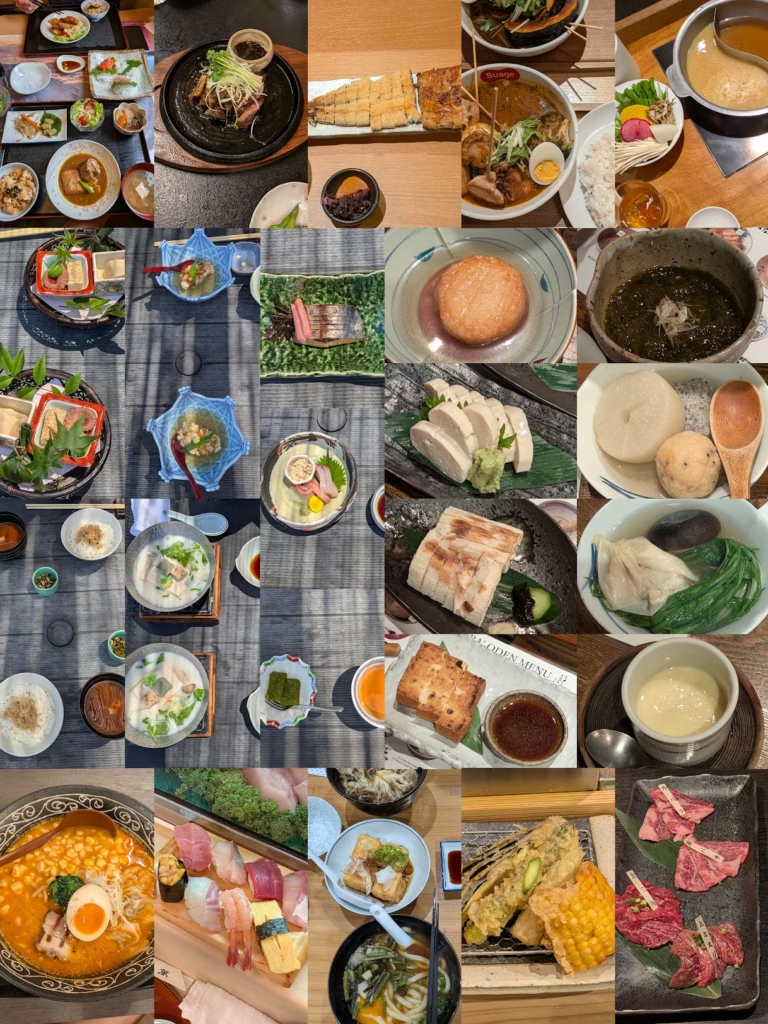
Our goal was simple and slightly greedy: eat our way through as many kinds of Japanese food as possible. Here’s how it went.
Sushi
Sushi probably needs no introduction – vinegared rice paired with seafood, mostly raw, sometimes cooked. It looks like the simplest food in the world, but behind those little rice blocks hides a whole system of styles, rules, and unspoken etiquette that varies from restaurant to restaurant. I am not a big sushi eater because I don’t eat raw meat, but my husband is. There are so many types: with rice, without rice, with wasabi inside and without. Even the restaurants have different rules – some don’t provide soy sauce or wasabi at all. We had heard from our Japanese friend that one eats sushi with bare hands, but it turns out chopsticks are also fine. Two places really stood out:
Maruman (丸萬)
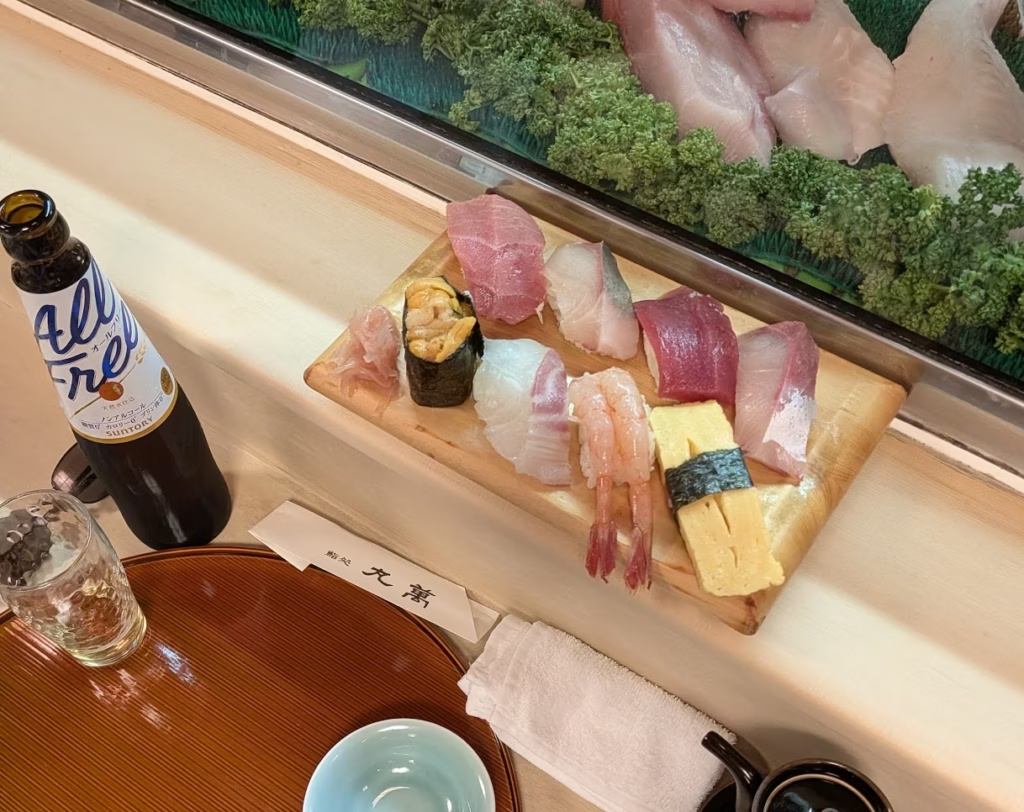
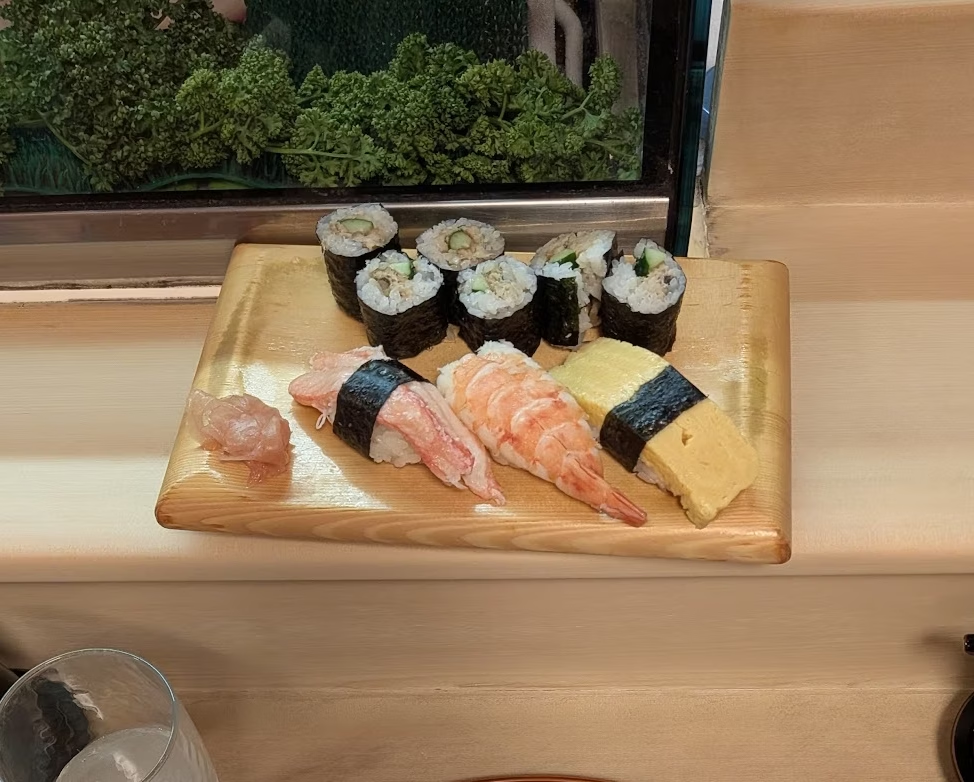
Located in Kyoto, with no reservations available – which means lining up before they open. It’s a tiny place run by an old Japanese couple, with seating for only around 6 parties. The fish and everything else were really fresh; my husband said the quality stood out among all the sushi places we visited. For me, there were still several cooked items that left me super satisfied (the omelet, eel, and shrimp). One thing to note: they accept cash only, so bring enough.
Kaitenzushi Nemuro Hanamaru Ginza (根室花まる)
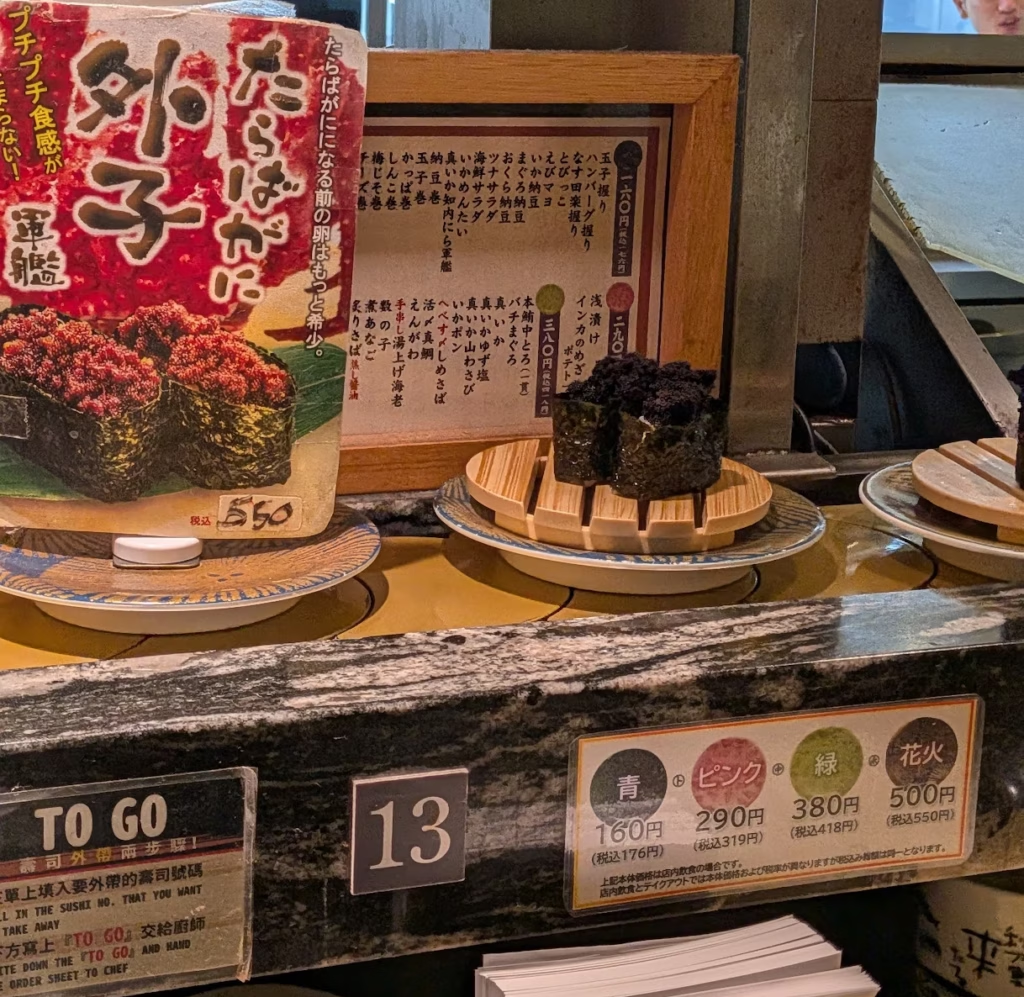
This one is conveyor belt sushi, but somehow extremely popular. Along with many other people, we waited about an hour for the mall to open. I was betting that surely not everyone was there for the sushi. I was wrong: when we arrived on that floor, everyone was running toward the restaurant. Trust me, you need to exercise more to compete 🙂
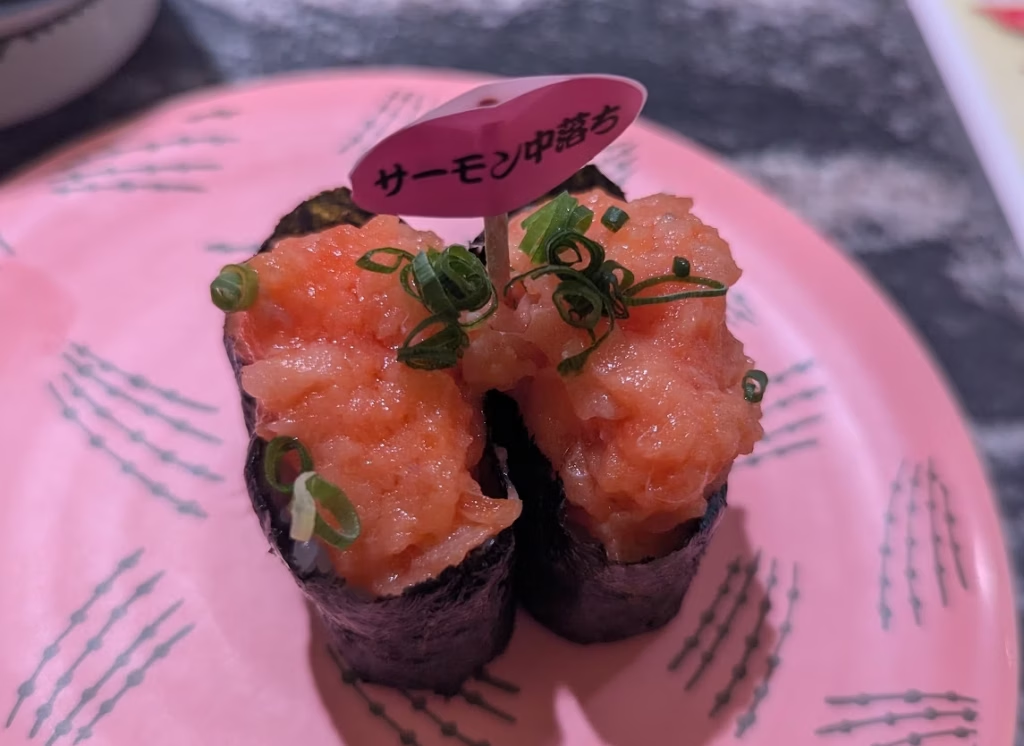
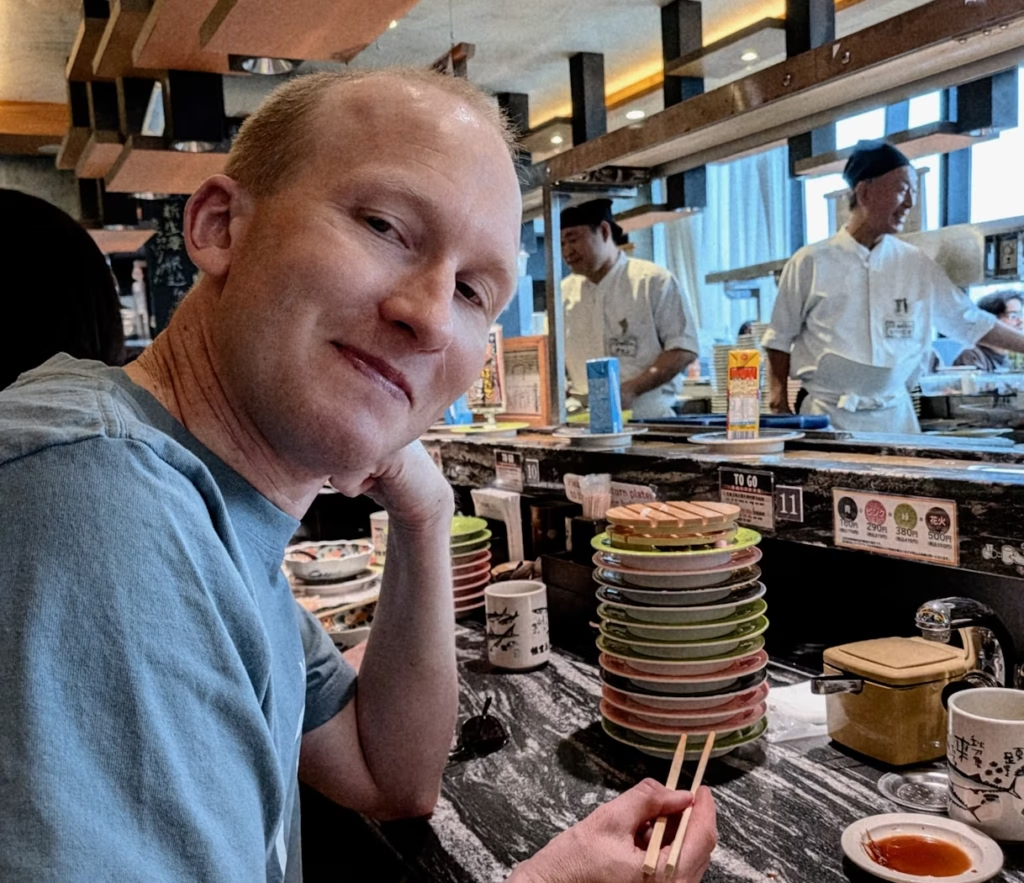
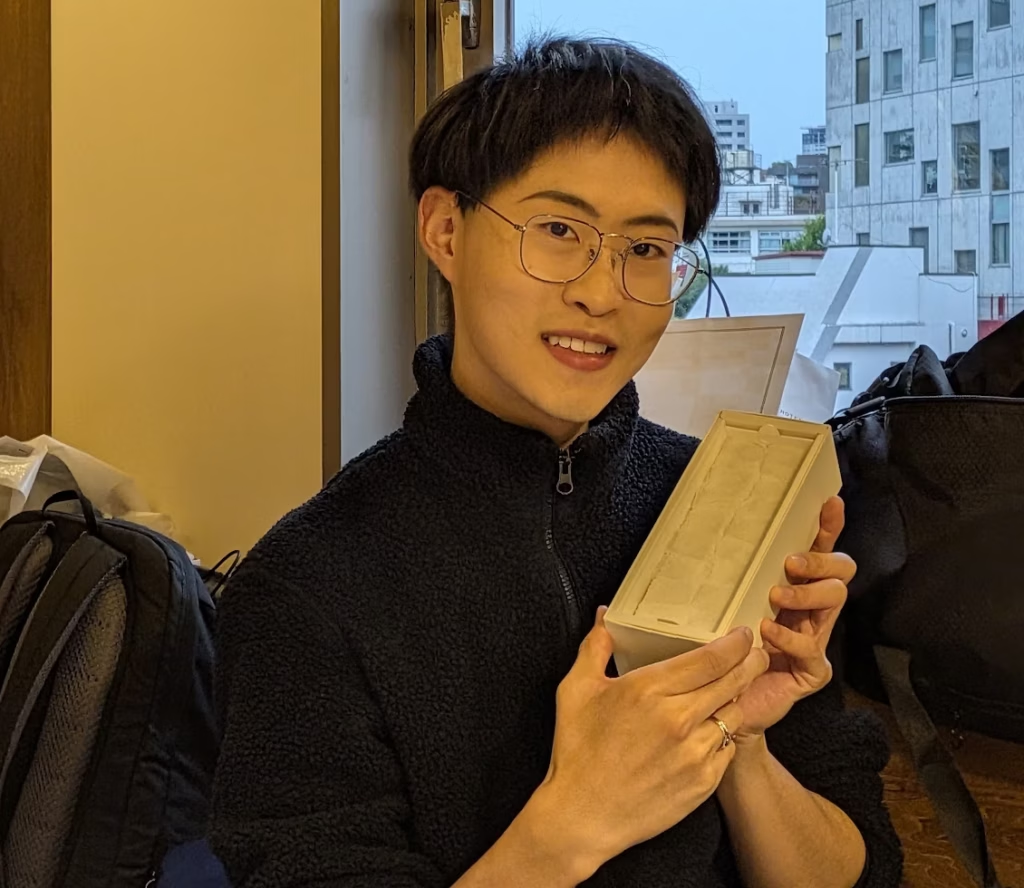
This is the place where the sushi is fancier – both ingredients and looks. I had no trouble filling my stomach. Besides what’s on the belt, you can order extras from the menu, and once in a while the chefs make something completely new and off-menu for guests. Look at the picture – you can see my husband was really satisfied!
Shabushabu
We had shabushabu in several different cities, mostly because it was our chance to get enough leafy vegetables. It’s basically Japanese hotpot, but stricter. With Chinese hotpot, you order whatever you want; with shabushabu, it’s usually a set menu with just a handful of choices. Most likely, you only select the type or quality of meat, and the vegetables come included.
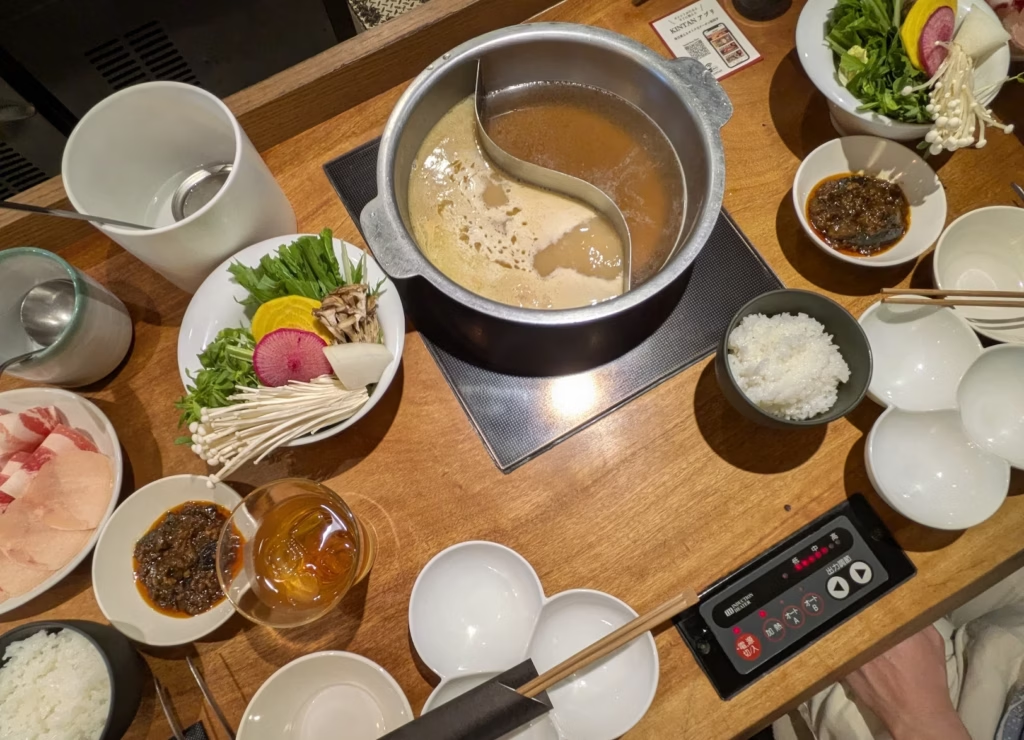
In Tokyo, we went to Shabu Shabu SUKIYAKI KINTAN Daikanyama, where we could choose between different soup bases, and the set menu came with rice and dessert. That one impressed me the most.
In Fujiyoshida, the set came all at once, and the “pot” was tiny. Both of our pots ran out of soup and fire, but it was completely fine to ask for more.
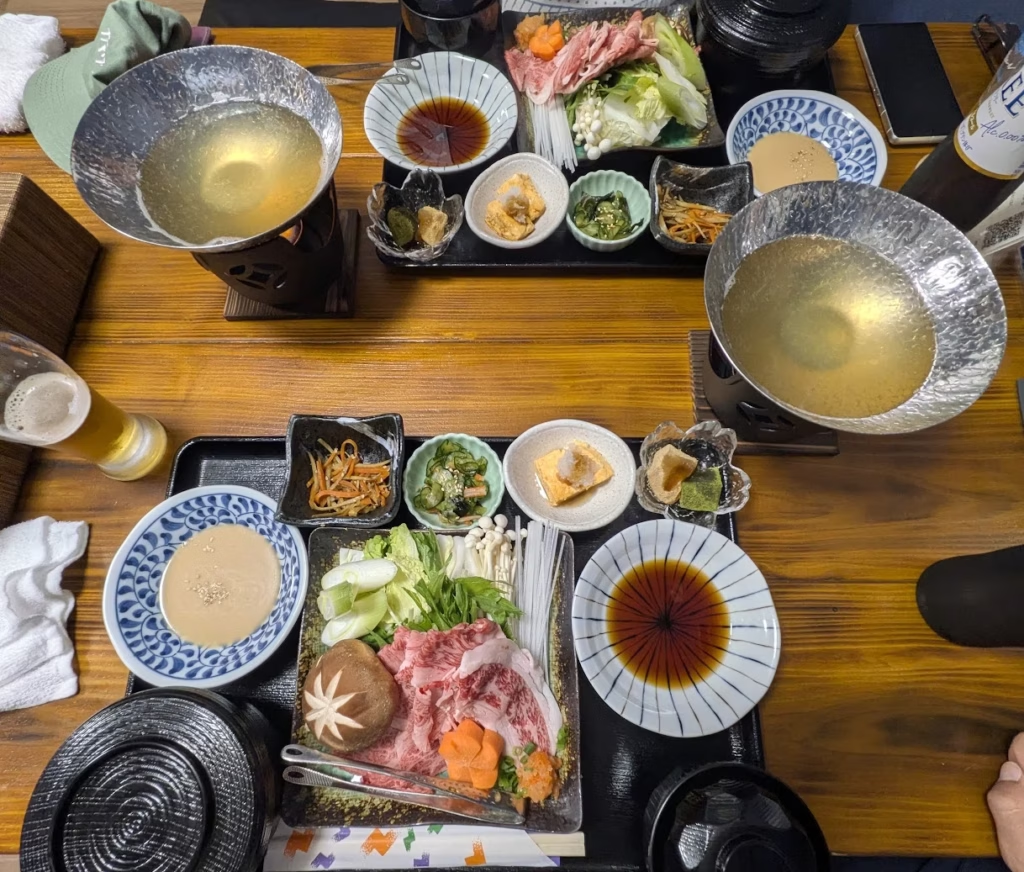
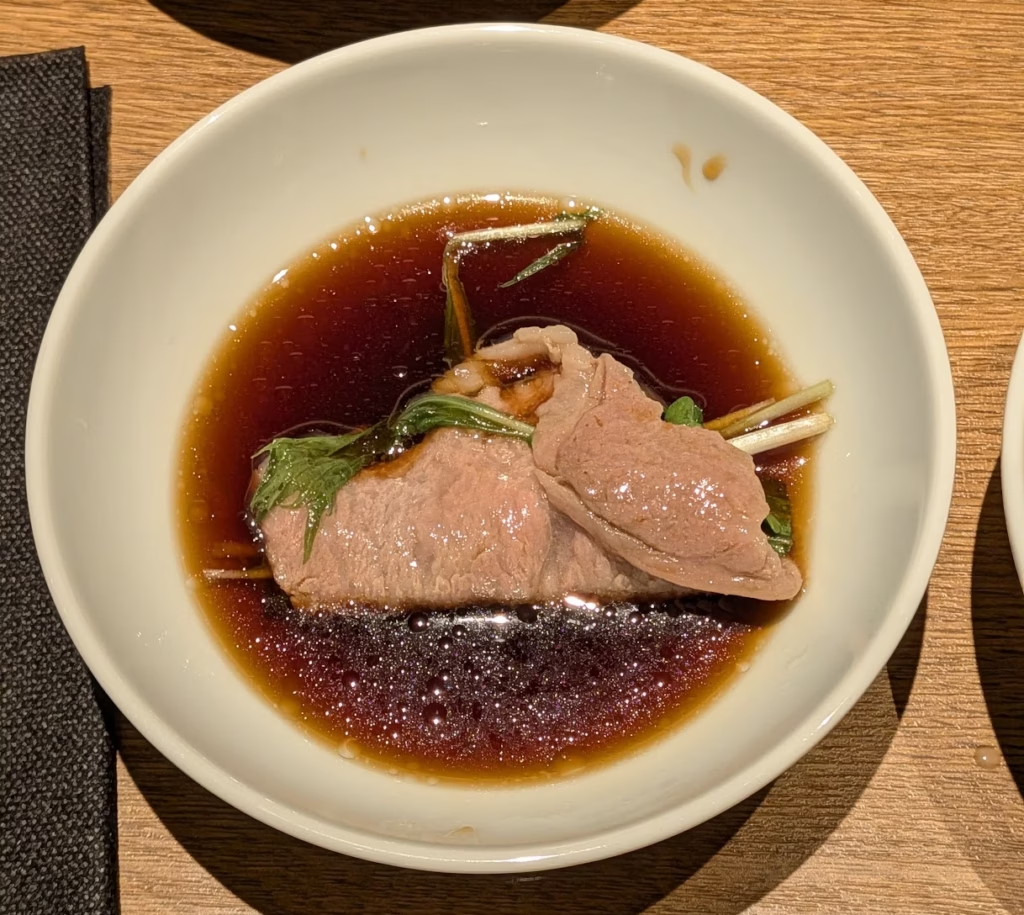
The one in Kyoto amazed my husband the most because of the beef quality – and of course, it was the most expensive. Sadly, my tongue was too numb that day to properly taste the marble-like beef. Before the meat, they served us vegetables and fish. I secretly cooked mine a bit longer, but even so, the rich flavor stunned me. Probably because we were the only party there, we got all the attention: they taught us how to cook in the pot, how to roll the vegetables with beef, and even took pictures with us. For someone like me who doesn’t love attention, it was a lot. For others, it could be very fun.
Japanese barbecue (Yakiniku)
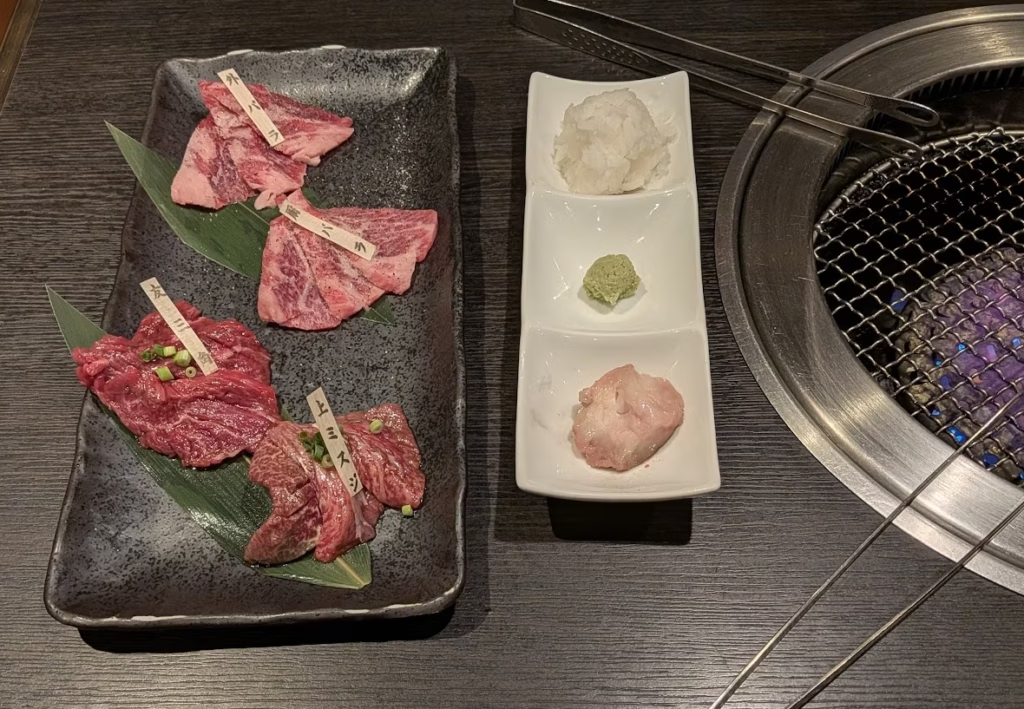
Our first dinner in Japan was barbecue, and we hadn’t planned it at all – we walked into the wrong place while looking for shabushabu. It turned out to be just as tasty as anything else. It’s very much like Korean barbecue: place the meat on the grill, control exactly how cooked you want it, and voilà – eat. It comes with rice, but unfortunately no vegetables.
Japanese set menu (定食)
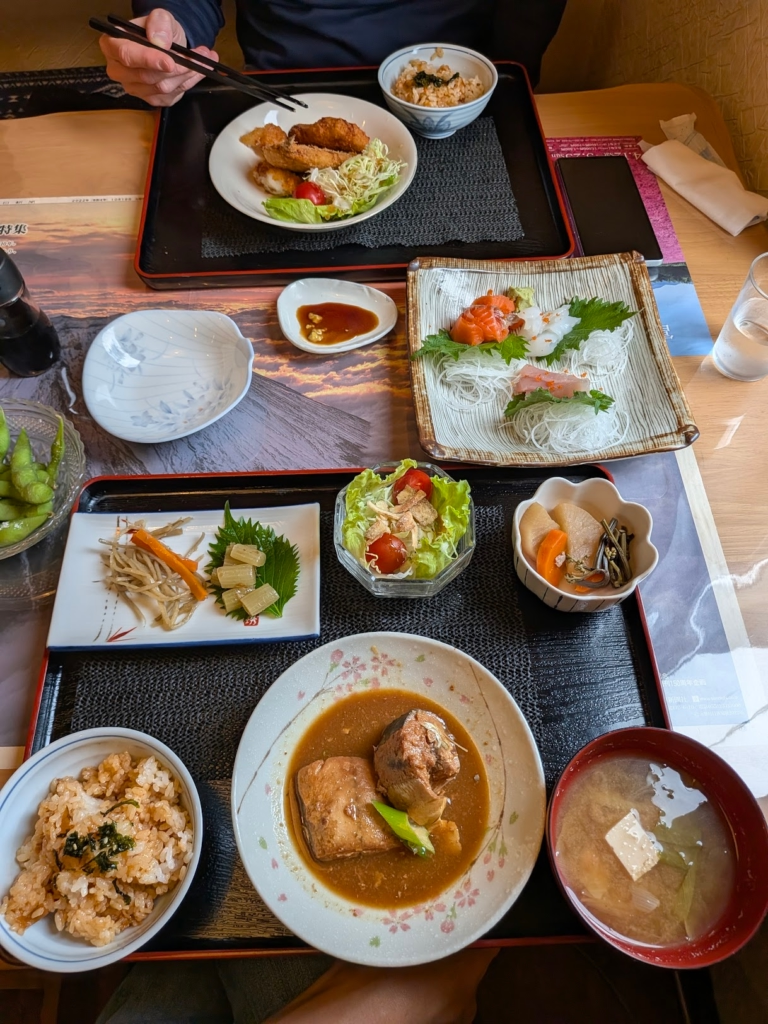
Want a normal, everyday Japanese meal? Then try a 定食 (teishoku) restaurant. These places usually offer 4-6 different set menus, which come with meat, rice, soup, pickles, and so on. They mostly serve workers on informal outings, so they’re a step more formal than a random noodle shop on the street. I was very impressed by the one we had in Fujiyoshida.
Eel rice
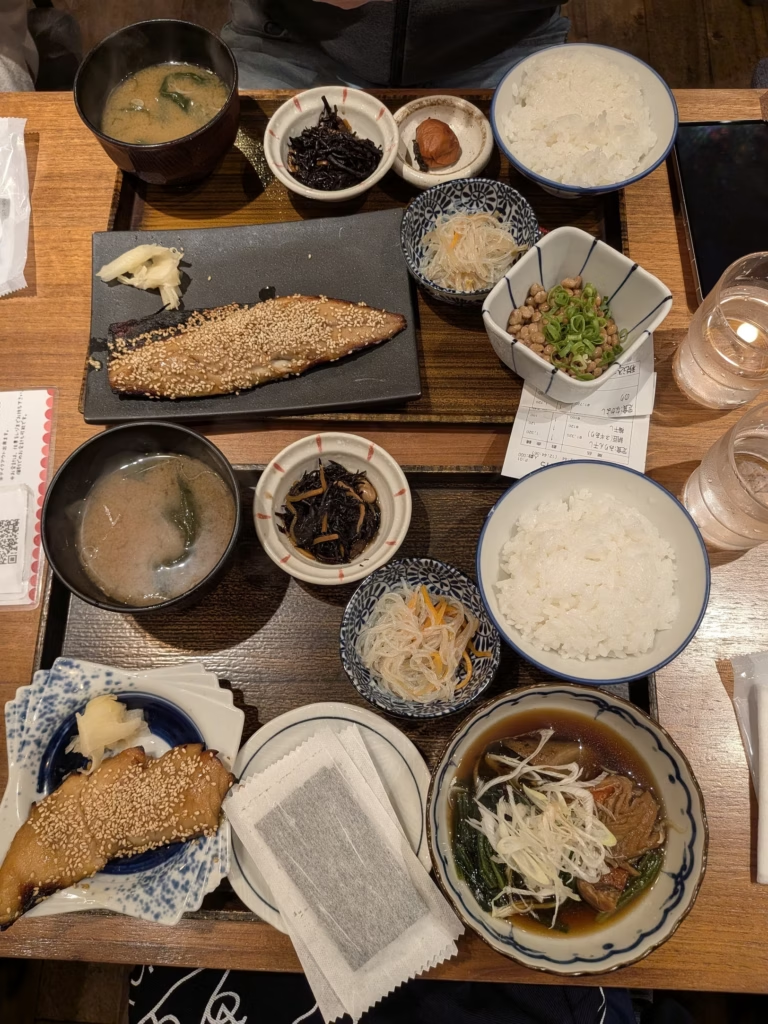
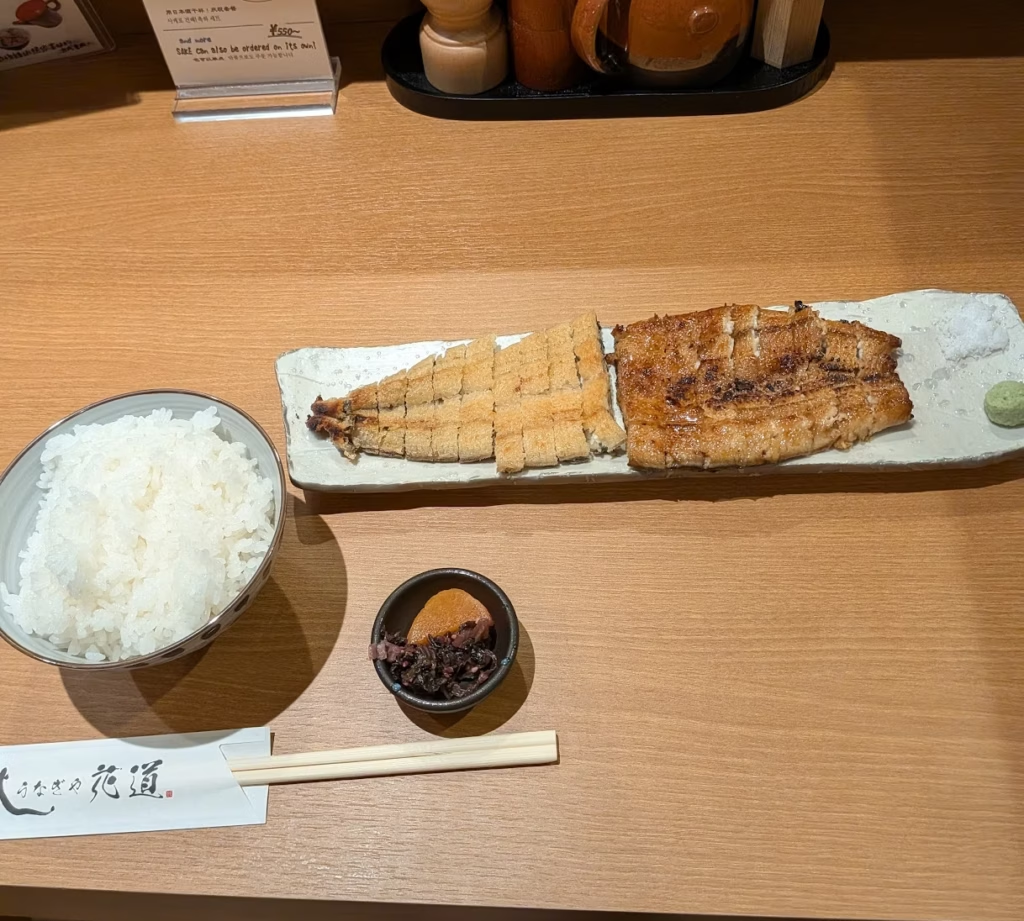
I am a big eel fan, and only at a dedicated eel restaurant in Japan can you find preparations that basically don’t exist outside the country. Usually you get eel with the brown sauce on top, but the one I’m talking about is shirayaki (白焼き) – grilled white, without the sauce – and you eat it with wasabi. A whole new experience for me.
Soup Curry (汤咖喱)
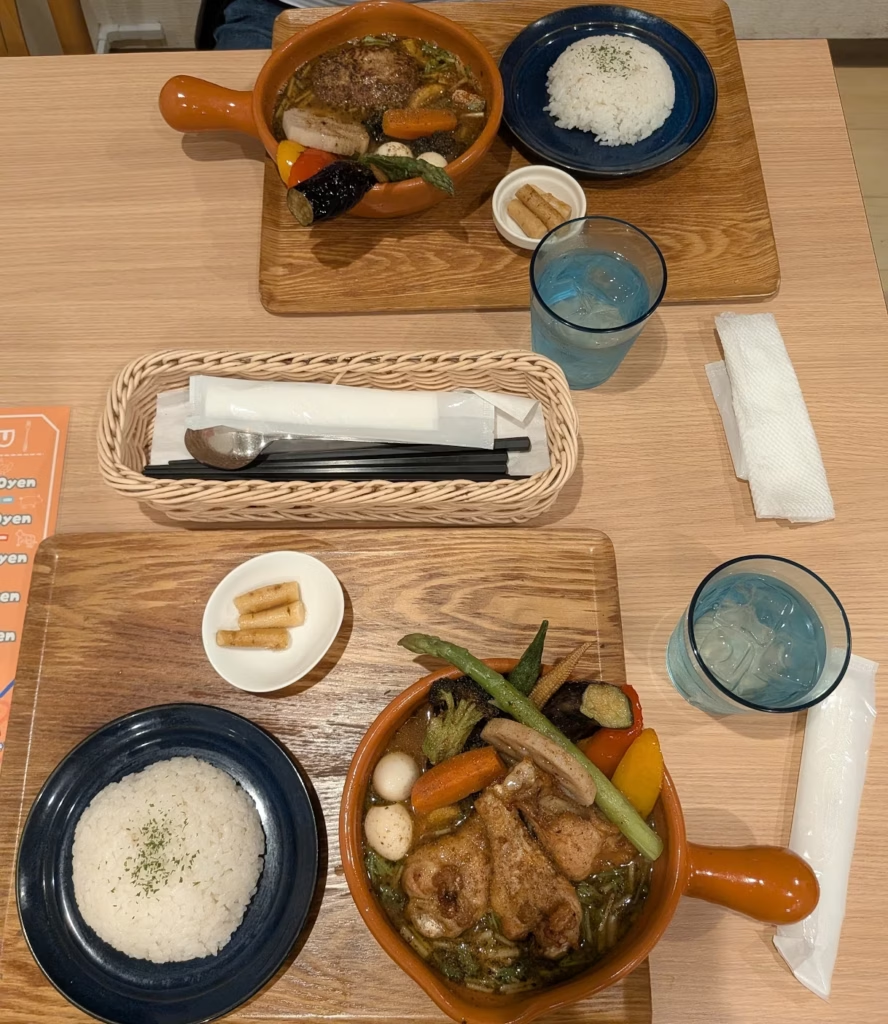
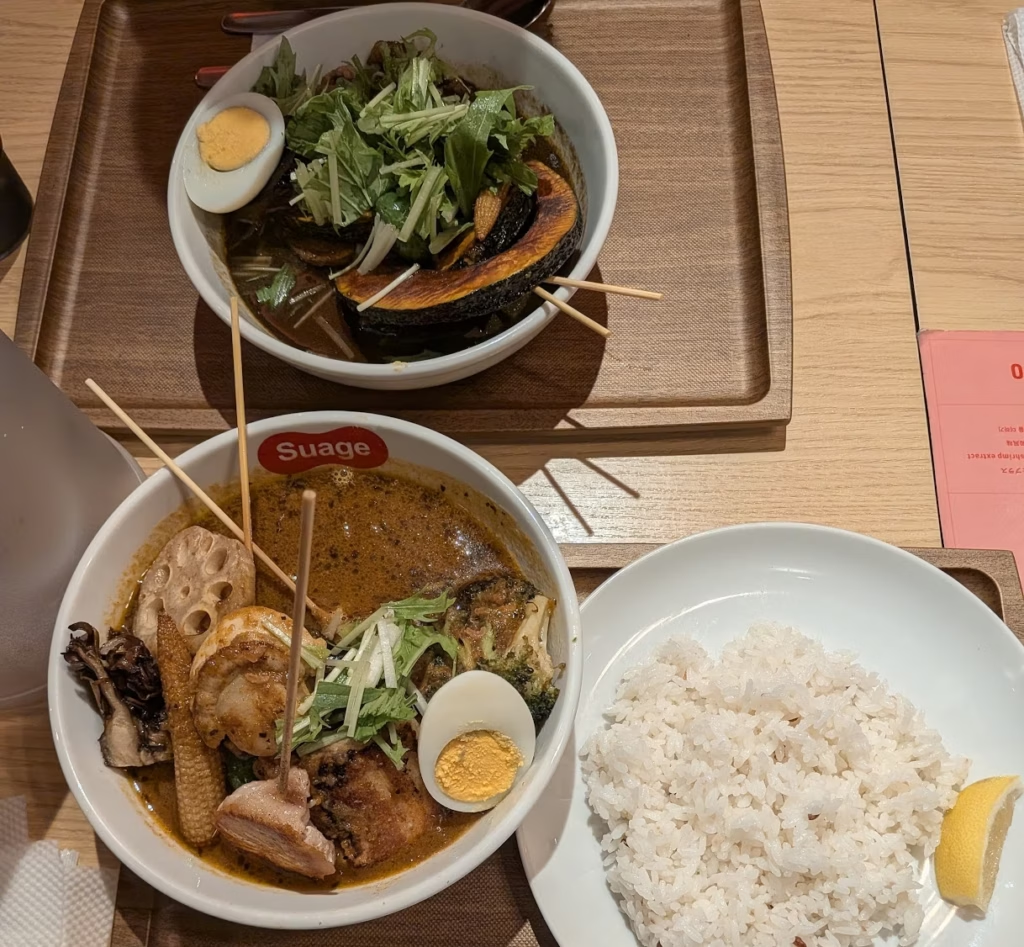
Inspired by cuisines from outside Japan, soup curry is a Hokkaido specialty. Curry spices in different broths, cooked with baked or fried vegetables and meat – a completely new experience for us! We went to two different soup curry places, and both were extremely good. It also seems quite easy to make at home; it was so good, in fact, that we’re talking about making it ourselves.
懷石料理 (Kaiseki)
Kaiseki had been on my mind for quite a while. From what I know, it’s usually reserved for special occasions. It developed from the simple meal served during the tea ceremony, and the name supposedly comes from Zen monks who held warmed stones against their stomachs to hold off hunger – 懷石 literally means “stone in the robe.” Over time, it evolved into the multi-course fine dining that represents the peak of Japanese cuisine. Because of its nature, it’s usually expensive.
I found a restaurant serving it just by randomly walking down 先斗町通 in Kyoto. It offered affordable Kaiseki for lunch, so I quickly booked it. For this kind of food, a reservation is always required: the restaurant needs to time the courses and gather the ingredients. For ours, they would charge the full fee for cancellations within 24 hours.
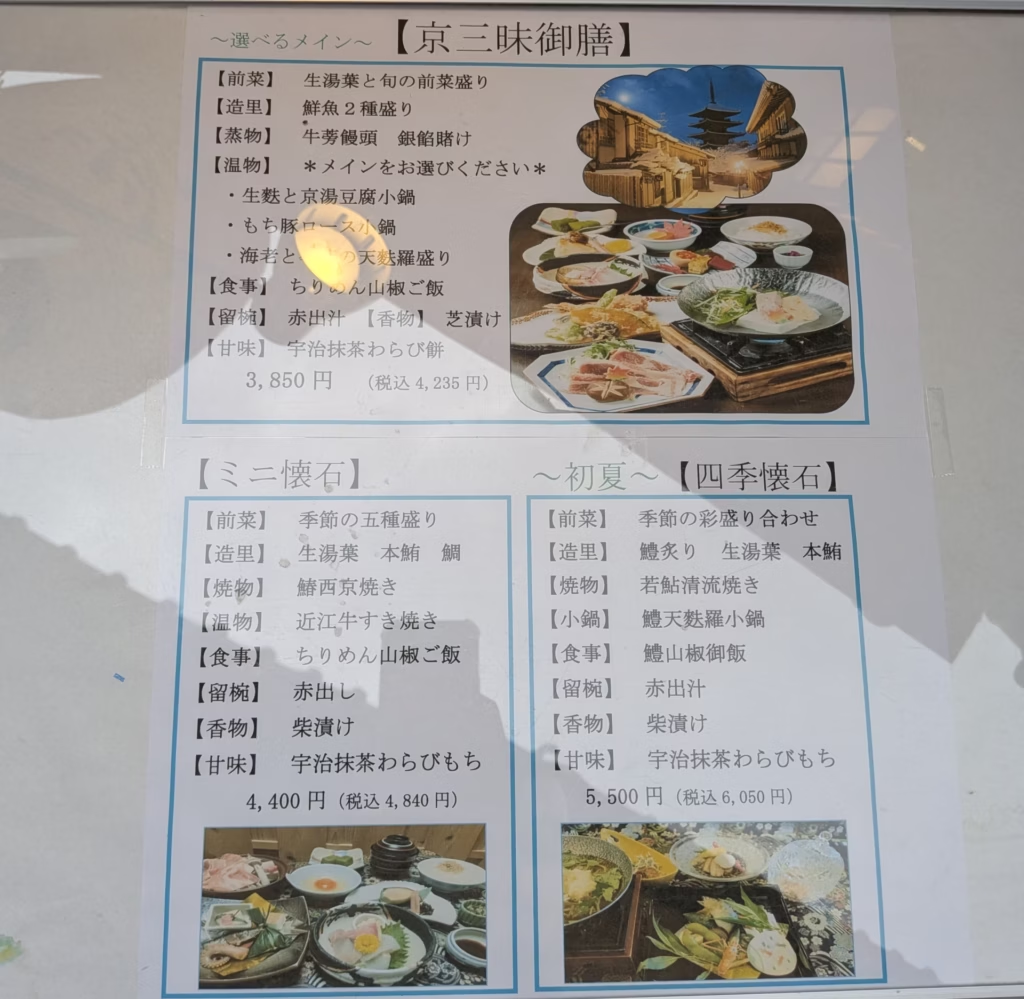
What made ours special was that the whole menu was built around 鱧 (hamo, pike conger), the fish that basically defines Kyoto summer cuisine. The courses:
- 前菜 (appetizer): a colorful assortment of seasonal small bites
- 造里 (sashimi course): seared hamo, fresh yuba (tofu skin), and bluefin tuna
- 焼物 (grilled course): young ayu (sweetfish), grilled “clear stream” style
- 小鍋 (small pot): hamo tempura in a small hot pot
- 食事 (rice course): rice with hamo and sansho pepper
- 留椀 (soup): red miso soup
- 香物 (pickles): shibazuke, Kyoto’s signature purple pickles
- 甘味 (dessert): Uji matcha warabi mochi
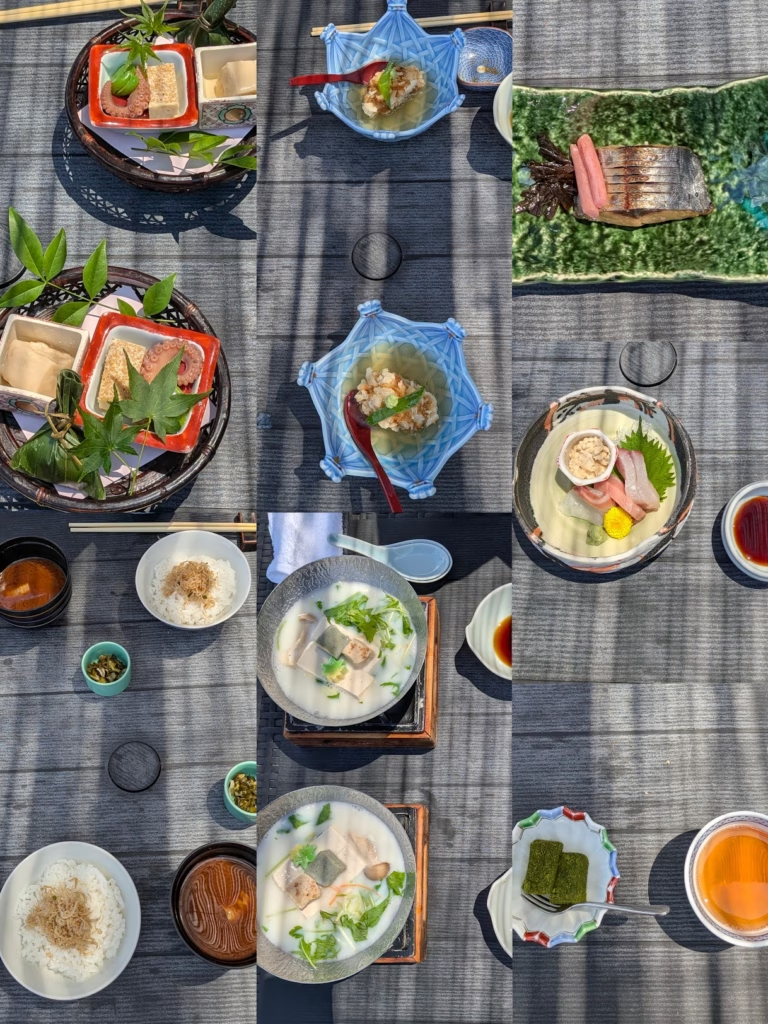
Eating the same fish prepared three completely different ways – seared, fried, and mixed into rice – is exactly the kind of thing kaiseki does well: it’s less a meal and more a seasonal statement.
Beyond the exceptional dining itself, we were seated on the 川床 – the riverside platform they only set up during the hot summer season. I already miss the experience of eating fresh food while listening to the river running next to us.
关东煮 (Oden)
Here’s a fun fact I only learned after being confused by the name: 关东煮 actually did originate in the Kanto region, going back to Edo times. The Chinese name comes via a detour – in Kansai, people called the dish 関東炊き (“Kanto-style simmer”), and that Kansai name traveled to Taiwan through convenience stores and became the standard Chinese term. So the dish is from Kanto, but the name we Chinese speakers use arrived via Kansai. No wonder I was confused.
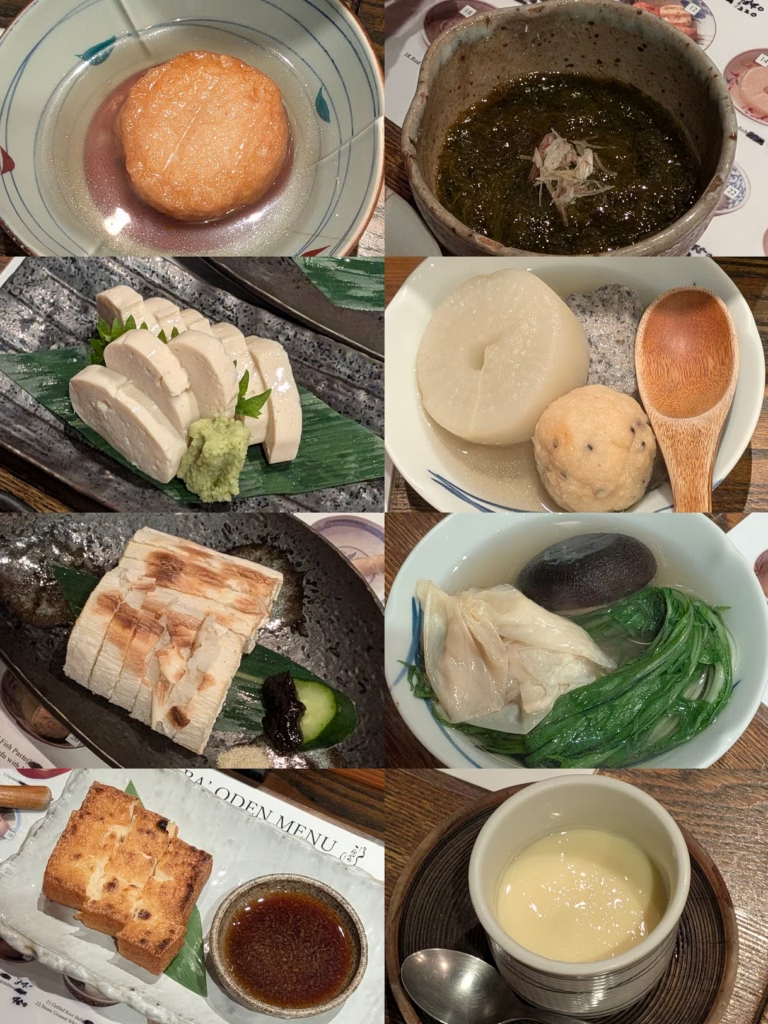
Oden is skewered food simmered in a broth, normally just a snack to go with drinks – but why not have it for dinner if we could? The place we found served super tasty food. The flavor of every dish we ordered had completely blended with the broth, yet we could still taste the original ingredient underneath. Incredibly good. And if you just want a small snack between meals, you can easily find oden at 7-Eleven.
Noodles
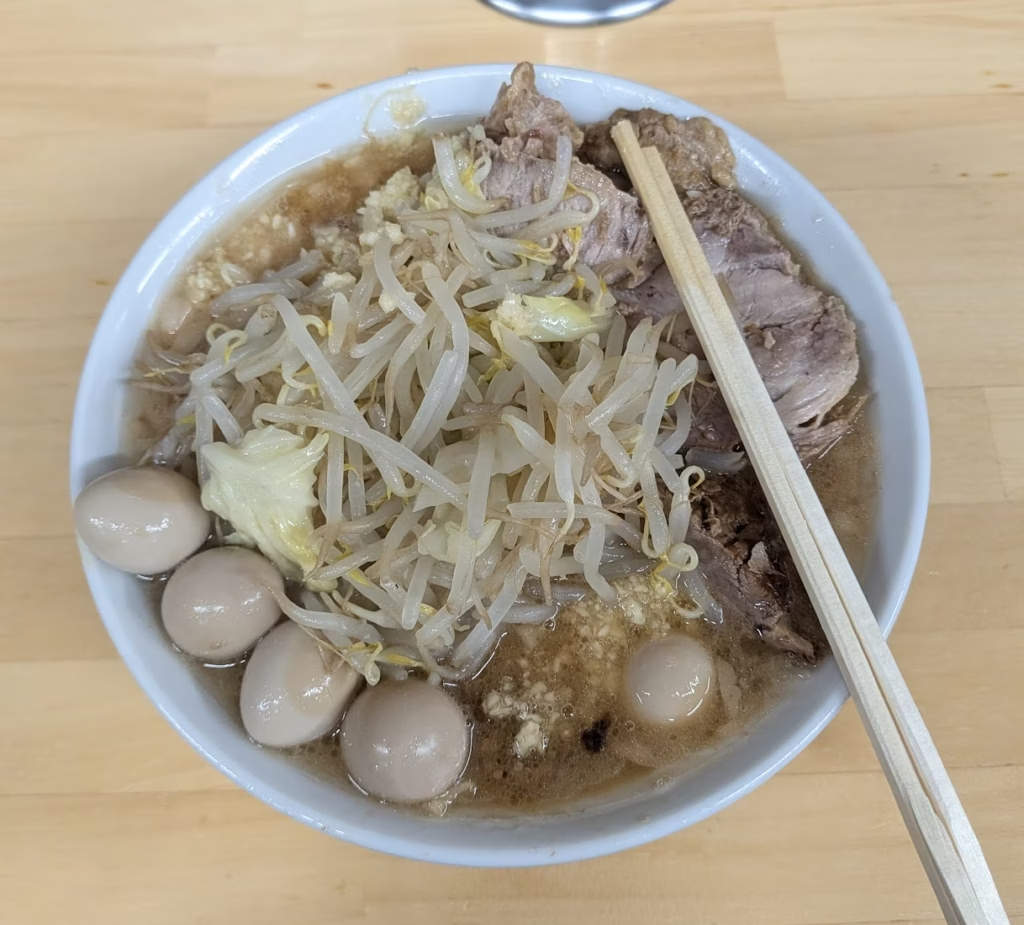
Of course we had noodles in Japan – ramen basically represents Japanese food in the Western world! My first ramen was at a very local restaurant in Fujiyoshida, the kind that uses an old ticketing machine and where nobody spoke English. The noodles were clearly fresh – thick and more al dente, nothing like the industrial ones we usually get. Soba was new to me, and I found it quite tasty and honestly also very healthy. Since we spent time in Kyoto, we also tried matcha noodles, though they didn’t taste very tea-like. We never made it to a dedicated udon place, but had udon at a restaurant, and it was simply delicious.
Two honest warnings
I was very satisfied with the food in Japan – not just the food itself, but also my planning that got us such variety. Still, two things worth mentioning. First, there are not many leafy vegetables in Japanese meals, so some people will have, let’s say, digestive complaints. We genuinely worked to maintain our belly health, so seek out fiber where you can. Second, the food is quite plain in the sense that there’s very little oil (no oil!) – which, I suspect, is part of why Japanese people are so thin.
Dessert
I stopped eating dessert in Western countries once I learned how sweet everything is, so going to Japan really unleashed my desire for sweets.
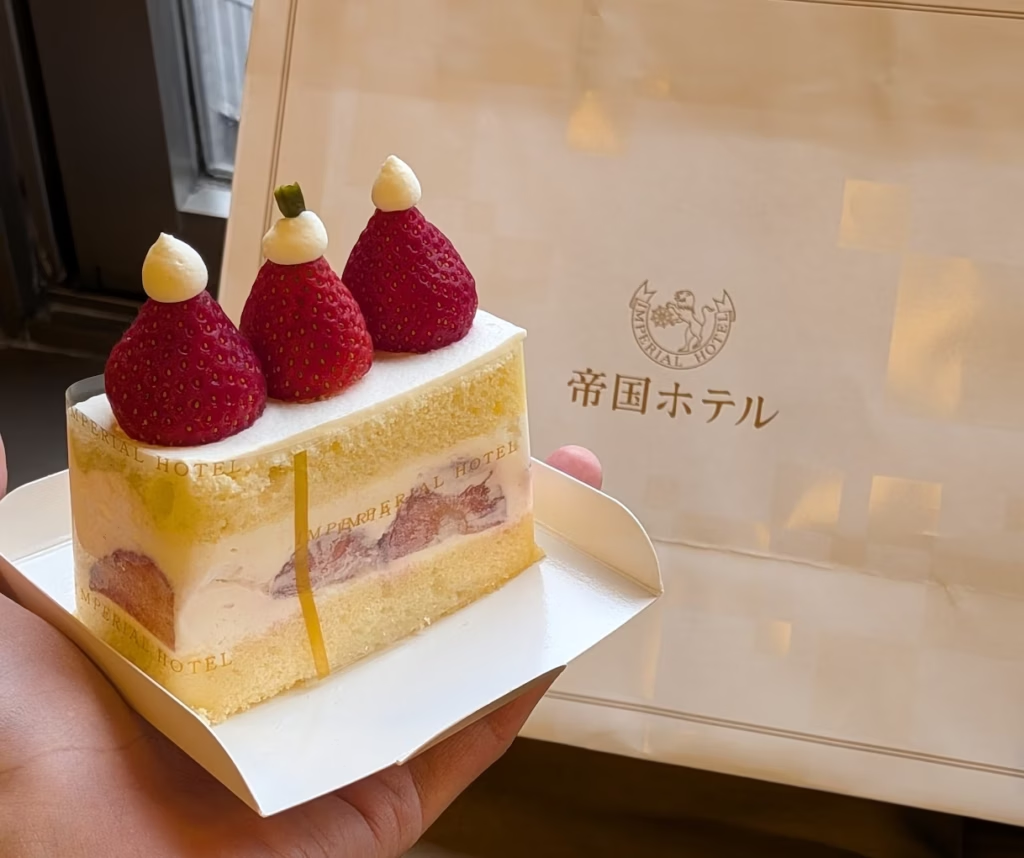
The coconut white warabi mochi (椰子の白わらび餅) sold at the Imperial Hotel’s Gargantua shop comes from Ittatsu Mitorado, a brand created by two Michelin-starred Japanese restaurants – Kagurazaka Ishikawa and Kohaku – so I definitely had to try it. The daily supply is limited, so go before noon to secure a box. The mochi was indeed very tasty, almost the best I’ve ever had! Because of that, my husband and I rationed it stingily until the very last day it could be eaten.
I also tried a piece of their strawberry cake. Extremely good. With fresh, sweet strawberries, and a sponge base that had low sweetness – exactly how it should be.
The warabi mochi (matcha and kinako flavored) elsewhere was also very good, more of a standard after-meal dessert. I guess they simply can’t make it badly in Japan.
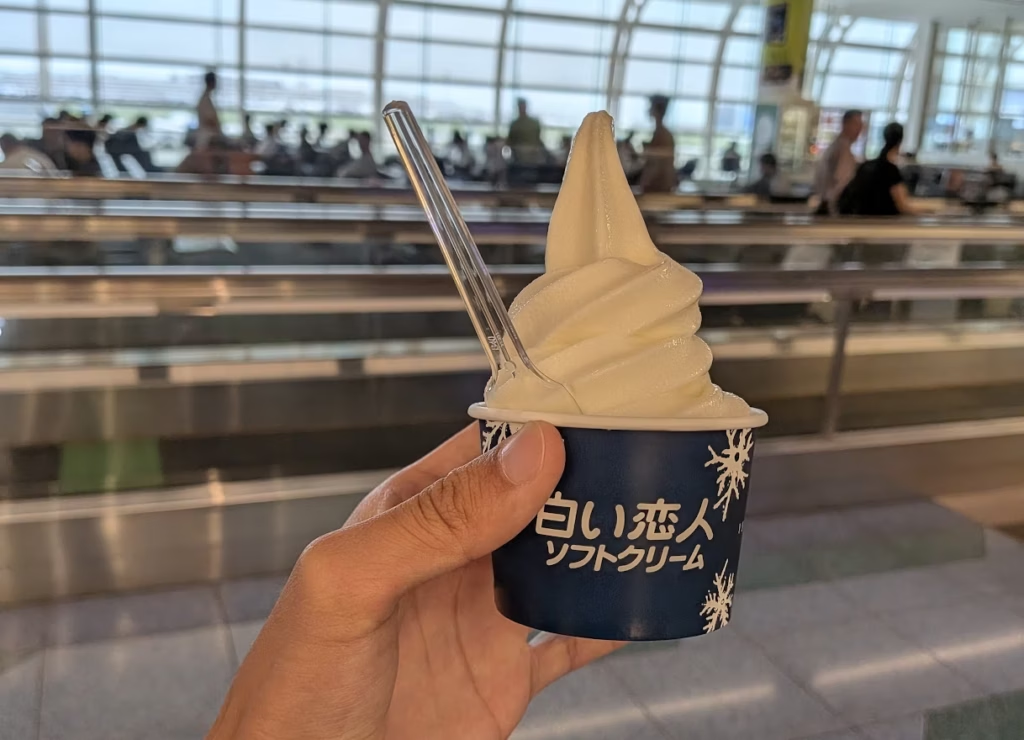
Before flying back, at the airport, I was pulled in by a small counter of 白い恋人 (Shiroi Koibito) from Hokkaido selling ice cream made from Hokkaido milk. Trust me, that was the best milk ice cream! The Häagen-Dazs Hokkaido milk flavor was already not bad though 🙂 I also enjoyed the Häagen-Dazs strawberry – great flavor, with big pieces of actual strawberry.
Beyond those, most of my desserts happened in 关西. I am crazy about matcha, so I couldn’t stop eating everything matcha. I tried matcha desserts from the three most famous brands: 伊藤久右衛門, 中村藤吉 and 辻利, plus two different parfaits. Honestly, the parfaits didn’t satisfy me: too little of the real matcha, too many rice balls and crunchy filler bits, too much cream and jelly. I don’t really recommend them. Matcha ice cream, on the other hand, is a no-brainer: all very good.
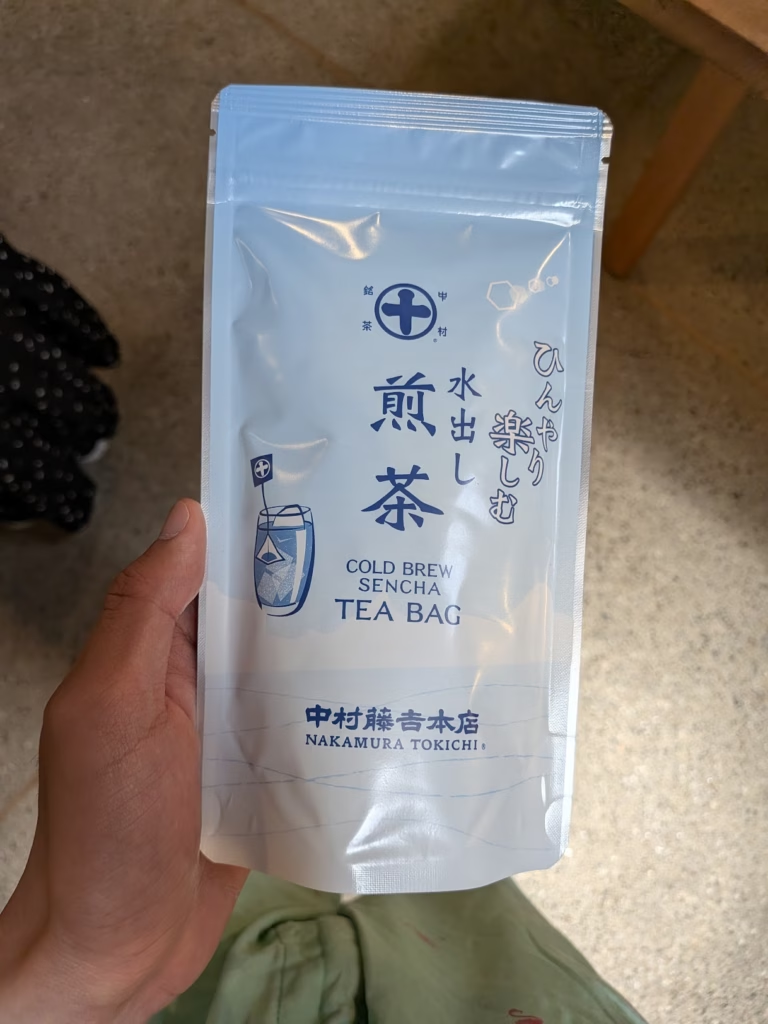
I was additionally surprised by the 水出煎茶 (cold brew sencha) from 中村藤吉 – so much umami in a cold tea! Who would expect that?!
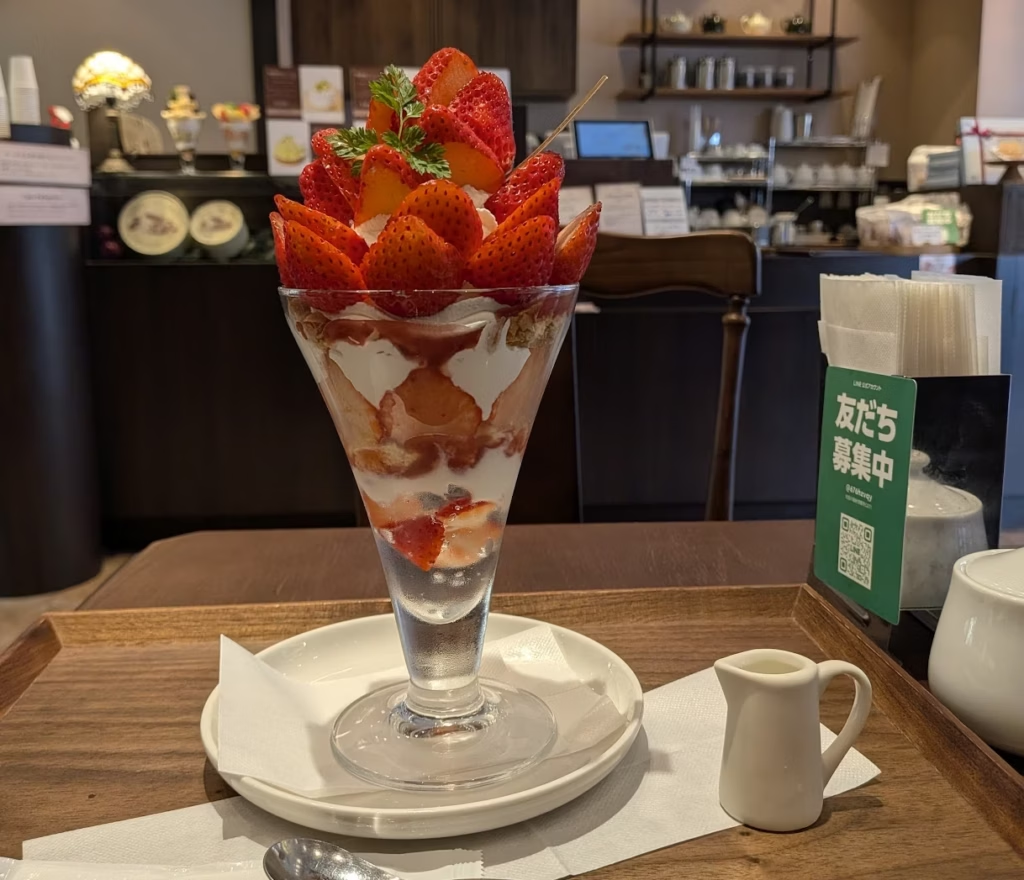
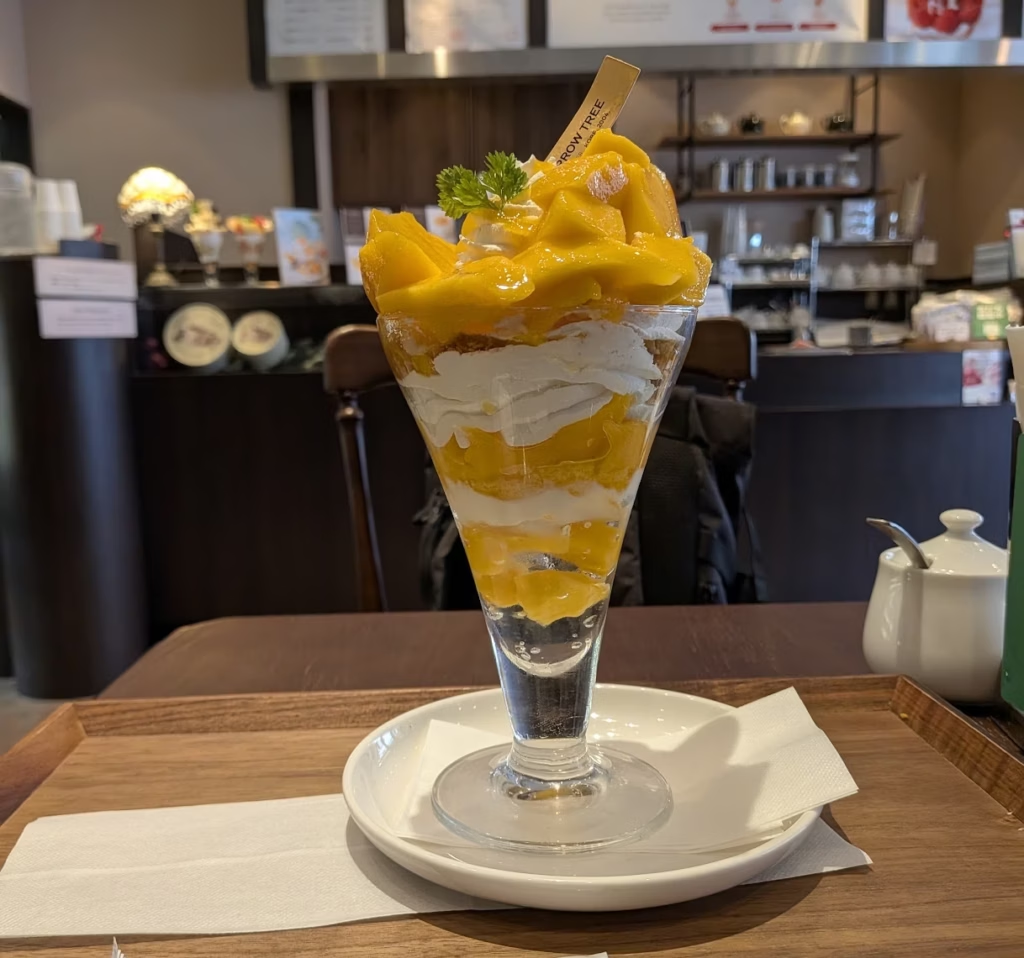
I also had a mango parfait and a strawberry parfait at Arrow Tree. Let me tell you, those are the parfaits you should eat: mostly seasonal sweet fruit, with very few random extras. I know many parfaits are just about the look, but these actually tasted super good!!!
Hungry yet? Continue the series with Tokyo & Kamakura, Kyoto, or the 4am Mt. Fuji story. And as always, all the restaurants mentioned here will end up on my Foodie Map.
This is the second post of my Japan series. If you haven’t read the planning hub yet, it covers how we handled reservations and Tabelog – useful background, since many of the places below require booking ahead.
Our goal was simple and slightly greedy: eat our way through as many kinds of Japanese food as possible. Here’s how it went.
Sushi
Sushi probably needs no introduction – vinegared rice paired with seafood, mostly raw, sometimes cooked. It looks like the simplest food in the world, but behind those little rice blocks hides a whole system of styles, rules, and unspoken etiquette that varies from restaurant to restaurant. I am not a big sushi eater because I don’t eat raw meat, but my husband is. There are so many types: with rice, without rice, with wasabi inside and without. Even the restaurants have different rules – some don’t provide soy sauce or wasabi at all. We had heard from our Japanese friend that one eats sushi with bare hands, but it turns out chopsticks are also fine. Two places really stood out:
Maruman (丸萬)
Located in Kyoto, with no reservations available – which means lining up before they open. It’s a tiny place run by an old Japanese couple, with seating for only around 6 parties. The fish and everything else were really fresh; my husband said the quality stood out among all the sushi places we visited. For me, there were still several cooked items that left me super satisfied (the omelet, eel, and shrimp). One thing to note: they accept cash only, so bring enough.
Kaitenzushi Nemuro Hanamaru Ginza (根室花まる)
This one is conveyor belt sushi, but somehow extremely popular. Along with many other people, we waited about an hour for the mall to open. I was betting that surely not everyone was there for the sushi. I was wrong: when we arrived on that floor, everyone was running toward the restaurant. Trust me, you need to exercise more to compete 🙂
This is the place where the sushi is fancier – both ingredients and looks. I had no trouble filling my stomach. Besides what’s on the belt, you can order extras from the menu, and once in a while the chefs make something completely new and off-menu for guests. Look at the picture – you can see my husband was really satisfied!
Shabushabu
We had shabushabu in several different cities, mostly because it was our chance to get enough leafy vegetables. It’s basically Japanese hotpot, but stricter. With Chinese hotpot, you order whatever you want; with shabushabu, it’s usually a set menu with just a handful of choices. Most likely, you only select the type or quality of meat, and the vegetables come included.
In Tokyo, we went to Shabu Shabu SUKIYAKI KINTAN Daikanyama, where we could choose between different soup bases, and the set menu came with rice and dessert. That one impressed me the most.
In Fujiyoshida, the set came all at once, and the “pot” was tiny. Both of our pots ran out of soup and fire, but it was completely fine to ask for more.
The one in Kyoto amazed my husband the most because of the beef quality – and of course, it was the most expensive. Sadly, my tongue was too numb that day to properly taste the marble-like beef. Before the meat, they served us vegetables and fish. I secretly cooked mine a bit longer, but even so, the rich flavor stunned me. Probably because we were the only party there, we got all the attention: they taught us how to cook in the pot, how to roll the vegetables with beef, and even took pictures with us. For someone like me who doesn’t love attention, it was a lot. For others, it could be very fun.
Japanese barbecue (Yakiniku)
Our first dinner in Japan was barbecue, and we hadn’t planned it at all – we walked into the wrong place while looking for shabushabu. It turned out to be just as tasty as anything else. It’s very much like Korean barbecue: place the meat on the grill, control exactly how cooked you want it, and voilà – eat. It comes with rice, but unfortunately no vegetables.
Japanese set menu (定食)
Want a normal, everyday Japanese meal? Then try a 定食 (teishoku) restaurant. These places usually offer 4-6 different set menus, which come with meat, rice, soup, pickles, and so on. They mostly serve workers on informal outings, so they’re a step more formal than a random noodle shop on the street. I was very impressed by the one we had in Fujiyoshida.
Eel rice
I am a big eel fan, and only at a dedicated eel restaurant in Japan can you find preparations that basically don’t exist outside the country. Usually you get eel with the brown sauce on top, but the one I’m talking about is shirayaki (白焼き) – grilled white, without the sauce – and you eat it with wasabi. A whole new experience for me.
Soup Curry (汤咖喱)
Inspired by cuisines from outside Japan, soup curry is a Hokkaido specialty. Curry spices in different broths, cooked with baked or fried vegetables and meat – a completely new experience for us! We went to two different soup curry places, and both were extremely good. It also seems quite easy to make at home; it was so good, in fact, that we’re talking about making it ourselves.
懷石料理 (Kaiseki)
Kaiseki had been on my mind for quite a while. From what I know, it’s usually reserved for special occasions. It developed from the simple meal served during the tea ceremony, and the name supposedly comes from Zen monks who held warmed stones against their stomachs to hold off hunger – 懷石 literally means “stone in the robe.” Over time, it evolved into the multi-course fine dining that represents the peak of Japanese cuisine. Because of its nature, it’s usually expensive.
I found a restaurant serving it just by randomly walking down 先斗町通 in Kyoto. It offered affordable Kaiseki for lunch, so I quickly booked it. For this kind of food, a reservation is always required: the restaurant needs to time the courses and gather the ingredients. For ours, they would charge the full fee for cancellations within 24 hours.
What made ours special was that the whole menu was built around 鱧 (hamo, pike conger), the fish that basically defines Kyoto summer cuisine. The courses:
- 前菜 (appetizer): a colorful assortment of seasonal small bites
- 造里 (sashimi course): seared hamo, fresh yuba (tofu skin), and bluefin tuna
- 焼物 (grilled course): young ayu (sweetfish), grilled “clear stream” style
- 小鍋 (small pot): hamo tempura in a small hot pot
- 食事 (rice course): rice with hamo and sansho pepper
- 留椀 (soup): red miso soup
- 香物 (pickles): shibazuke, Kyoto’s signature purple pickles
- 甘味 (dessert): Uji matcha warabi mochi
Eating the same fish prepared three completely different ways – seared, fried, and mixed into rice – is exactly the kind of thing kaiseki does well: it’s less a meal and more a seasonal statement.
Beyond the exceptional dining itself, we were seated on the 川床 – the riverside platform they only set up during the hot summer season. I already miss the experience of eating fresh food while listening to the river running next to us.
关东煮 (Oden)
Here’s a fun fact I only learned after being confused by the name: 关东煮 actually did originate in the Kanto region, going back to Edo times. The Chinese name comes via a detour – in Kansai, people called the dish 関東炊き (“Kanto-style simmer”), and that Kansai name traveled to Taiwan through convenience stores and became the standard Chinese term. So the dish is from Kanto, but the name we Chinese speakers use arrived via Kansai. No wonder I was confused.
Oden is skewered food simmered in a broth, normally just a snack to go with drinks – but why not have it for dinner if we could? The place we found served super tasty food. The flavor of every dish we ordered had completely blended with the broth, yet we could still taste the original ingredient underneath. Incredibly good. And if you just want a small snack between meals, you can easily find oden at 7-Eleven.
Noodles
Of course we had noodles in Japan – ramen basically represents Japanese food in the Western world! My first ramen was at a very local restaurant in Fujiyoshida, the kind that uses an old ticketing machine and where nobody spoke English. The noodles were clearly fresh – thick and more al dente, nothing like the industrial ones we usually get. Soba was new to me, and I found it quite tasty and honestly also very healthy. Since we spent time in Kyoto, we also tried matcha noodles, though they didn’t taste very tea-like. We never made it to a dedicated udon place, but had udon at a restaurant, and it was simply delicious.
Two honest warnings
I was very satisfied with the food in Japan – not just the food itself, but also my planning that got us such variety. Still, two things worth mentioning. First, there are not many leafy vegetables in Japanese meals, so some people will have, let’s say, digestive complaints. We genuinely worked to maintain our belly health, so seek out fiber where you can. Second, the food is quite plain in the sense that there’s very little oil (no oil!) – which, I suspect, is part of why Japanese people are so thin.
Dessert
I stopped eating dessert in Western countries once I learned how sweet everything is, so going to Japan really unleashed my desire for sweets.
The coconut white warabi mochi (椰子の白わらび餅) sold at the Imperial Hotel’s Gargantua shop comes from Ittatsu Mitorado, a brand created by two Michelin-starred Japanese restaurants – Kagurazaka Ishikawa and Kohaku – so I definitely had to try it. The daily supply is limited, so go before noon to secure a box. The mochi was indeed very tasty, almost the best I’ve ever had! Because of that, my husband and I rationed it stingily until the very last day it could be eaten.
I also tried a piece of their strawberry cake. Extremely good. With fresh, sweet strawberries, and a sponge base that had low sweetness – exactly how it should be.
The warabi mochi (matcha and kinako flavored) elsewhere was also very good, more of a standard after-meal dessert. I guess they simply can’t make it badly in Japan.
Before flying back, at the airport, I was pulled in by a small counter of 白い恋人 (Shiroi Koibito) from Hokkaido selling ice cream made from Hokkaido milk. Trust me, that was the best milk ice cream! The Häagen-Dazs Hokkaido milk flavor was already not bad though 🙂 I also enjoyed the Häagen-Dazs strawberry – great flavor, with big pieces of actual strawberry.
Beyond those, most of my desserts happened in 关西. I am crazy about matcha, so I couldn’t stop eating everything matcha. I tried matcha desserts from the three most famous brands: 伊藤久右衛門, 中村藤吉 and 辻利, plus two different parfaits. Honestly, the parfaits didn’t satisfy me: too little of the real matcha, too many rice balls and crunchy filler bits, too much cream and jelly. I don’t really recommend them. Matcha ice cream, on the other hand, is a no-brainer: all very good.
I was additionally surprised by the 水出煎茶 (cold brew sencha) from 中村藤吉 – so much umami in a cold tea! Who would expect that?!
I also had a mango parfait and a strawberry parfait at Arrow Tree. Let me tell you, those are the parfaits you should eat: mostly seasonal sweet fruit, with very few random extras. I know many parfaits are just about the look, but these actually tasted super good!!!
Hungry yet? Continue the series with Tokyo & Kamakura, Kyoto, or the 4am Mt. Fuji story. And as always, all the restaurants mentioned here will end up on my Foodie Map.