
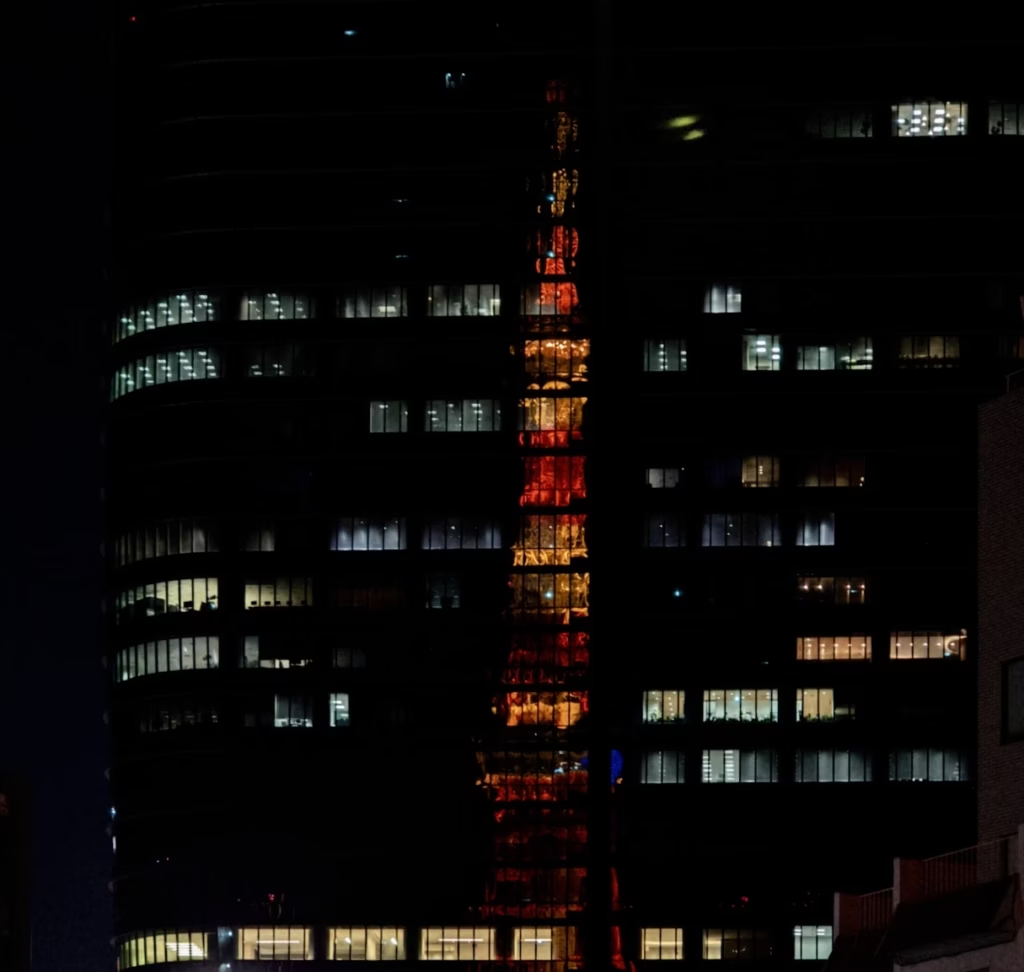
Japan was completely unknown to us. That’s why I spent hours and hours reading and watching videos about getting around the country and, just as important, how to behave in an acceptable manner. This post is the “planning hub” of my Japan series – the practical part that made everything else possible. From here, you can jump to the other posts:
Restaurant reservations: do this first
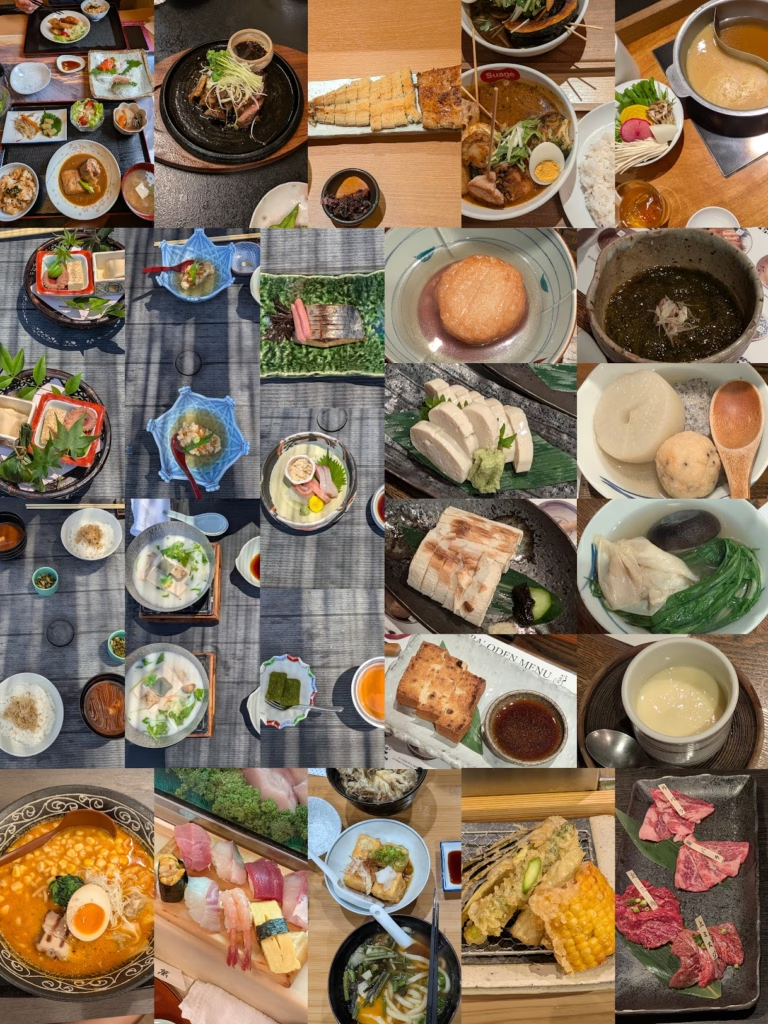
Eating is always important to us, so it was the first thing we researched. Our goal was to try most of the various kinds of Japanese food, and since many places require reservations, we dealt with those before anything else – other than the hotels, of course.
If you check online guides, Tabelog always pops up. Yes, you can use Tabelog to find restaurants, and there are many listed there, but it’s not complete. So we checked both Tabelog and Google Maps. A few things to note:
- Restaurant names can differ between Tabelog and Google Maps. This confused us more than once. The trick is to match the exact location on the map rather than the name.
- Tabelog’s rating scale is much stricter than Google’s. A rating above 3 is already good, and above 3.5 means pretty decent. Don’t skip a restaurant just because it “only” has a 3.4.
- Most likely, you’ll be charged a service fee for each reservation. For restaurants that do set meals only, you often have to select the meals in advance and possibly pay at the time of booking. Because of that, I didn’t book any 懷石料理 (Kaiseki) in Tokyo – we didn’t want to pay that much upfront for something we wouldn’t be able to cancel. (Spoiler: we found our Kaiseki in Kyoto instead – more on that in the food guide.)
Getting around
Getting around in Japan is not that painful! In many cities, including Tokyo and Kyoto, you can use the subways and buses with a Suica card, which you can purchase at the airport. For tourists, there are temporary versions that expire, so remember to use up the balance before leaving Japan. Very conveniently, these cards also work at convenience stores like 7-Eleven, FamilyMart, and Lawson, plus many pharmacies. There are also local vouchers to save money, but calculate carefully before assuming they’re a good deal.
Special routes
From Narita to Tokyo
The fastest and most expensive way: Narita Express (N’EX). It takes you directly from Narita to Tokyo Station, Shibuya, Shinjuku, and more. The ticket machines are directly outside the station. I highly recommend this, especially if you’re staying on the west side of Tokyo and arriving after a super long flight.
Keisei options: The Skyliner (said to reach Keisei-Ueno within 41 minutes) or the Rapid Limited Express (slower than the Skyliner). These trains don’t go into central Tokyo, meaning you’ll have to transfer to another line. The Keisei Access Express takes you a bit further, to Asakusa and Ginza, and certain trains continue all the way to Haneda Airport. Slower, but more affordable.
Airport bus: Priced similarly to the Access Express, the shuttle bus takes you from the airport to Tokyo Station in about an hour. A good option if you’d rather skip the crowds on the trains.
From Haneda to Tokyo
Haneda is very close to the city, so normal trains will do. If you’re staying in the east of Tokyo, the Tokyo Monorail is your best choice – take it to Hamamatsucho and you can get basically anywhere via the JR lines. If you’re staying in the west, the Keikyu Line to Shinagawa is your best option.
From Tokyo to Fujiyoshida/Kawaguchiko
Our choice: the Fuji Excursion from Shinjuku to Kawaguchiko – the fastest and most convenient way to travel. It’s a direct journey, so there was nothing to worry about: get the suitcases on board, rest, and we were there.
To book it, go to the JR-EAST website, choose the Chuo Line, then enter your departure station (usually Shinjuku) and destination (Kawaguchiko, or Mt. Fuji station in Fujiyoshida). Reserving a seat is highly recommended – otherwise you might end up standing for 2 hours. If you do get a seat, take the left side (facing Mt. Fuji) for the mountain view.
A comparable but more affordable option: the highway bus from Shinjuku. Go to highwaybus.com, choose Yamanashi as your destination, and you’ll see the stops listed – Kawaguchiko is one of them 🙂 To catch the bus, exit through the southern gate of Shinjuku Station and head up to the bus terminal on the 4th floor.
Another affordable rail route: Take the Chūō Line from Shinjuku to Ōtsuki (大月), then switch to the Fuji Kyūkō Line (富士急行線) to Kawaguchiko. You can use your IC card (Suica) the whole way. The 富士急行線 is also the line you’ll usually take to commute between Kawaguchiko and Fujiyoshida once you’re there.
Between Tokyo and Kyoto
Between these two cities, you’ll need Tokaido Shinkansen tickets from Smart-EX. Register first, select your route and seats (if you want to reserve one), then receive the online ticket. You can also reserve a space for your luggage, though it seems only oversized luggage gets a dedicated spot.
Here’s my favorite tip: if you want to enjoy Mount Fuji from the train, select the side with only two seats – and this works no matter which direction you’re traveling, since the mountain sits north of the tracks either way.
With the QR code of your ticket, tap it on the display at the gate scanner and you’ll receive a confirmation printout. Carry it the whole way, but note that the printout itself is not a ticket – you’ll still need the QR code to exit the station.
A note on being a guest
Overall, we enjoyed Japan enormously, and both of us want to go back soon. For me, it was the food and the snacks, the feeling of being back in Asia after way too long, and all the interesting things that seem to exist only in Japan. For my husband, it was the onsen, the fancy toilets, and the sushi 🙂
The convenience of daily life in Japan is basically unbeatable. But there were also many tourists who didn’t follow the rules and norms. In Kyoto especially, many didn’t keep to the left side while walking. I personally saw more than one tourist picking flowers off the shrubs for their own photos. In Fujiyoshida, some tourists ignored traffic entirely, crossing the road while cars were driving, all for a nice picture. I saw and heard people being rude to service staff.
This is really the downside of a place where people are generally kind to foreigners and everything is easily accessible – but none of that means visitors can do whatever they want. Japan rewards guests who behave like guests.
Ready to eat? Continue to the next post in the series: What We Ate in Japan.
Japan was completely unknown to us. That’s why I spent hours and hours reading and watching videos about getting around the country and, just as important, how to behave in an acceptable manner. This post is the “planning hub” of my Japan series – the practical part that made everything else possible. From here, you can jump to the other posts:
Restaurant reservations: do this first
Eating is always important to us, so it was the first thing we researched. Our goal was to try most of the various kinds of Japanese food, and since many places require reservations, we dealt with those before anything else – other than the hotels, of course.
If you check online guides, Tabelog always pops up. Yes, you can use Tabelog to find restaurants, and there are many listed there, but it’s not complete. So we checked both Tabelog and Google Maps. A few things to note:
- Restaurant names can differ between Tabelog and Google Maps. This confused us more than once. The trick is to match the exact location on the map rather than the name.
- Tabelog’s rating scale is much stricter than Google’s. A rating above 3 is already good, and above 3.5 means pretty decent. Don’t skip a restaurant just because it “only” has a 3.4.
- Most likely, you’ll be charged a service fee for each reservation. For restaurants that do set meals only, you often have to select the meals in advance and possibly pay at the time of booking. Because of that, I didn’t book any 懷石料理 (Kaiseki) in Tokyo – we didn’t want to pay that much upfront for something we wouldn’t be able to cancel. (Spoiler: we found our Kaiseki in Kyoto instead – more on that in the food guide.)
Getting around
Getting around in Japan is not that painful! In many cities, including Tokyo and Kyoto, you can use the subways and buses with a Suica card, which you can purchase at the airport. For tourists, there are temporary versions that expire, so remember to use up the balance before leaving Japan. Very conveniently, these cards also work at convenience stores like 7-Eleven, FamilyMart, and Lawson, plus many pharmacies. There are also local vouchers to save money, but calculate carefully before assuming they’re a good deal.
Special routes
From Narita to Tokyo
The fastest and most expensive way: Narita Express (N’EX). It takes you directly from Narita to Tokyo Station, Shibuya, Shinjuku, and more. The ticket machines are directly outside the station. I highly recommend this, especially if you’re staying on the west side of Tokyo and arriving after a super long flight.
Keisei options: The Skyliner (said to reach Keisei-Ueno within 41 minutes) or the Rapid Limited Express (slower than the Skyliner). These trains don’t go into central Tokyo, meaning you’ll have to transfer to another line. The Keisei Access Express takes you a bit further, to Asakusa and Ginza, and certain trains continue all the way to Haneda Airport. Slower, but more affordable.
Airport bus: Priced similarly to the Access Express, the shuttle bus takes you from the airport to Tokyo Station in about an hour. A good option if you’d rather skip the crowds on the trains.
From Haneda to Tokyo
Haneda is very close to the city, so normal trains will do. If you’re staying in the east of Tokyo, the Tokyo Monorail is your best choice – take it to Hamamatsucho and you can get basically anywhere via the JR lines. If you’re staying in the west, the Keikyu Line to Shinagawa is your best option.
From Tokyo to Fujiyoshida/Kawaguchiko
Our choice: the Fuji Excursion from Shinjuku to Kawaguchiko – the fastest and most convenient way to travel. It’s a direct journey, so there was nothing to worry about: get the suitcases on board, rest, and we were there.
To book it, go to the JR-EAST website, choose the Chuo Line, then enter your departure station (usually Shinjuku) and destination (Kawaguchiko, or Mt. Fuji station in Fujiyoshida). Reserving a seat is highly recommended – otherwise you might end up standing for 2 hours. If you do get a seat, take the left side (facing Mt. Fuji) for the mountain view.
A comparable but more affordable option: the highway bus from Shinjuku. Go to highwaybus.com, choose Yamanashi as your destination, and you’ll see the stops listed – Kawaguchiko is one of them 🙂 To catch the bus, exit through the southern gate of Shinjuku Station and head up to the bus terminal on the 4th floor.
Another affordable rail route: Take the Chūō Line from Shinjuku to Ōtsuki (大月), then switch to the Fuji Kyūkō Line (富士急行線) to Kawaguchiko. You can use your IC card (Suica) the whole way. The 富士急行線 is also the line you’ll usually take to commute between Kawaguchiko and Fujiyoshida once you’re there.
Between Tokyo and Kyoto
Between these two cities, you’ll need Tokaido Shinkansen tickets from Smart-EX. Register first, select your route and seats (if you want to reserve one), then receive the online ticket. You can also reserve a space for your luggage, though it seems only oversized luggage gets a dedicated spot.
Here’s my favorite tip: if you want to enjoy Mount Fuji from the train, select the side with only two seats – and this works no matter which direction you’re traveling, since the mountain sits north of the tracks either way.
With the QR code of your ticket, tap it on the display at the gate scanner and you’ll receive a confirmation printout. Carry it the whole way, but note that the printout itself is not a ticket – you’ll still need the QR code to exit the station.
A note on being a guest
Overall, we enjoyed Japan enormously, and both of us want to go back soon. For me, it was the food and the snacks, the feeling of being back in Asia after way too long, and all the interesting things that seem to exist only in Japan. For my husband, it was the onsen, the fancy toilets, and the sushi 🙂
The convenience of daily life in Japan is basically unbeatable. But there were also many tourists who didn’t follow the rules and norms. In Kyoto especially, many didn’t keep to the left side while walking. I personally saw more than one tourist picking flowers off the shrubs for their own photos. In Fujiyoshida, some tourists ignored traffic entirely, crossing the road while cars were driving, all for a nice picture. I saw and heard people being rude to service staff.
This is really the downside of a place where people are generally kind to foreigners and everything is easily accessible – but none of that means visitors can do whatever they want. Japan rewards guests who behave like guests.
Ready to eat? Continue to the next post in the series: What We Ate in Japan.