
When social media keeps showing you the same city over and over, eventually you have to see it for yourself. That’s how I ended up on a solo day trip to Verona – the city of Romeo and Juliet, ancient Roman arenas, and apparently, enough tourists to rival the Champs-Élysées. Prepared with a perfect walking route I found online, I set out to explore this historic city in a single day.
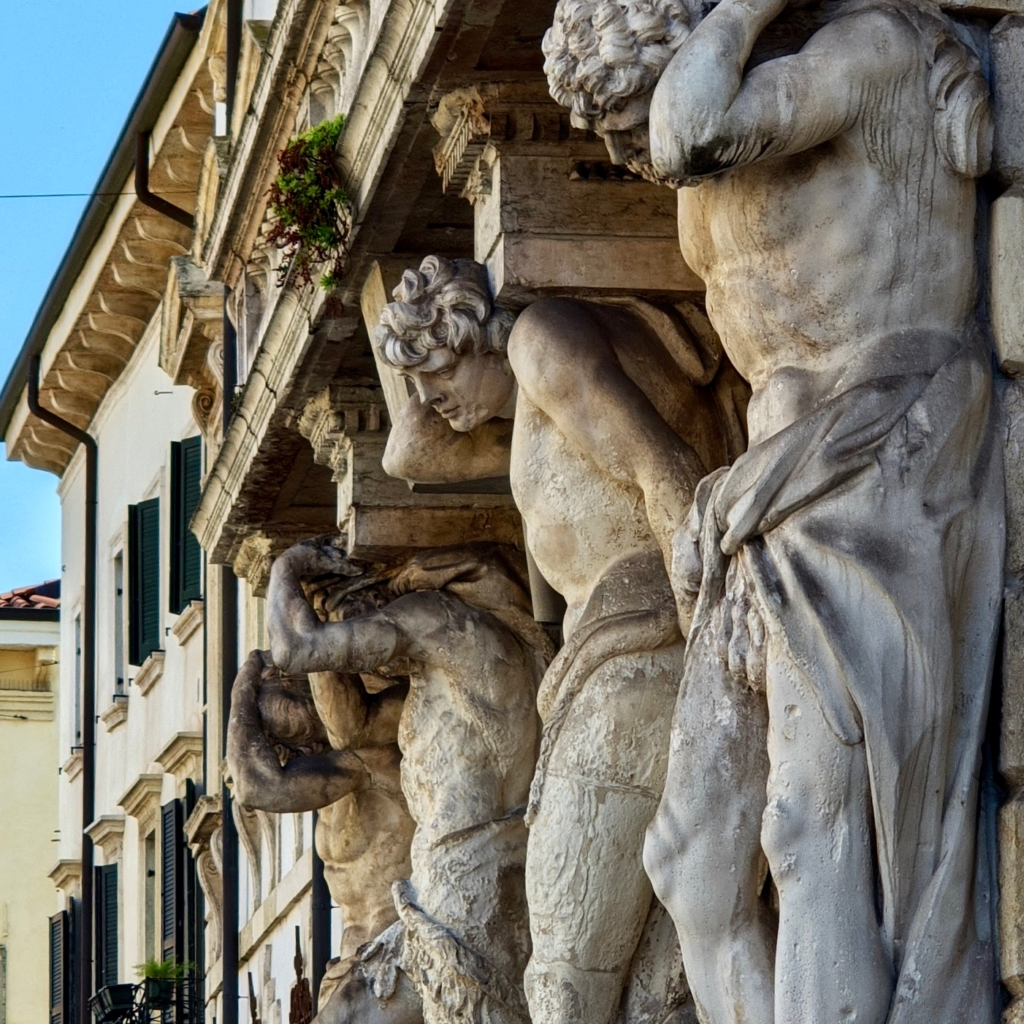
The City of Red Bricks and Romance
Verona has been charming visitors for over 2,000 years, from when it was an important Roman colony at the junction of main roads between Italy and northern Europe. The city reached its golden age under the della Scala (Scaliger) family in the 13th and 14th centuries, who left behind the impressive castles and fortifications that define much of Verona’s character today.
Of course, Verona’s modern fame rests largely on Shakespeare’s Romeo and Juliet, despite the fact that Shakespeare probably never visited the city. The play, written in 1596, was based on an Italian novella, and Verona has enthusiastically embraced its connection to the star-crossed lovers ever since.
Following the Perfect Route
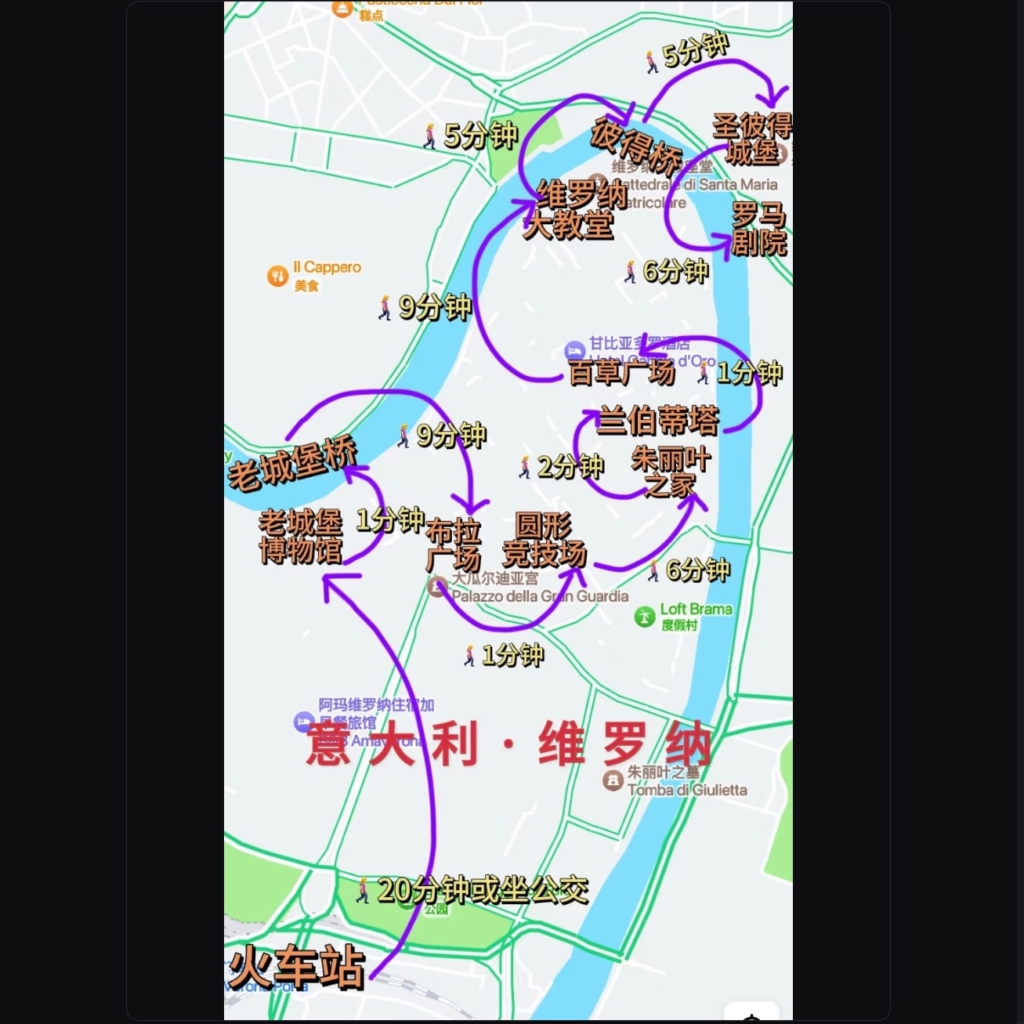
For trip planning, I’d turned to social media and found an incredibly useful guide from @东行西晃 on RedNote who mapped out a route covering all major attractions without retracing your steps. Her route proved invaluable – thank you for sharing it!
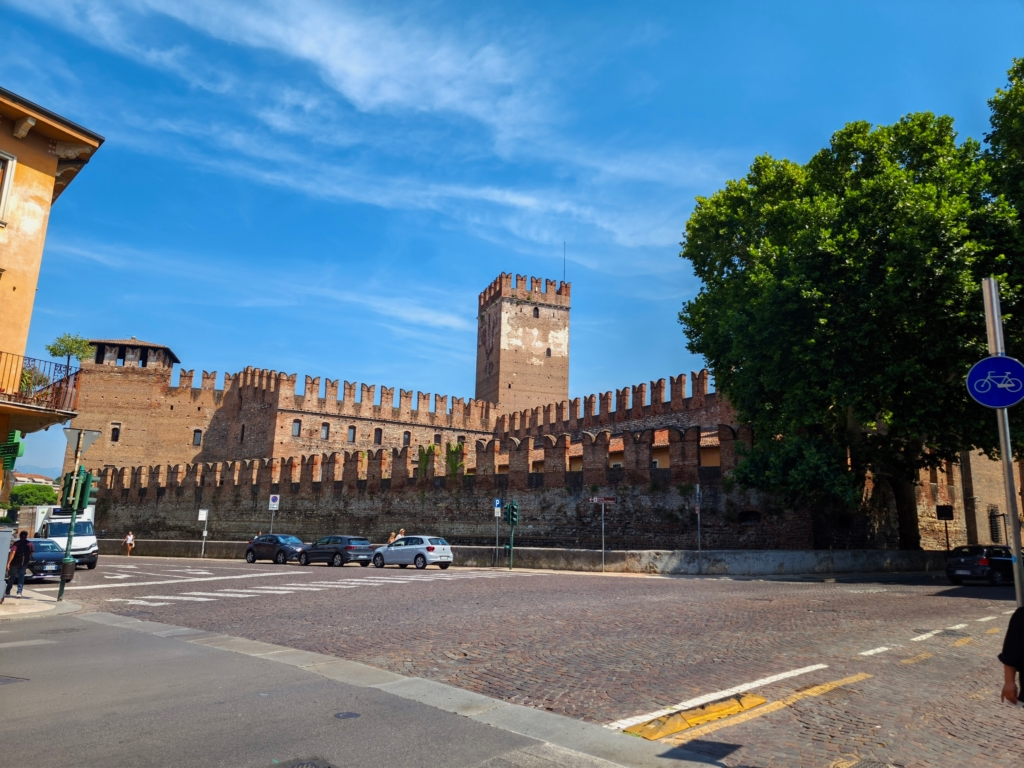
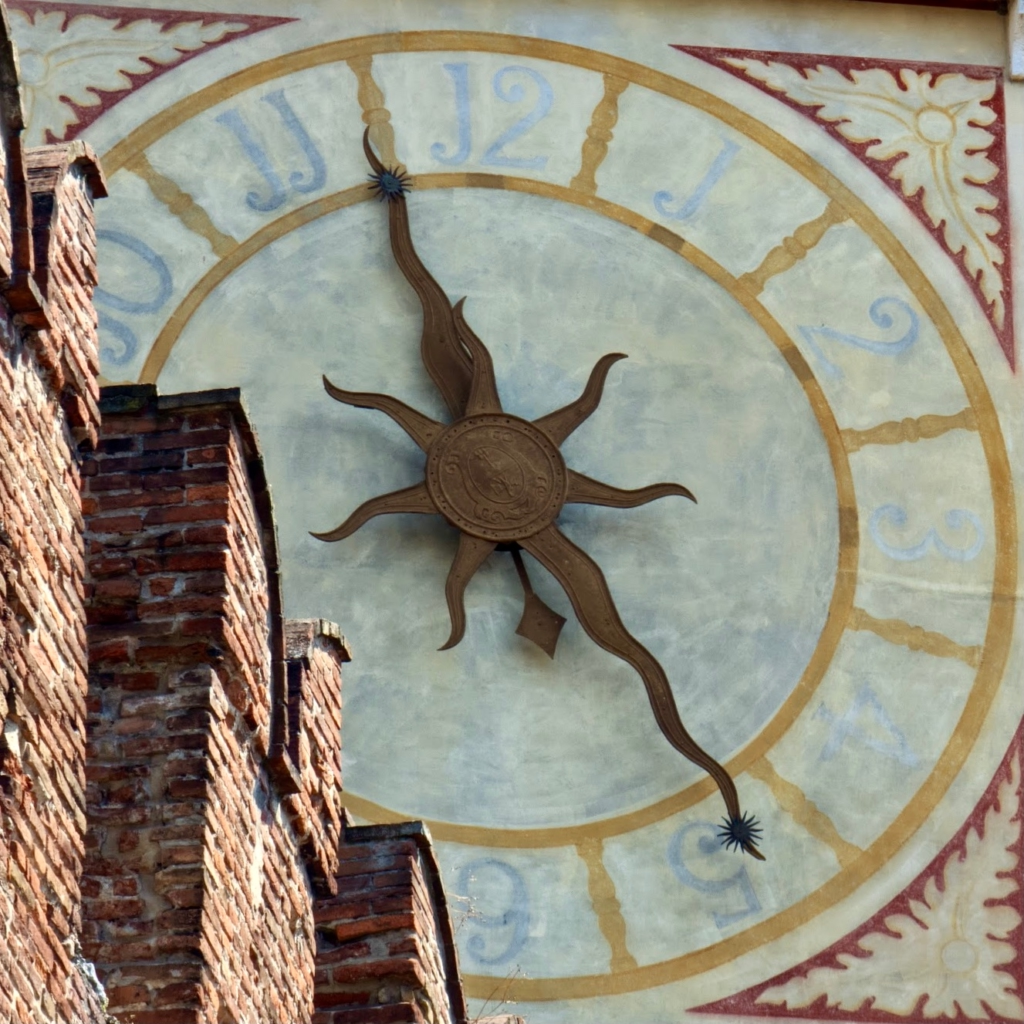
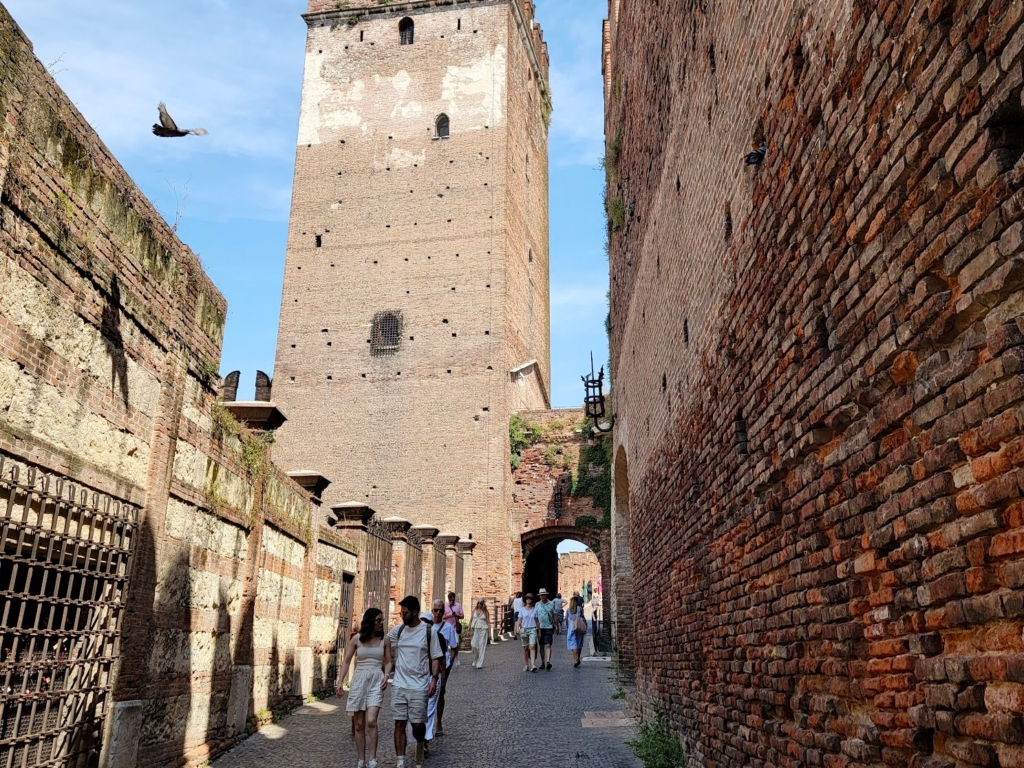
My first stop was Castelvecchio, a medieval fortress built between 1354 and 1376 by Cangrande II della Scala. Constructed with distinctive reddish-yellow bricks, the castle features a sophisticated structure with a grand clock that once helped ancient residents keep track of time. These days, the gaps between the bricks have become natural nesting spots for pigeons.
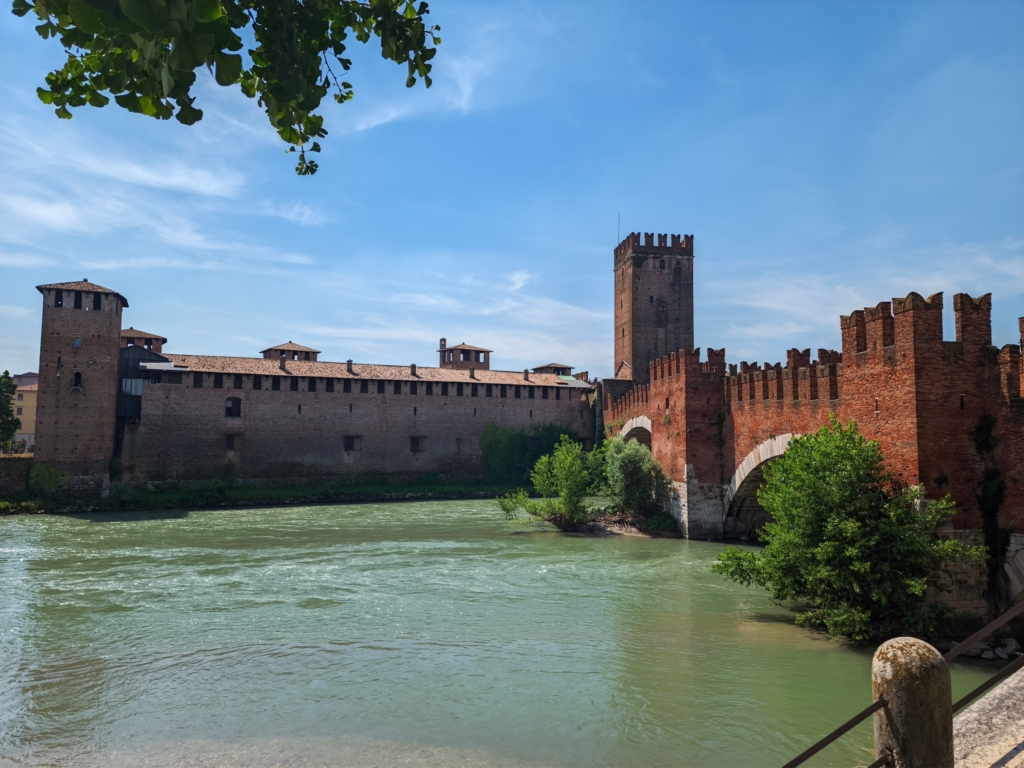
What makes Castelvecchio particularly interesting is that it also functions as a fortified bridge (Ponte Scaligero) leading across the Adige River. When it was completed in 1356, it was the world’s largest bridge arch with a span of nearly 49 meters. From the opposite bank, the castle bridge looked dramatically red – though I later realized the entire old town has this reddish hue, probably because red bricks were the primary building material when most of these structures were constructed.
The opposite side of the river felt completely different – clearly newer and more residential, with far fewer tourists. Even though these buildings were modern and no longer built with traditional bricks, they maintained a delicacy and beauty that didn’t compromise the overall aesthetic.
The Arena and the Crush of Tourists
I skipped Piazza Bra, a garden-like plaza, and headed straight for the Arena di Verona, getting thoroughly lost with multiple detours along the way. The 30-degree heat combined with strong sunshine wasn’t helping my sense of direction!
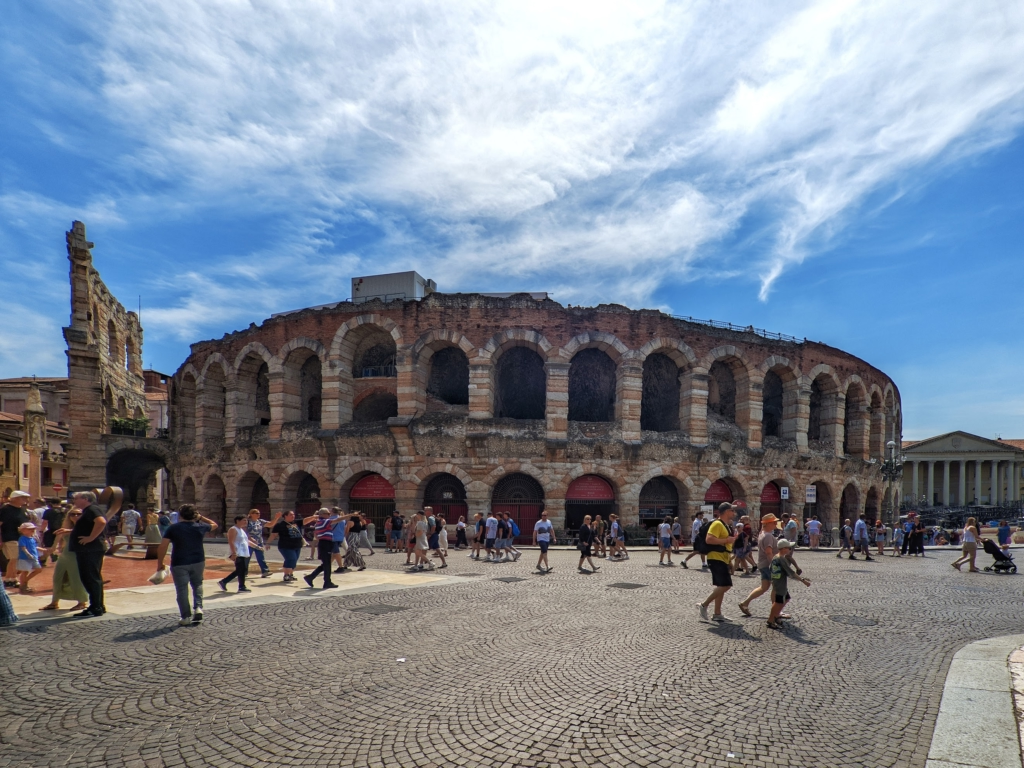
The Arena is a Roman amphitheater from the 1st century and is the third-largest surviving Roman amphitheater in the world. Having never been to Rome, this was my first time seeing this style of ancient architecture in person, and I honestly don’t believe Rome’s Colosseum could be much more impressive than Verona’s Arena. The structure was remarkably well-preserved and genuinely awe-inspiring.
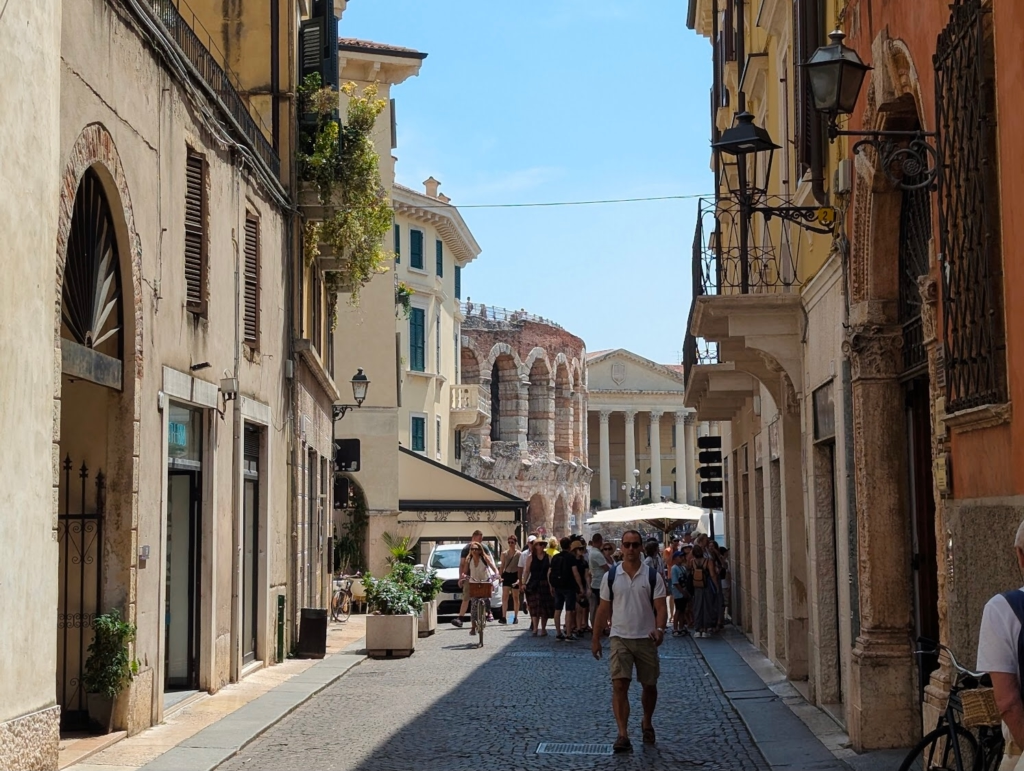
That said, the endless queues at every entrance killed any desire I had to explore the interior. Sometimes it’s enough to admire something impressive from the outside and move on, especially when you have a whole city still to see.
Casa di Giulietta: The Main Event
Following my downloaded map, I quickly made my way to the most important attraction in Verona: Casa di Giulietta (Juliet’s House). The queue of people at first intimidated me enough that I considered skipping it entirely. But then I thought – the Juliet statue is the one thing from Verona that’s known worldwide. I had to see it.
So I bought my ticket and joined the line. Honestly, it wasn’t bad at all. There was shade, and it only took less than 10 minutes before I reached the famous bronze statue in the courtyard.
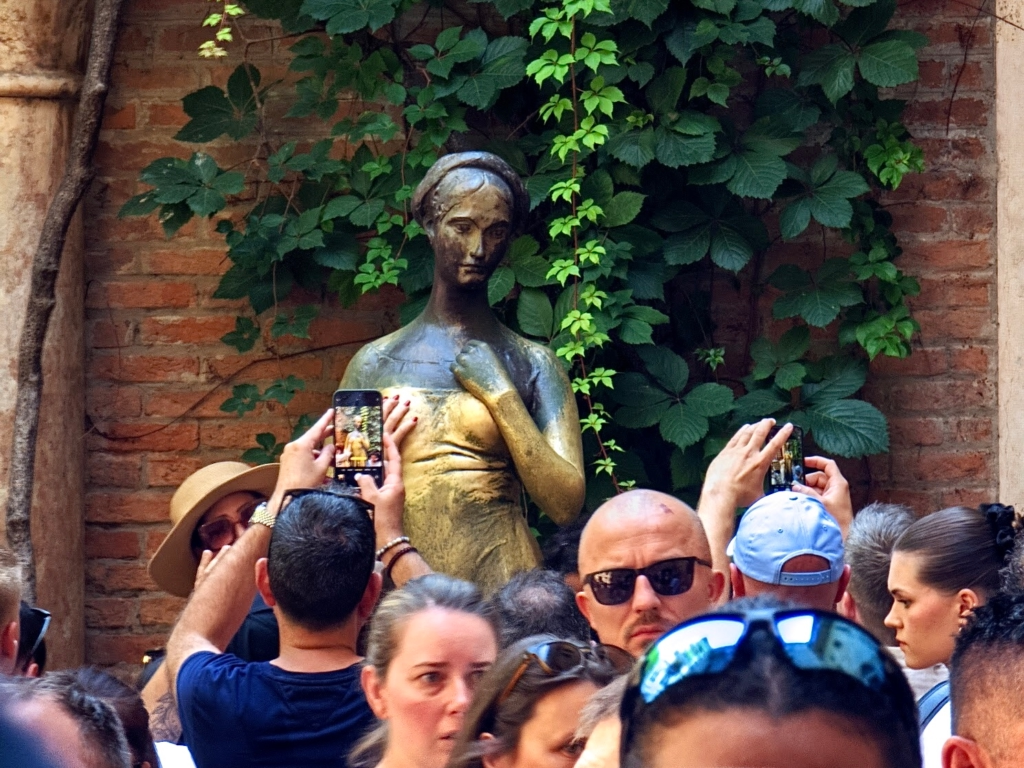
Here’s what I really didn’t understand: why is everyone so obsessed with touching the statue’s chest? According to local legend, touching Juliet’s right breast is supposed to bring you luck in love. But after 42 years of aggressive groping by tourists, the original statue developed such damage that it had to be removed for restoration in 2014. The one there now is a replica, but visitors continue the tradition with equal enthusiasm.
I didn’t feel comfortable participating in this particular custom, so I took a selfie with the statue and moved on. Call me prudish, but fondling a bronze statue in front of crowds of people just wasn’t my thing.
Market Squares and Medieval Tombs
Piazza delle Erbe was my next natural stop. To me, this felt like Verona’s version of München‘s Viktualienmarkt – a market square that’s been the heart of commercial and social life since Roman times. I didn’t buy anything, but I was happy just soaking in the atmosphere, surrounded by beautiful 12th-15th century buildings.
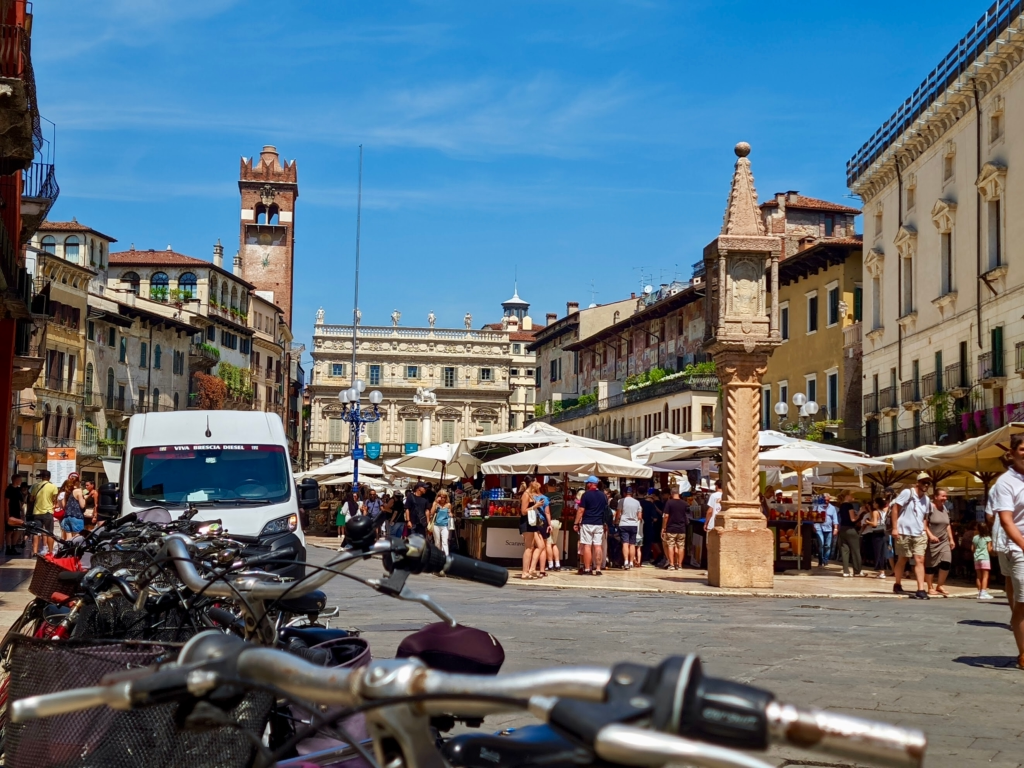
After passing through an archway called Arco della Costa, I entered Piazza dei Signori where I encountered several Chinese dancers in traditional costume. I suspected there might be some cultural event happening, though I never figured out exactly what.
The Scaliger Tombs were under construction during my visit. These elaborate Gothic tombs of the della Scala family are considered architectural masterpieces, but by this point, I was ready for lunch.
After a great meal at Il Vicoletto Trattoria (check out my Foodie Map for details), I headed toward my next destination.
Climbing to Castel San Pietro
I have no particular interest in churches, so I headed straight for Castel San Pietro. I didn’t want to go inside the castle itself – I just wanted the view of the entire town from above.
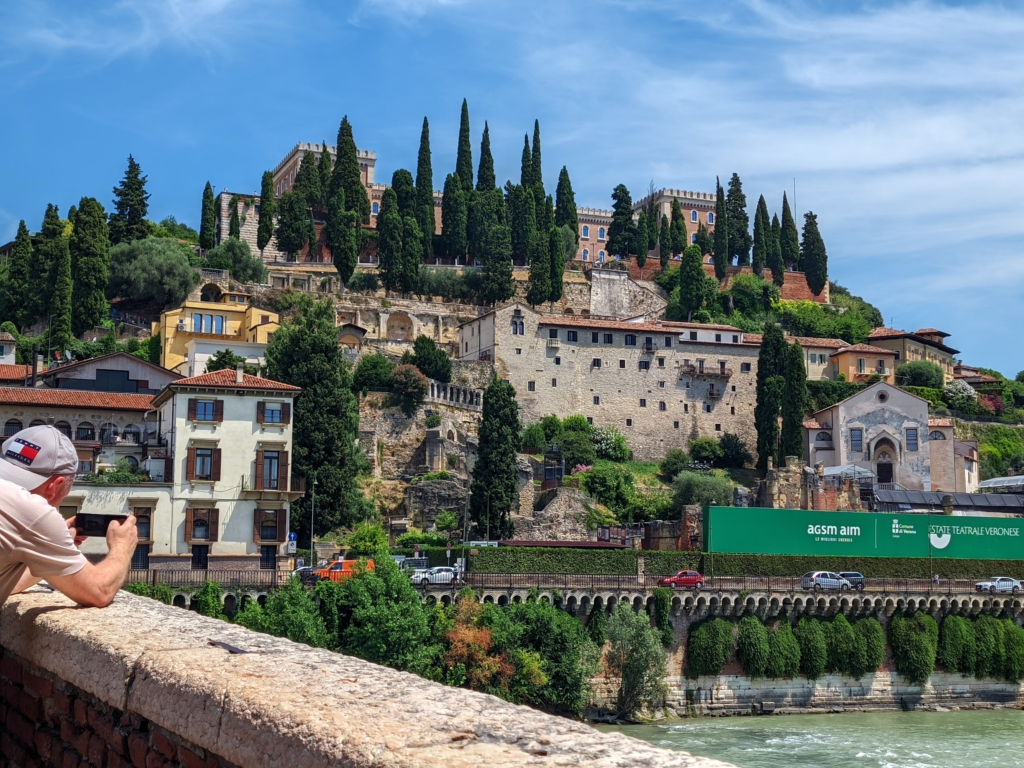
In principle, Ponte Pietra (the stone bridge leading to the hill) should have been perfect for photos, but some distracting banners on the castle side blocked the ideal view. Still, the bridge itself is beautiful – an ancient Roman arch bridge originally built in 100 BCE and reconstructed after being destroyed in World War II.
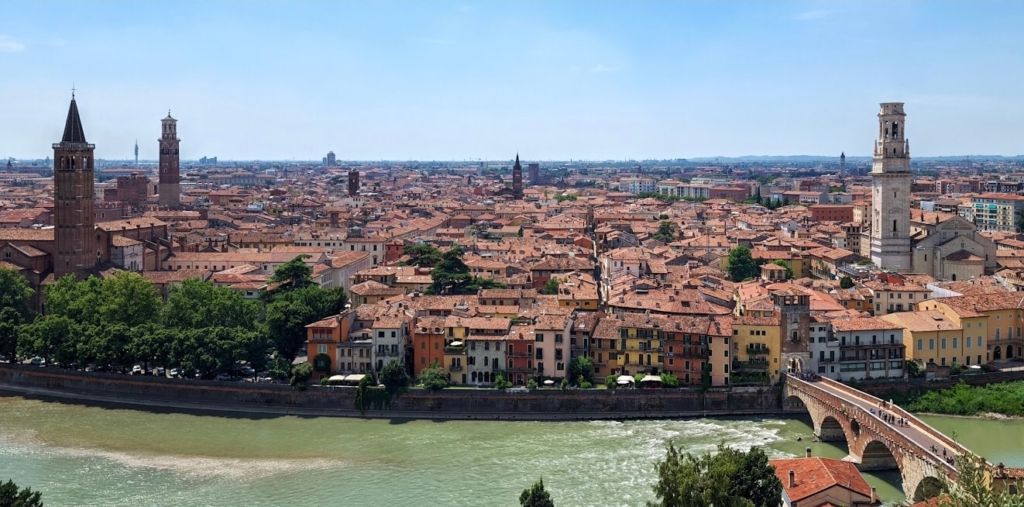
There seemed to be multiple routes up to the castle, but I took the traditional approach: climbing the stairs. This resulted in a lot of sweating, but I was glad for the extra cardio training. The view from the top made it worthwhile – the town looked completely different from this elevated perspective. Everything was so red, creating a dramatic contrast with the green Adige River winding through the city.
I would have preferred to stay longer, perhaps listening to the old Italian guy playing guitar up there, but I had calculated my time carefully to make it back for my train. On my way down, I even saw a woman applying blister patches to her feet – while wearing sandals! At least I wasn’t the only one suffering.
Getting Back
After helping another tourist take photos at the bridge (because that’s what we solo travelers do for each other), I made my way back toward the station. The afternoon heat was intense, and the uneven stone paths that look so charming in photos turned out to be less fun to walk on than expected. By the time I reached the station, I was more than ready for that train ride back – even if it did come with the obligatory Italian train delay.
The Verdict
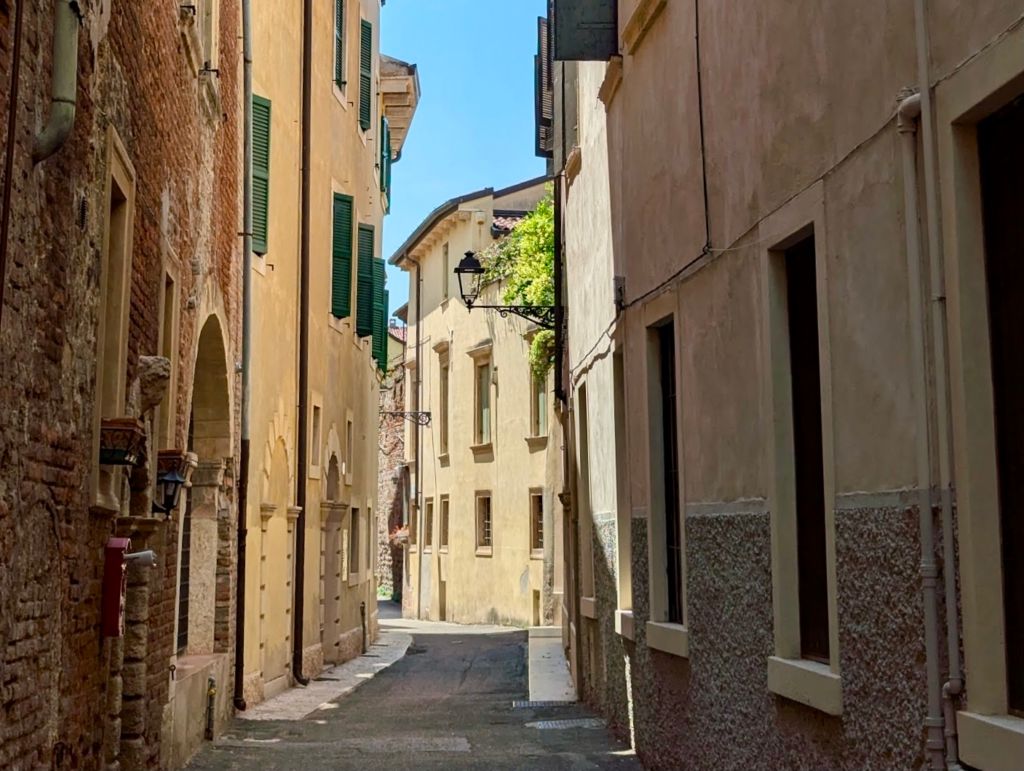
Verona is undeniably beautiful. The red brick architecture, the ancient Roman structures, the medieval castles, the romantic squares – it all creates a genuinely charming atmosphere that justifies the city’s popularity. If you’re visiting northern Italy, it absolutely deserves a day of your time.
Just maybe bring comfortable walking shoes and prepare for crowds at the major attractions. The city’s beauty is worth it.
When social media keeps showing you the same city over and over, eventually you have to see it for yourself. That’s how I ended up on a solo day trip to Verona – the city of Romeo and Juliet, ancient Roman arenas, and apparently, enough tourists to rival the Champs-Élysées. Prepared with a perfect walking route I found online, I set out to explore this historic city in a single day.
The City of Red Bricks and Romance
Verona has been charming visitors for over 2,000 years, from when it was an important Roman colony at the junction of main roads between Italy and northern Europe. The city reached its golden age under the della Scala (Scaliger) family in the 13th and 14th centuries, who left behind the impressive castles and fortifications that define much of Verona’s character today.
Of course, Verona’s modern fame rests largely on Shakespeare’s Romeo and Juliet, despite the fact that Shakespeare probably never visited the city. The play, written in 1596, was based on an Italian novella, and Verona has enthusiastically embraced its connection to the star-crossed lovers ever since.
Following the Perfect Route
For trip planning, I’d turned to social media and found an incredibly useful guide from @东行西晃 on RedNote who mapped out a route covering all major attractions without retracing your steps. Her route proved invaluable – thank you for sharing it!
My first stop was Castelvecchio, a medieval fortress built between 1354 and 1376 by Cangrande II della Scala. Constructed with distinctive reddish-yellow bricks, the castle features a sophisticated structure with a grand clock that once helped ancient residents keep track of time. These days, the gaps between the bricks have become natural nesting spots for pigeons.
What makes Castelvecchio particularly interesting is that it also functions as a fortified bridge (Ponte Scaligero) leading across the Adige River. When it was completed in 1356, it was the world’s largest bridge arch with a span of nearly 49 meters. From the opposite bank, the castle bridge looked dramatically red – though I later realized the entire old town has this reddish hue, probably because red bricks were the primary building material when most of these structures were constructed.
The opposite side of the river felt completely different – clearly newer and more residential, with far fewer tourists. Even though these buildings were modern and no longer built with traditional bricks, they maintained a delicacy and beauty that didn’t compromise the overall aesthetic.
The Arena and the Crush of Tourists
I skipped Piazza Bra, a garden-like plaza, and headed straight for the Arena di Verona, getting thoroughly lost with multiple detours along the way. The 30-degree heat combined with strong sunshine wasn’t helping my sense of direction!
The Arena is a Roman amphitheater from the 1st century and is the third-largest surviving Roman amphitheater in the world. Having never been to Rome, this was my first time seeing this style of ancient architecture in person, and I honestly don’t believe Rome’s Colosseum could be much more impressive than Verona’s Arena. The structure was remarkably well-preserved and genuinely awe-inspiring.
That said, the endless queues at every entrance killed any desire I had to explore the interior. Sometimes it’s enough to admire something impressive from the outside and move on, especially when you have a whole city still to see.
Casa di Giulietta: The Main Event
Following my downloaded map, I quickly made my way to the most important attraction in Verona: Casa di Giulietta (Juliet’s House). The queue of people at first intimidated me enough that I considered skipping it entirely. But then I thought – the Juliet statue is the one thing from Verona that’s known worldwide. I had to see it.
So I bought my ticket and joined the line. Honestly, it wasn’t bad at all. There was shade, and it only took less than 10 minutes before I reached the famous bronze statue in the courtyard.
Here’s what I really didn’t understand: why is everyone so obsessed with touching the statue’s chest? According to local legend, touching Juliet’s right breast is supposed to bring you luck in love. But after 42 years of aggressive groping by tourists, the original statue developed such damage that it had to be removed for restoration in 2014. The one there now is a replica, but visitors continue the tradition with equal enthusiasm.
I didn’t feel comfortable participating in this particular custom, so I took a selfie with the statue and moved on. Call me prudish, but fondling a bronze statue in front of crowds of people just wasn’t my thing.
Market Squares and Medieval Tombs
Piazza delle Erbe was my next natural stop. To me, this felt like Verona’s version of München‘s Viktualienmarkt – a market square that’s been the heart of commercial and social life since Roman times. I didn’t buy anything, but I was happy just soaking in the atmosphere, surrounded by beautiful 12th-15th century buildings.
After passing through an archway called Arco della Costa, I entered Piazza dei Signori where I encountered several Chinese dancers in traditional costume. I suspected there might be some cultural event happening, though I never figured out exactly what.
The Scaliger Tombs were under construction during my visit. These elaborate Gothic tombs of the della Scala family are considered architectural masterpieces, but by this point, I was ready for lunch.
After a great meal at Il Vicoletto Trattoria (check out my Foodie Map for details), I headed toward my next destination.
Climbing to Castel San Pietro
I have no particular interest in churches, so I headed straight for Castel San Pietro. I didn’t want to go inside the castle itself – I just wanted the view of the entire town from above.
In principle, Ponte Pietra (the stone bridge leading to the hill) should have been perfect for photos, but some distracting banners on the castle side blocked the ideal view. Still, the bridge itself is beautiful – an ancient Roman arch bridge originally built in 100 BCE and reconstructed after being destroyed in World War II.
There seemed to be multiple routes up to the castle, but I took the traditional approach: climbing the stairs. This resulted in a lot of sweating, but I was glad for the extra cardio training. The view from the top made it worthwhile – the town looked completely different from this elevated perspective. Everything was so red, creating a dramatic contrast with the green Adige River winding through the city.
I would have preferred to stay longer, perhaps listening to the old Italian guy playing guitar up there, but I had calculated my time carefully to make it back for my train. On my way down, I even saw a woman applying blister patches to her feet – while wearing sandals! At least I wasn’t the only one suffering.
Getting Back
After helping another tourist take photos at the bridge (because that’s what we solo travelers do for each other), I made my way back toward the station. The afternoon heat was intense, and the uneven stone paths that look so charming in photos turned out to be less fun to walk on than expected. By the time I reached the station, I was more than ready for that train ride back – even if it did come with the obligatory Italian train delay.
The Verdict
Verona is undeniably beautiful. The red brick architecture, the ancient Roman structures, the medieval castles, the romantic squares – it all creates a genuinely charming atmosphere that justifies the city’s popularity. If you’re visiting northern Italy, it absolutely deserves a day of your time.
Just maybe bring comfortable walking shoes and prepare for crowds at the major attractions. The city’s beauty is worth it.