
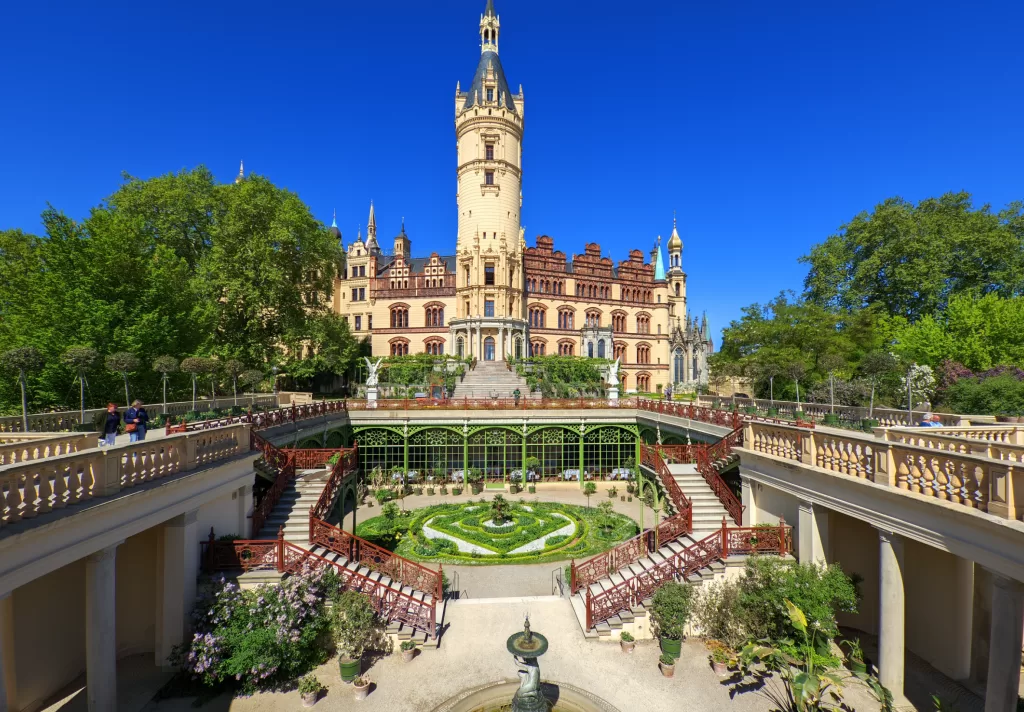
Sometimes the places you’ve been dreaming about for years turn out to be even better than you imagined. Schwerin, the capital of Mecklenburg-Vorpommern, had been on my must-see list for ages, and when I finally caught the chance to visit, I understood why I’d been so drawn to this place. After spending a day wandering its colorful streets and exploring its fairy-tale castle, I was left wondering why more people don’t know about this charming small city. With just 96,000 residents, Schwerin is Germany’s least populous state capital, but what it lacks in size, it makes up for in character, cleanliness, and that perfect castle-on-a-lake setting that looks like it belongs in a storybook.
A City That Feels Just Right
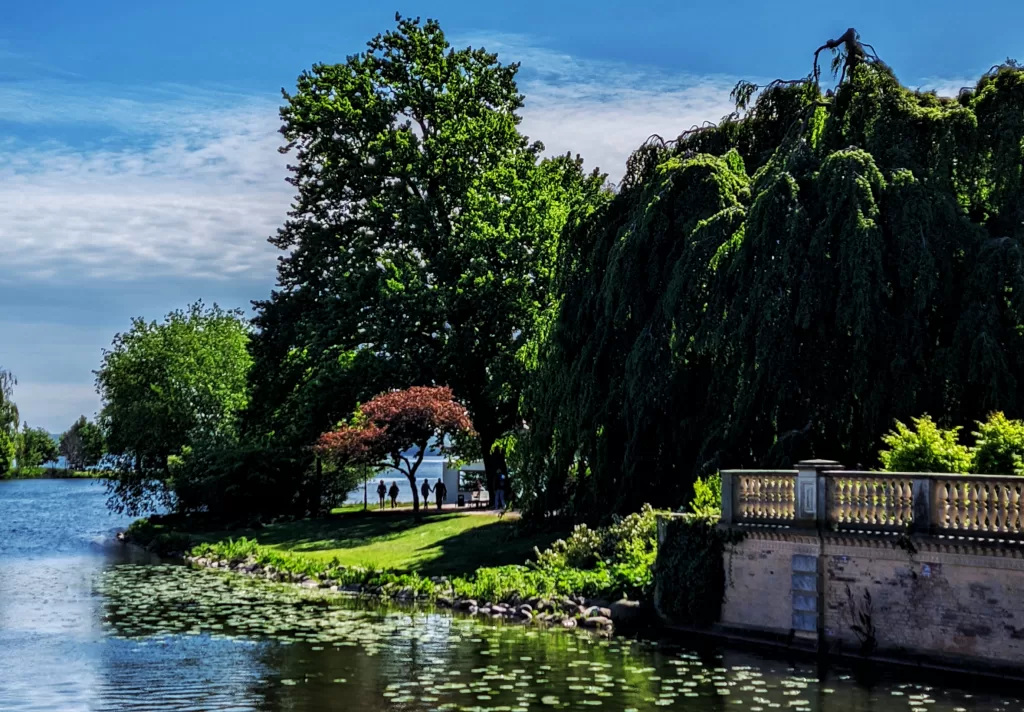
Schwerin struck me as a place where everything works exactly as it should. The city has an incredibly high green rate – about one-third consists of lakes and another third of forests, parks, and gardens – making it feel more like a large garden town than a typical urban center. Founded in 1160 by Henry the Lion, this city has managed to preserve its historical character while maintaining modern cleanliness that’s increasingly rare in many places.
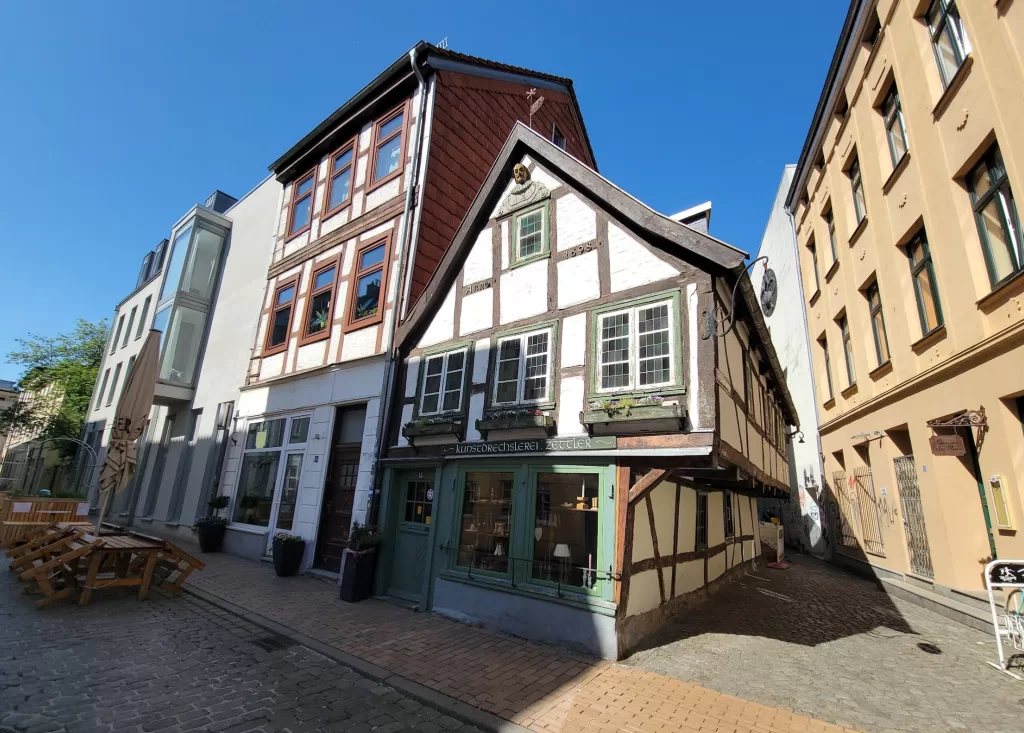
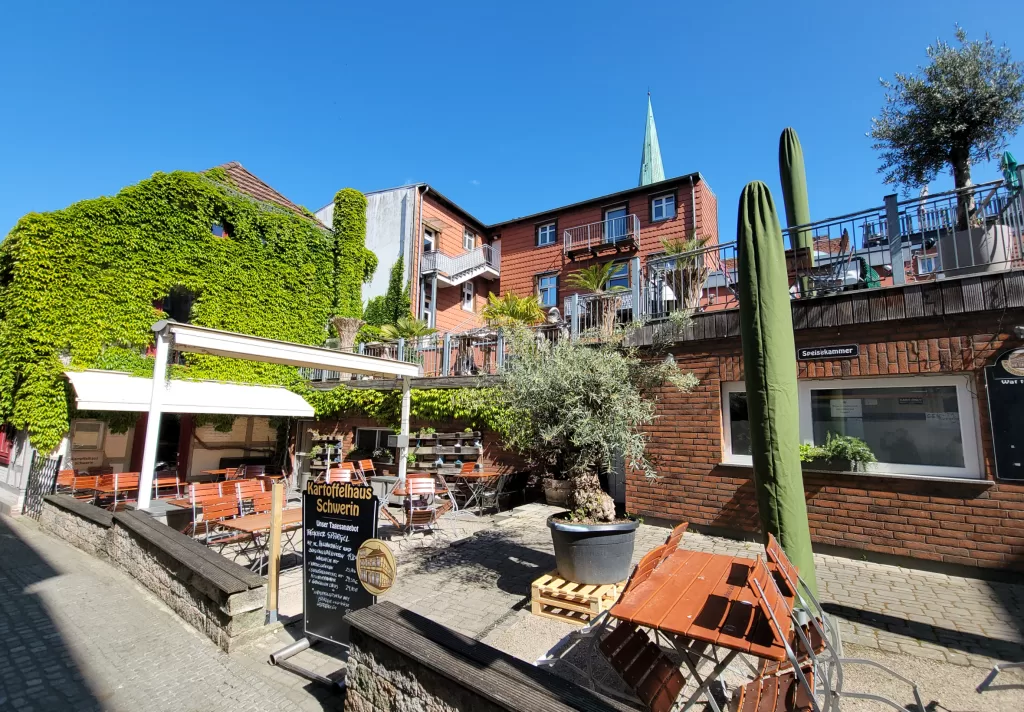
Walking through the narrow alleys became my favorite way to explore because each one led somewhere completely different and beautiful. We discovered a half-timbered house from 1698, its weathered beams telling centuries of stories, and throughout the old town, houses painted in cheerful colors created a delightful patchwork. The brick pathways under your feet give you that wonderful feeling of walking through living history.
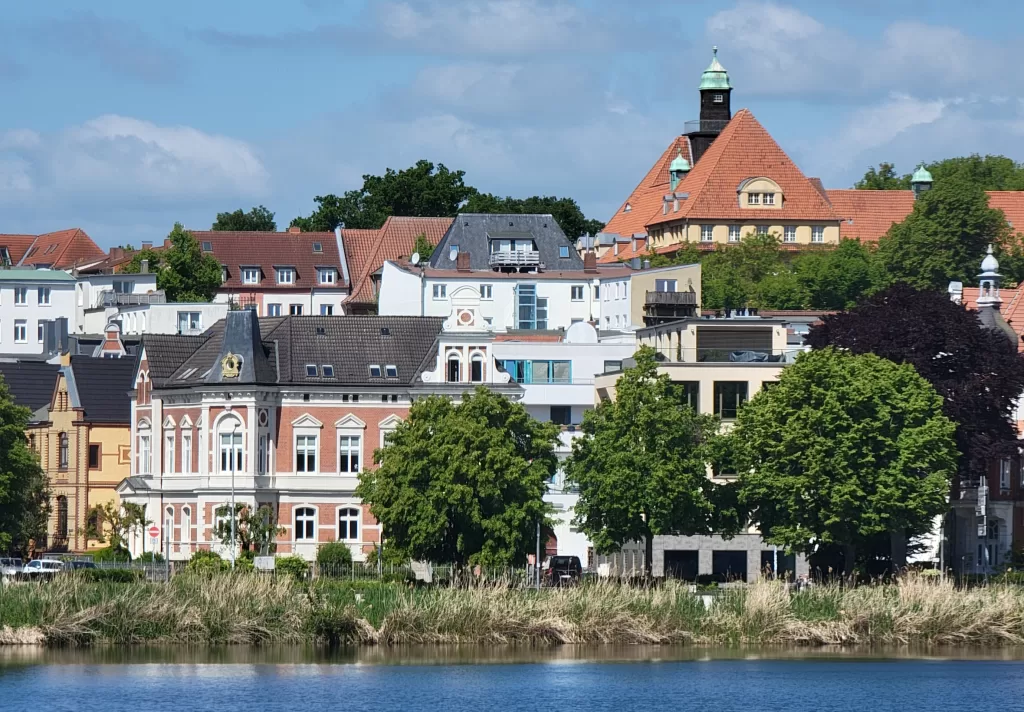
What impressed me most was how well the modern and traditional parts of the city blend together. Unlike some historic towns that feel frozen in time or others that have lost their character to development, Schwerin has found that sweet spot where old and new coexist naturally.
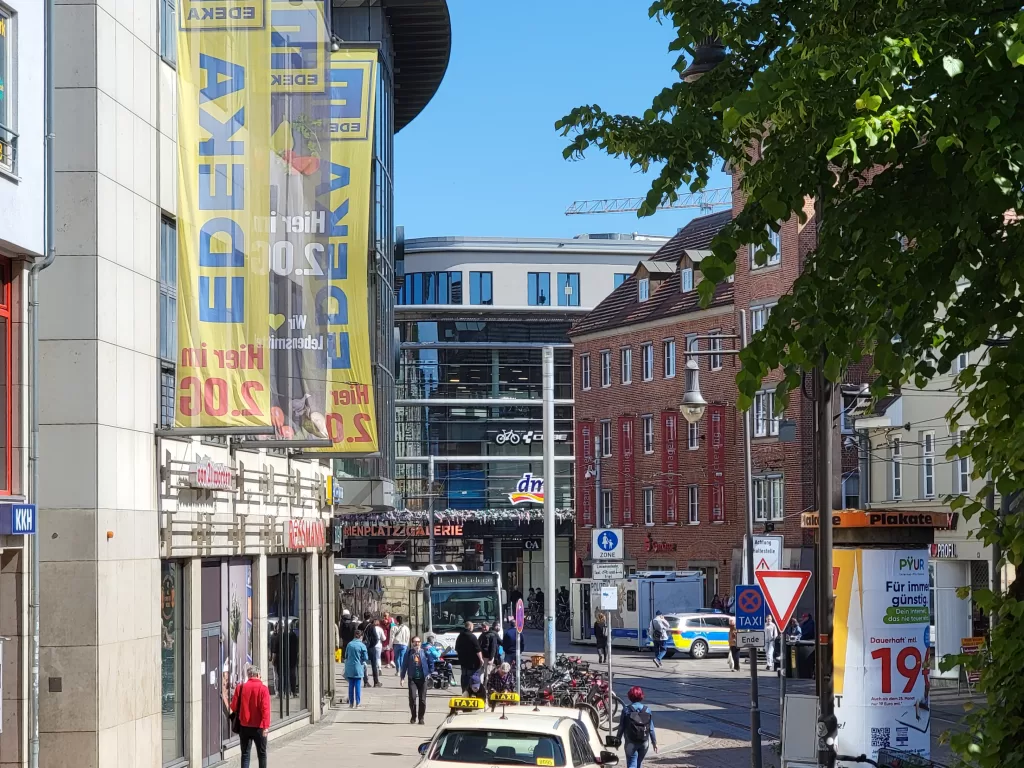
The locals we encountered reinforced my positive impression of German kindness. One moment that really touched me was watching young guys on scooters who stopped to help an elderly person unloading groceries. Having received so much help during my time in Germany, these small acts of consideration always remind me why I love German culture so much.
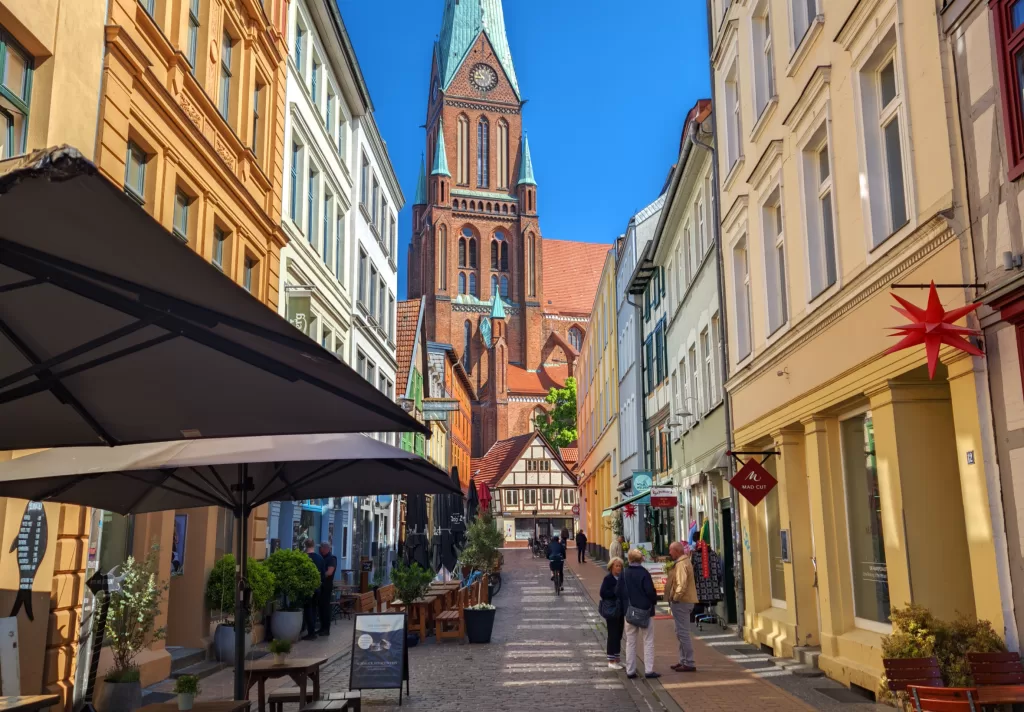
Schloss Schwerin: A Castle Worth the Journey
After wandering through the charming town, we made our way to the main attraction – and what an attraction it is! Schloss Schwerin sits majestically on an island in Lake Schwerin and is known as the “Neuschwanstein of the North.” With 653 rooms spread across its romantic silhouette, this castle is considered one of the most important examples of romantic historicism in Europe.
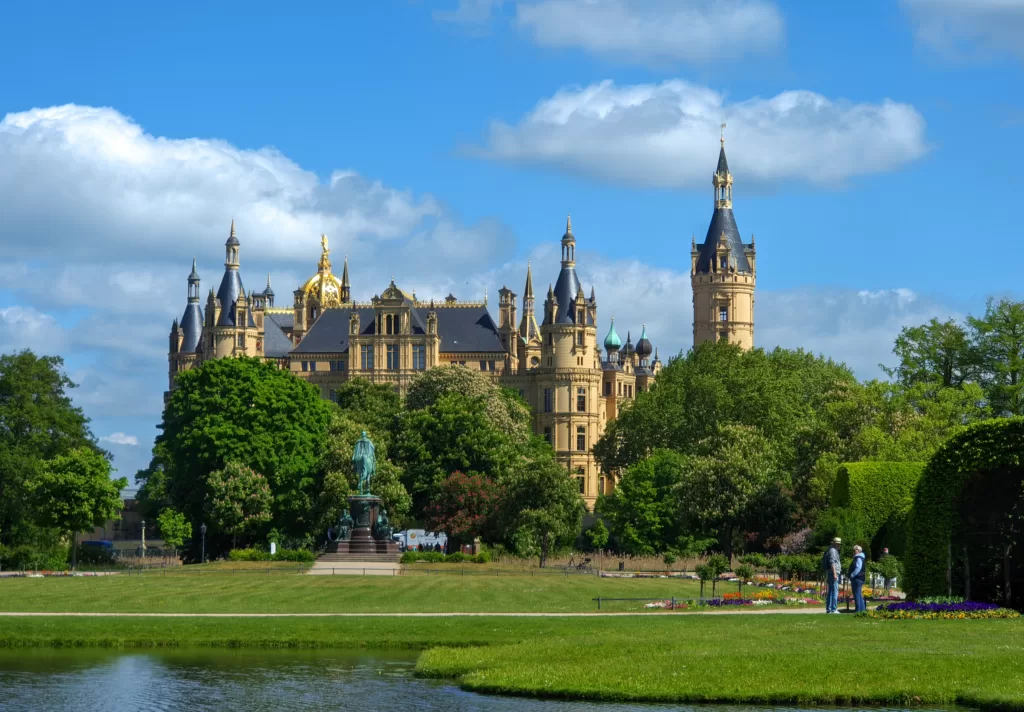
The approach to the castle is perfectly designed. After walking through one last narrow alley, the golden palace suddenly appears before you like something from a fairy tale. The main tower was reflecting sunlight so brilliantly it was almost blinding. Standing there, I thought about how building a castle on a small island in a lake is just as perfect an idea as placing one on an Alpine mountain top.
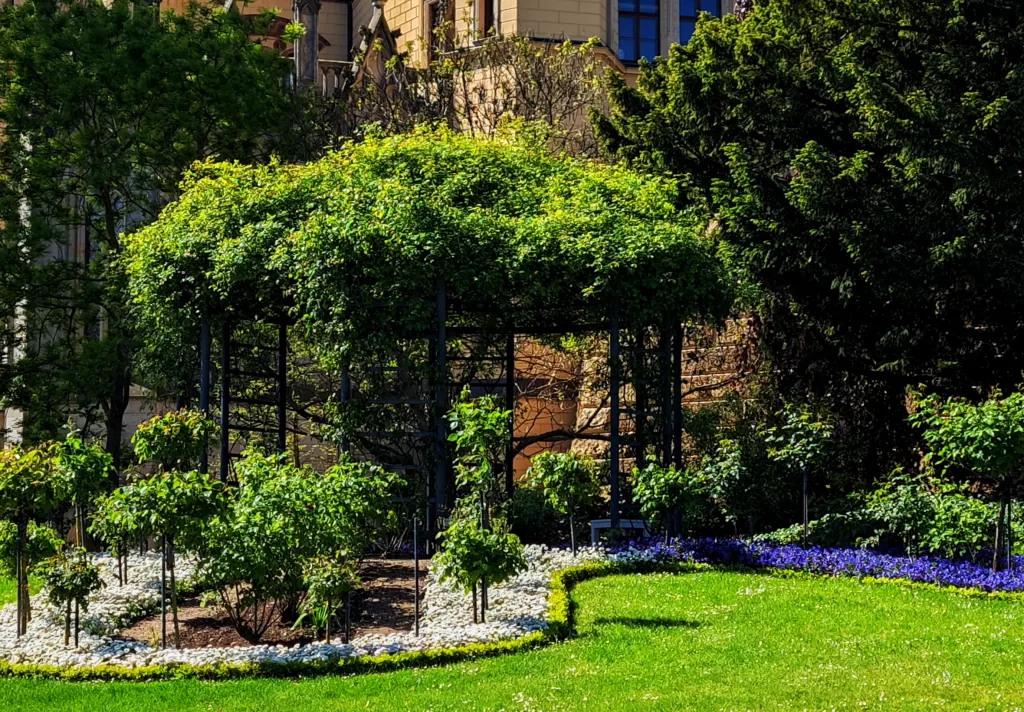
The current castle dates from the mid-19th century when Grand Duke Friedrich Franz II ordered a complete reconstruction between 1845 and 1857. The architects incorporated elements of French Renaissance design, giving it that distinctive romantic appearance that makes it so photogenic from every angle. What’s particularly interesting is that while it serves as a museum, parts of the castle still function as the seat of the Mecklenburg-Vorpommern state parliament – visitors actually can’t use the main entrance because it’s reserved for government business.
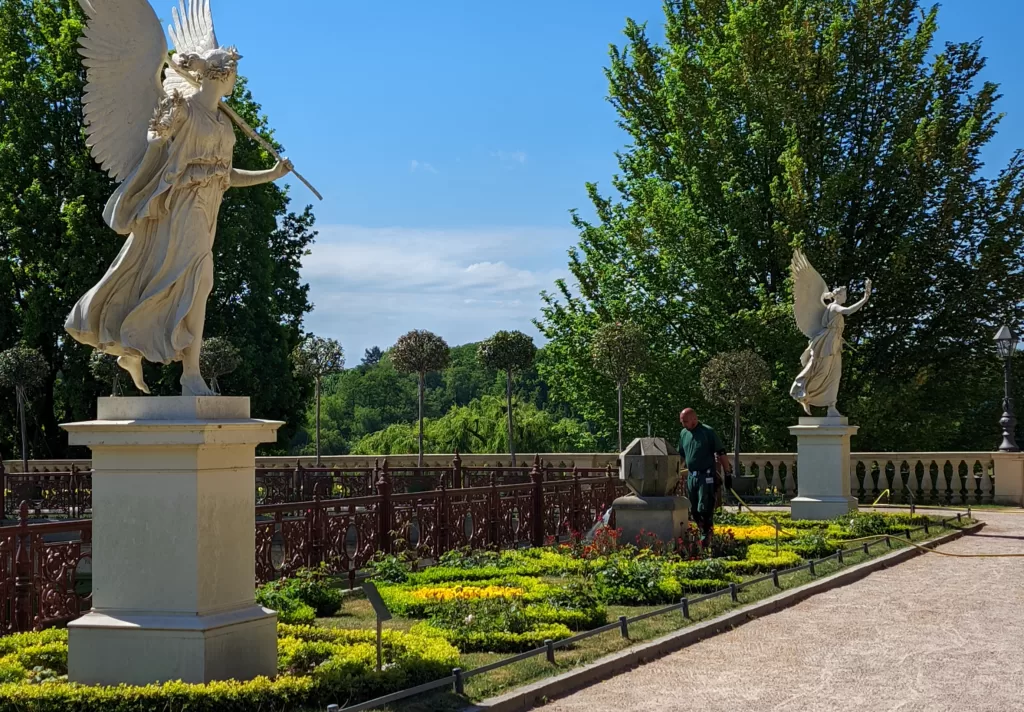
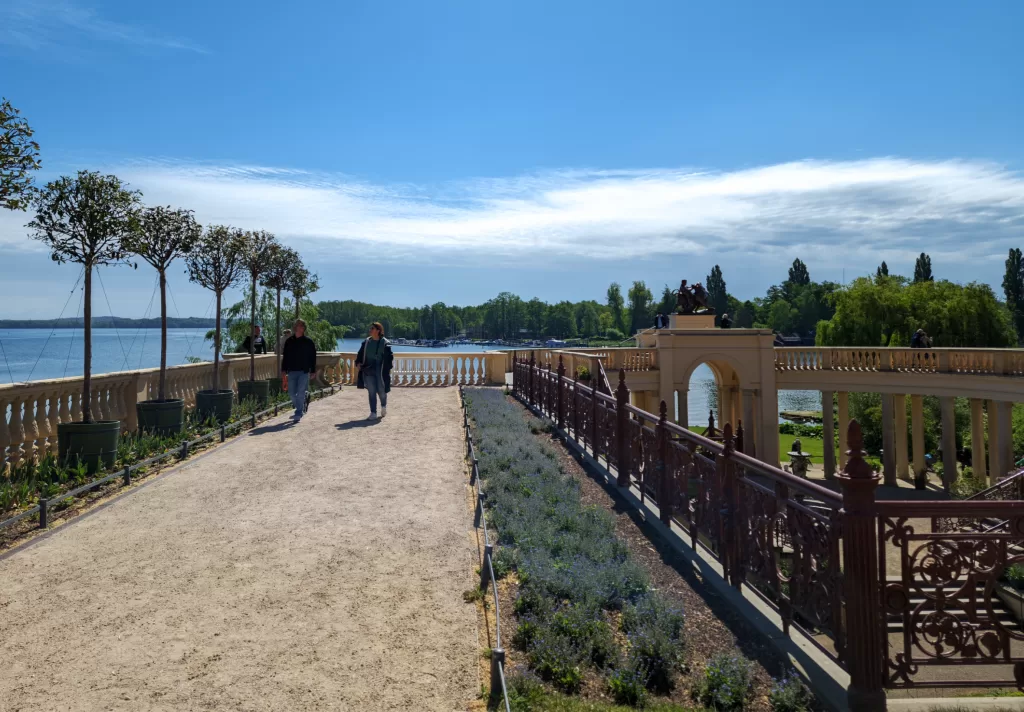
The Schlossgarten absolutely captivated me with its thoughtful design. The garden designer clearly understood aesthetics, perfectly layering plants and castle views so that from any angle, the scene is beautiful. What made Schwerin’s orangery special was how it differed from typical palace orangeries – instead of being a large structure on flat ground, this one cleverly used the natural height differences to create a charming two-story building.
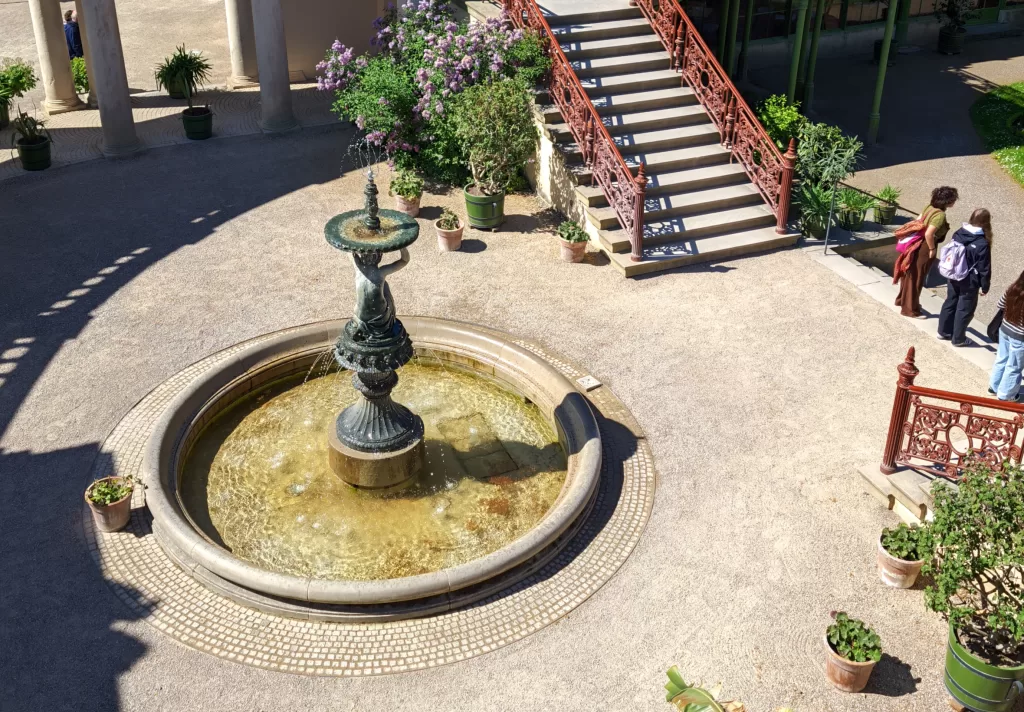
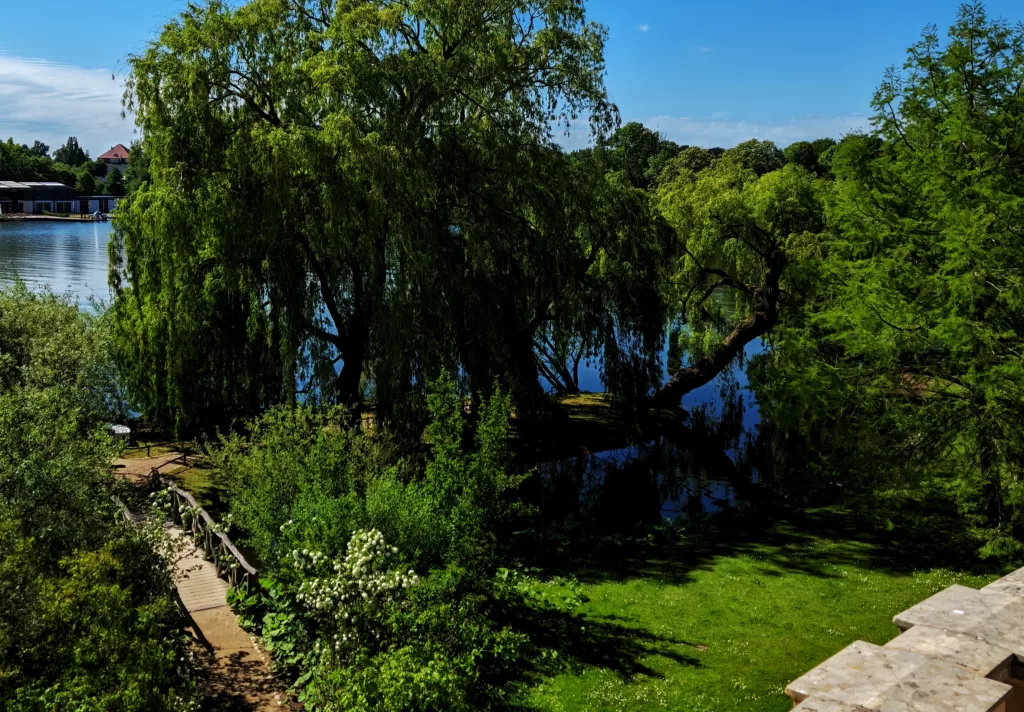
The designer also used bridges brilliantly to connect different parts of the water landscape, allowing visitors to escape crowds and find peaceful spots under willow trees while watching ducks and geese. A small fountain added just the right water element to balance the island’s landscape, and various smaller themed gardens created constantly changing scenery as you walked around.
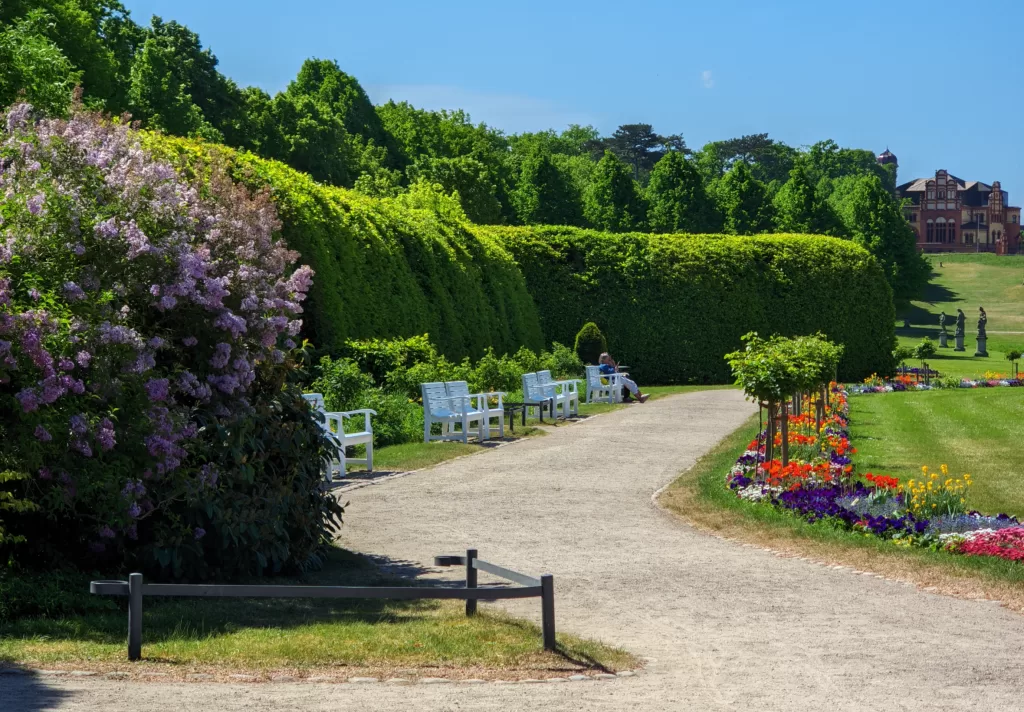
The larger Schlosspark extends onto the mainland and features a statue of Grand Duke Friedrich Franz II forever watching his castle from horseback. While many palace parks can feel overly formal with their rigid symmetry, Schwerin’s park adds interesting features like covered walkways and diverse flower plantings that keep it engaging.
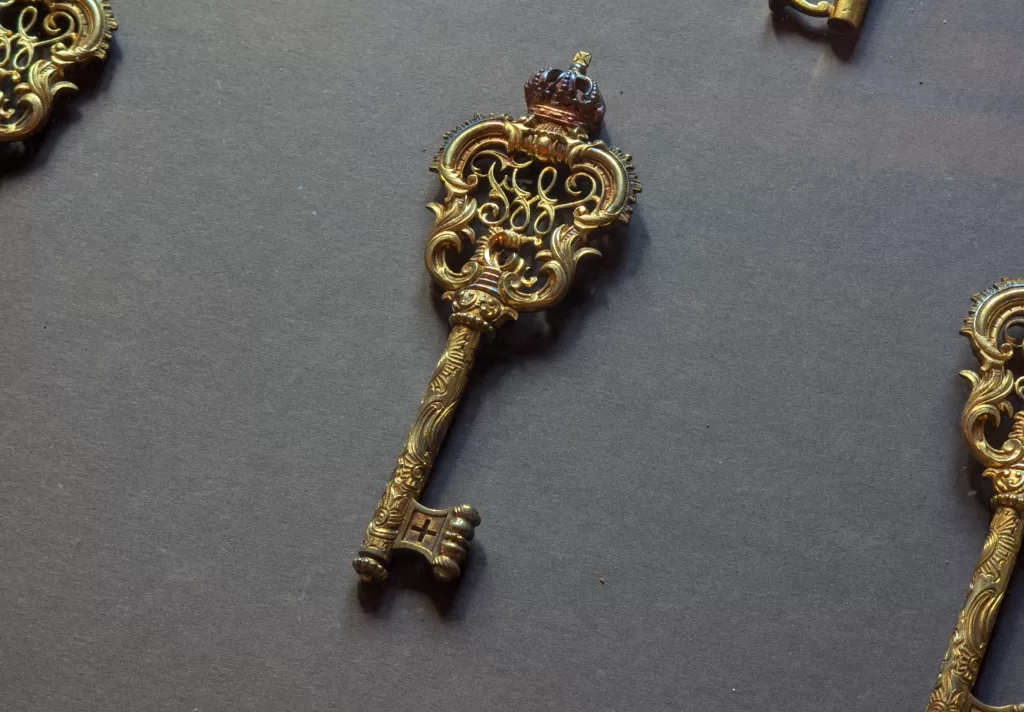
The castle interior, I’ll admit, felt less exciting after visiting so many royal residences – they tend to blur together after a while. Though I did love the display of intricately crafted antique keys that showed remarkable historical craftsmanship. One amusing moment was watching an elderly woman with a professional camera taking photos like she was some sort of photographer, but when we glimpsed her shots, she clearly had no idea how to frame them properly!
A Perfect Small-City Experience
Schwerin proved to be one of those places that reminds you why small cities can be so appealing. It has enough history and beauty to keep you interested, enough size to feel substantial, but remains human-scaled and walkable. The combination of the stunning castle, well-preserved architecture, abundant green space, and friendly locals created exactly the kind of travel experience I love most.
For anyone planning a trip through northern Germany, Schwerin deserves more than just a quick stop. It’s the kind of place that proves you don’t need international fame or massive size to be truly special – sometimes the most memorable discoveries are the ones you almost didn’t make.
Sometimes the places you’ve been dreaming about for years turn out to be even better than you imagined. Schwerin, the capital of Mecklenburg-Vorpommern, had been on my must-see list for ages, and when I finally caught the chance to visit, I understood why I’d been so drawn to this place. After spending a day wandering its colorful streets and exploring its fairy-tale castle, I was left wondering why more people don’t know about this charming small city. With just 96,000 residents, Schwerin is Germany’s least populous state capital, but what it lacks in size, it makes up for in character, cleanliness, and that perfect castle-on-a-lake setting that looks like it belongs in a storybook.
A City That Feels Just Right
Schwerin struck me as a place where everything works exactly as it should. The city has an incredibly high green rate – about one-third consists of lakes and another third of forests, parks, and gardens – making it feel more like a large garden town than a typical urban center. Founded in 1160 by Henry the Lion, this city has managed to preserve its historical character while maintaining modern cleanliness that’s increasingly rare in many places.
Walking through the narrow alleys became my favorite way to explore because each one led somewhere completely different and beautiful. We discovered a half-timbered house from 1698, its weathered beams telling centuries of stories, and throughout the old town, houses painted in cheerful colors created a delightful patchwork. The brick pathways under your feet give you that wonderful feeling of walking through living history.
What impressed me most was how well the modern and traditional parts of the city blend together. Unlike some historic towns that feel frozen in time or others that have lost their character to development, Schwerin has found that sweet spot where old and new coexist naturally.
The locals we encountered reinforced my positive impression of German kindness. One moment that really touched me was watching young guys on scooters who stopped to help an elderly person unloading groceries. Having received so much help during my time in Germany, these small acts of consideration always remind me why I love German culture so much.
Schloss Schwerin: A Castle Worth the Journey
After wandering through the charming town, we made our way to the main attraction – and what an attraction it is! Schloss Schwerin sits majestically on an island in Lake Schwerin and is known as the “Neuschwanstein of the North.” With 653 rooms spread across its romantic silhouette, this castle is considered one of the most important examples of romantic historicism in Europe.
The approach to the castle is perfectly designed. After walking through one last narrow alley, the golden palace suddenly appears before you like something from a fairy tale. The main tower was reflecting sunlight so brilliantly it was almost blinding. Standing there, I thought about how building a castle on a small island in a lake is just as perfect an idea as placing one on an Alpine mountain top.
The current castle dates from the mid-19th century when Grand Duke Friedrich Franz II ordered a complete reconstruction between 1845 and 1857. The architects incorporated elements of French Renaissance design, giving it that distinctive romantic appearance that makes it so photogenic from every angle. What’s particularly interesting is that while it serves as a museum, parts of the castle still function as the seat of the Mecklenburg-Vorpommern state parliament – visitors actually can’t use the main entrance because it’s reserved for government business.
The Schlossgarten absolutely captivated me with its thoughtful design. The garden designer clearly understood aesthetics, perfectly layering plants and castle views so that from any angle, the scene is beautiful. What made Schwerin’s orangery special was how it differed from typical palace orangeries – instead of being a large structure on flat ground, this one cleverly used the natural height differences to create a charming two-story building.
The designer also used bridges brilliantly to connect different parts of the water landscape, allowing visitors to escape crowds and find peaceful spots under willow trees while watching ducks and geese. A small fountain added just the right water element to balance the island’s landscape, and various smaller themed gardens created constantly changing scenery as you walked around.
The larger Schlosspark extends onto the mainland and features a statue of Grand Duke Friedrich Franz II forever watching his castle from horseback. While many palace parks can feel overly formal with their rigid symmetry, Schwerin’s park adds interesting features like covered walkways and diverse flower plantings that keep it engaging.
The castle interior, I’ll admit, felt less exciting after visiting so many royal residences – they tend to blur together after a while. Though I did love the display of intricately crafted antique keys that showed remarkable historical craftsmanship. One amusing moment was watching an elderly woman with a professional camera taking photos like she was some sort of photographer, but when we glimpsed her shots, she clearly had no idea how to frame them properly!
A Perfect Small-City Experience
Schwerin proved to be one of those places that reminds you why small cities can be so appealing. It has enough history and beauty to keep you interested, enough size to feel substantial, but remains human-scaled and walkable. The combination of the stunning castle, well-preserved architecture, abundant green space, and friendly locals created exactly the kind of travel experience I love most.
For anyone planning a trip through northern Germany, Schwerin deserves more than just a quick stop. It’s the kind of place that proves you don’t need international fame or massive size to be truly special – sometimes the most memorable discoveries are the ones you almost didn’t make.