
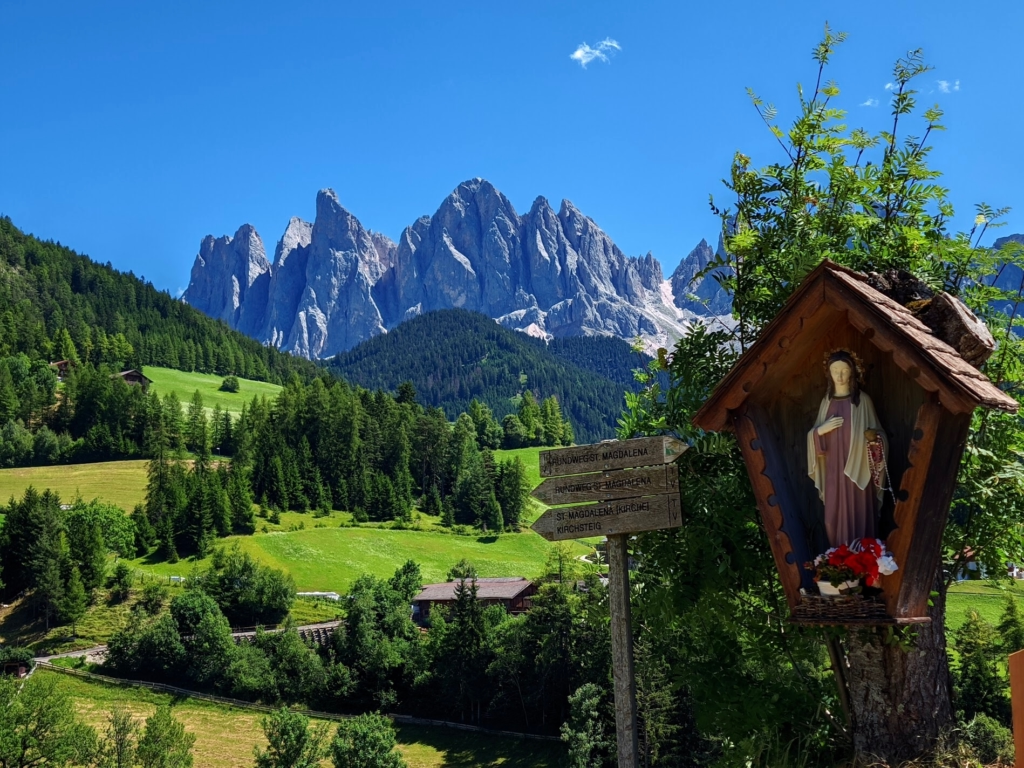
Social media has a way of making you feel like you’re missing out on something extraordinary. After seeing countless photos of the Dolomiti’s dramatic peaks pop up in my feed, I knew I had to see them for myself. The problem? I was based in Trento without a car, and the Dolomiti felt impossibly far away. But where there’s determination (and public transportation), there’s a way. That’s how I found myself on an ambitious day trip to Santa Maddalena in Val di Funes – a journey involving multiple trains, buses, and one very slow regional connection that tested my patience.
Discovering the Dolomiti
I’ll admit something embarrassing: I didn’t realize the Dolomiti were a massive mountain range until I started planning this trip. In my mind, “the Dolomiti” meant those famous jagged Odle Group peaks I’d seen in photos. Turns out, the Dolomiti stretches across 15,000 square kilometers of northeastern Italy, with the Odle (or Geisler) Group being just one of many spectacular mountain ranges in the region.
Val di Funes (Villnösstal in German) sits in South Tyrol, the German-speaking part of northern Italy, where the Odle peaks rise dramatically above pastoral villages and alpine meadows. The valley is part of Puez-Odle Nature Park, and the view of Santa Maddalena Church with the Odle mountains behind it has become one of the most photographed scenes in all the Dolomiti.
I chose Santa Maddalena because it was accessible by public transport and offered that postcard-perfect view without requiring a serious multi-hour hike. Perfect for a solo day trip with limited time.
The Journey: Trains, Buses, and Unexpected Delays
Getting there turned into quite an adventure. From Trento, I caught a train to Bolzano, then needed another train to Klausen followed by two buses to reach Santa Maddalena. Simple in theory, complicated in practice.
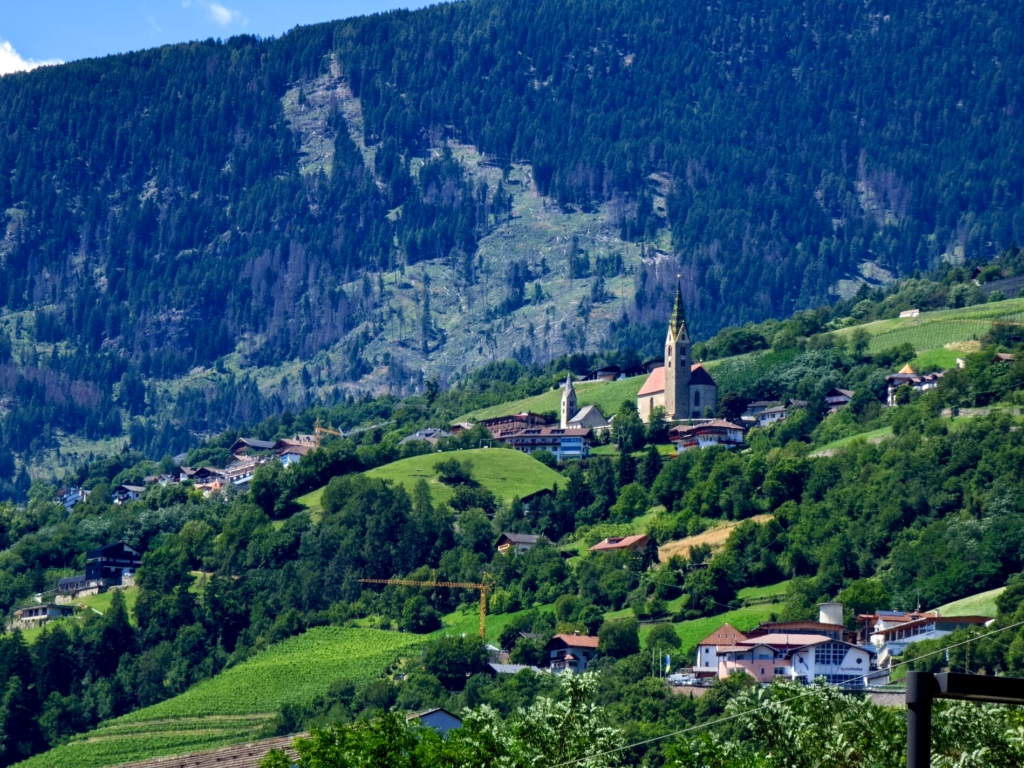
The regional train to Klausen was painfully slow, stopping constantly. When we finally arrived, I rushed out to catch my bus – only to watch it pull away. The next one wasn’t for another hour. Stranded and frustrated, I wandered around this quiet little town looking for a toilet, which naturally turned out to be right back at the bus station where I’d started. At least the bus transfer worked out – the driver waited for connecting passengers.
The Mountains Appear
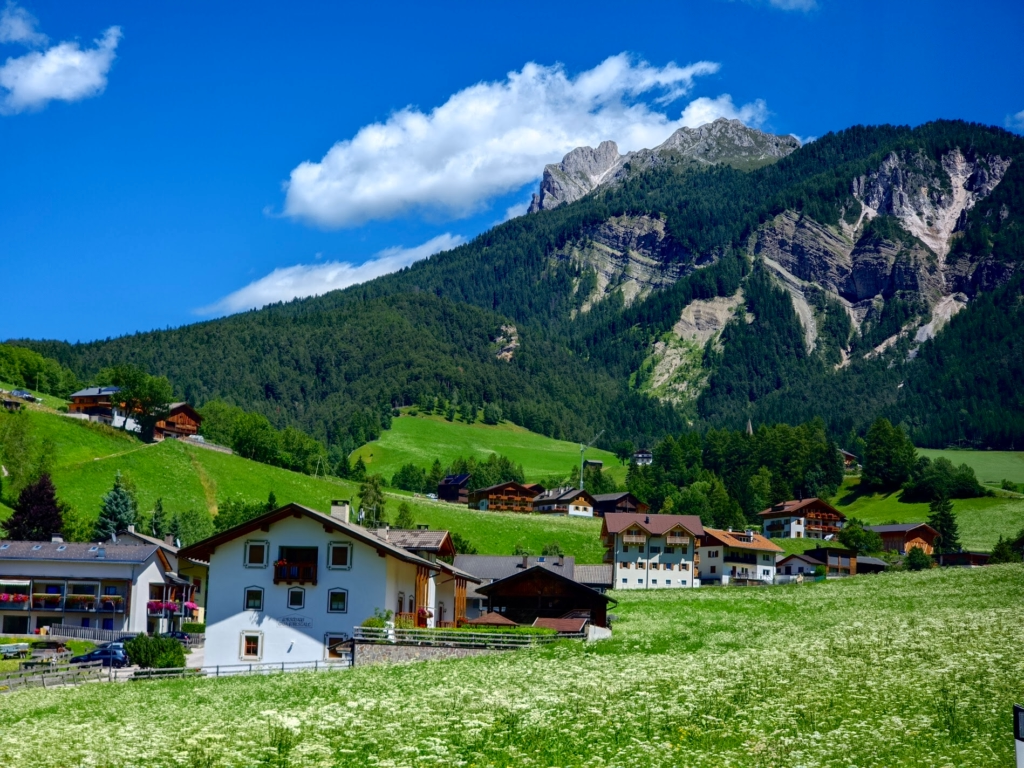
As my final bus climbed higher into the valley, I kept checking Google Maps obsessively, watching the little blue dot get closer to my destination. At one point, I mistook another mountain for the Odle Group, but when I finally stepped off the bus and saw the real thing, I was genuinely stunned.
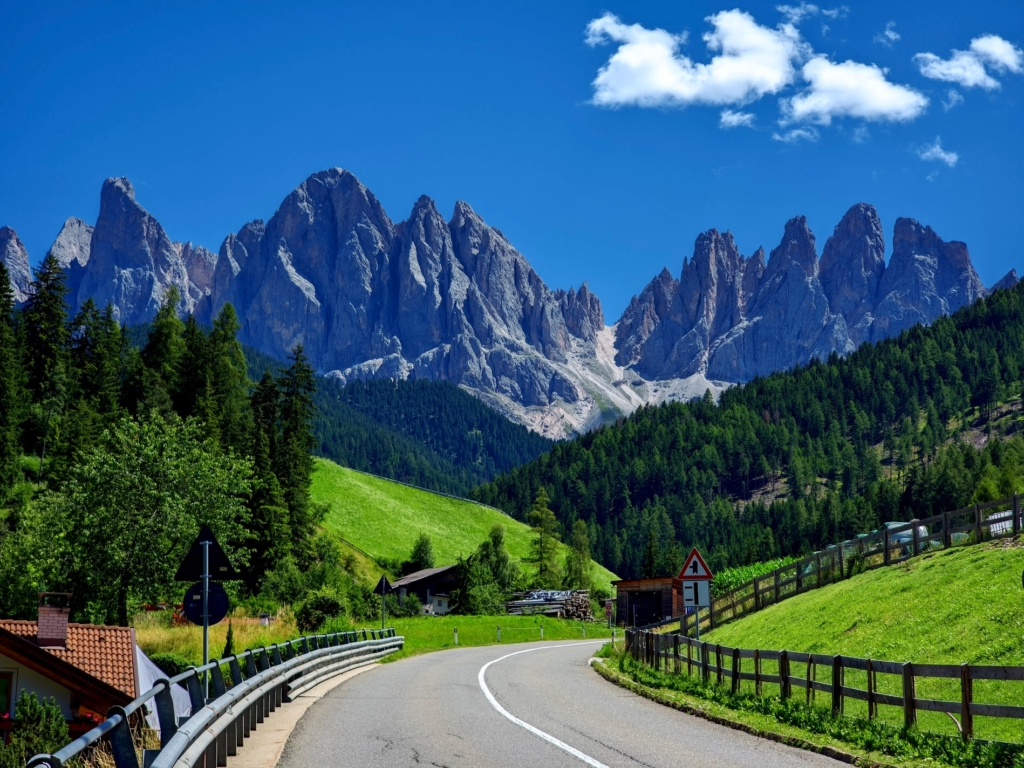
The Odle peaks rose up like giant sentinels watching over the valley – dramatic, jagged spires of pale limestone that look almost artificial in their sharpness. The main peak, Sass Rigais, reaches 3,025 meters and dominates the skyline with its distinctive rocky towers. These mountains earned the nickname “White Mountains” due to their high lime content, and they truly did stand out against the sky like massive sculptures.
I was amazed by how many Gasthöfe (guesthouses) filled the tiny village, all hosting tourists who’d come for exactly the same reason I had. I spotted quite a few Chinese tourists as well – the power of social media and the internet, I suppose.
Finding the Perfect View
Locating the famous viewpoint proved remarkably easy – signs pointing to the church and photo spots were everywhere. Before reaching Santa Maddalena Church itself, I walked up a slope with fields of cow parsley swaying beside me. What I saw nearly took my breath away.
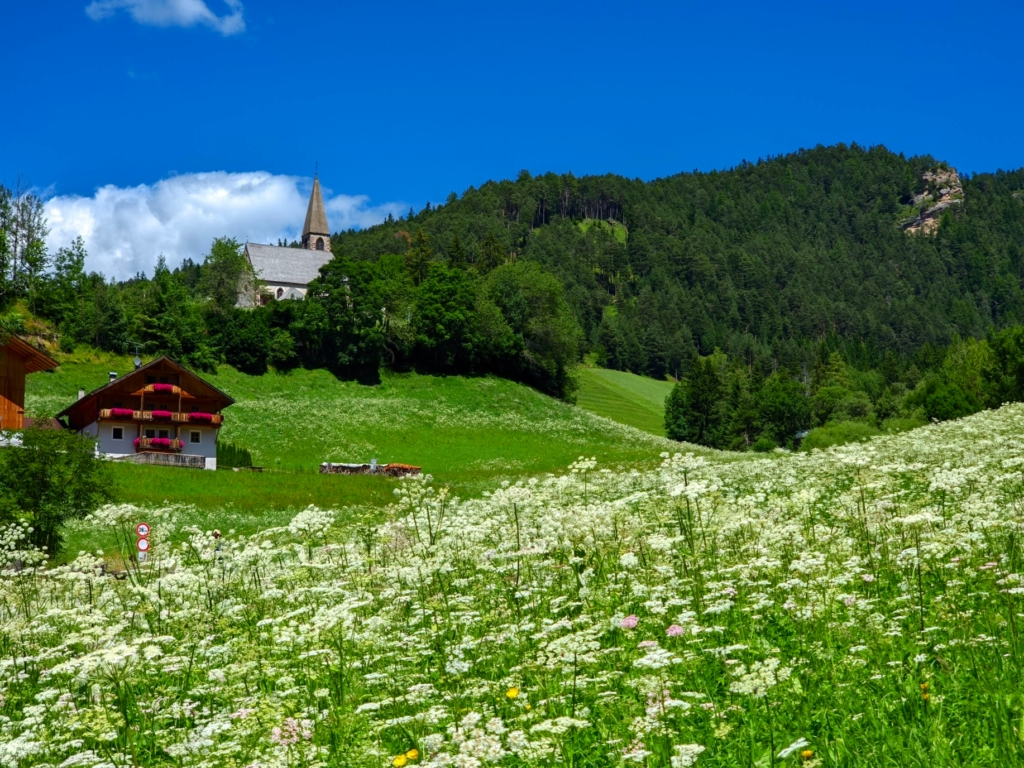
The winding road connected the village to scattered houses and the church, all framed by layers of herb-filled meadows, trees, and the sky beyond. It was one of the most beautiful pastoral scenes I’ve ever witnessed – vibrant, colorful, and perfectly capturing Alpine summer. The Odle peaks weren’t even visible yet from this angle, but I still found myself thinking this was one of the most gorgeous views I’d ever seen.
After days of walking and hiking around Trento, my legs handled the climb easily. I felt no tiredness at all – maybe all that training was paying off!
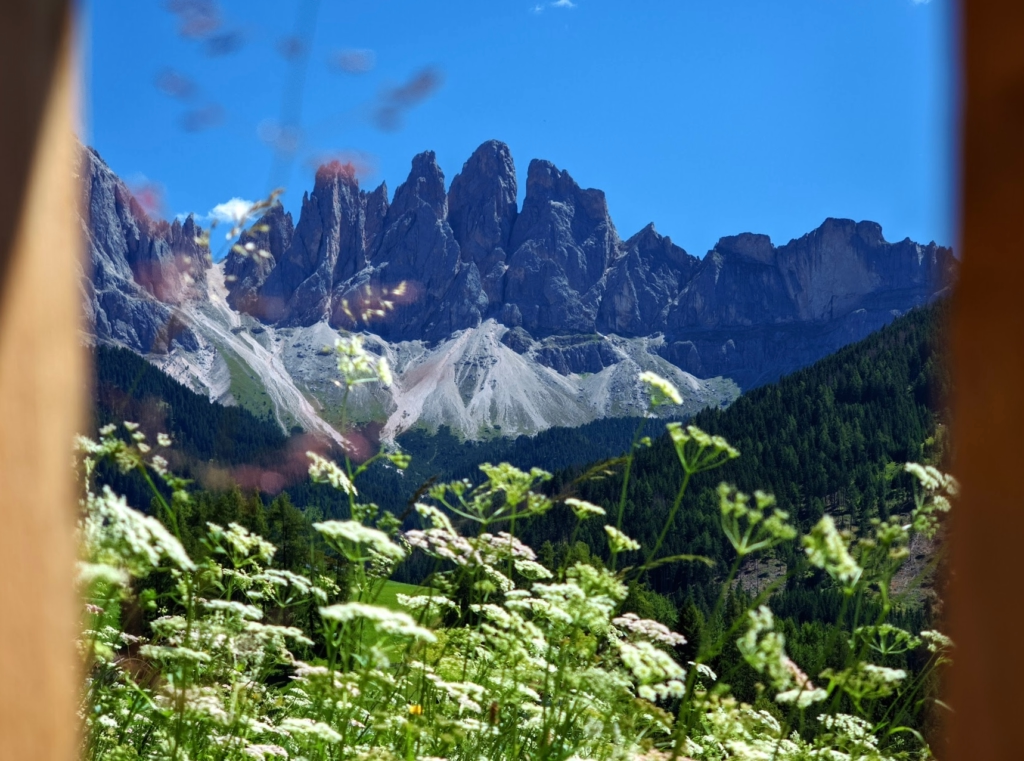
When I finally reached the ideal spot, I understood why this particular angle is so famous. Through the fence, the Odle Group looked perfectly framed, almost like a painting hanging in nature’s gallery. The church doubles as a graveyard, though I had no interest in exploring that. Instead, I climbed a bit higher to find the perfect spot where I could photograph the mountains with the church in the foreground.
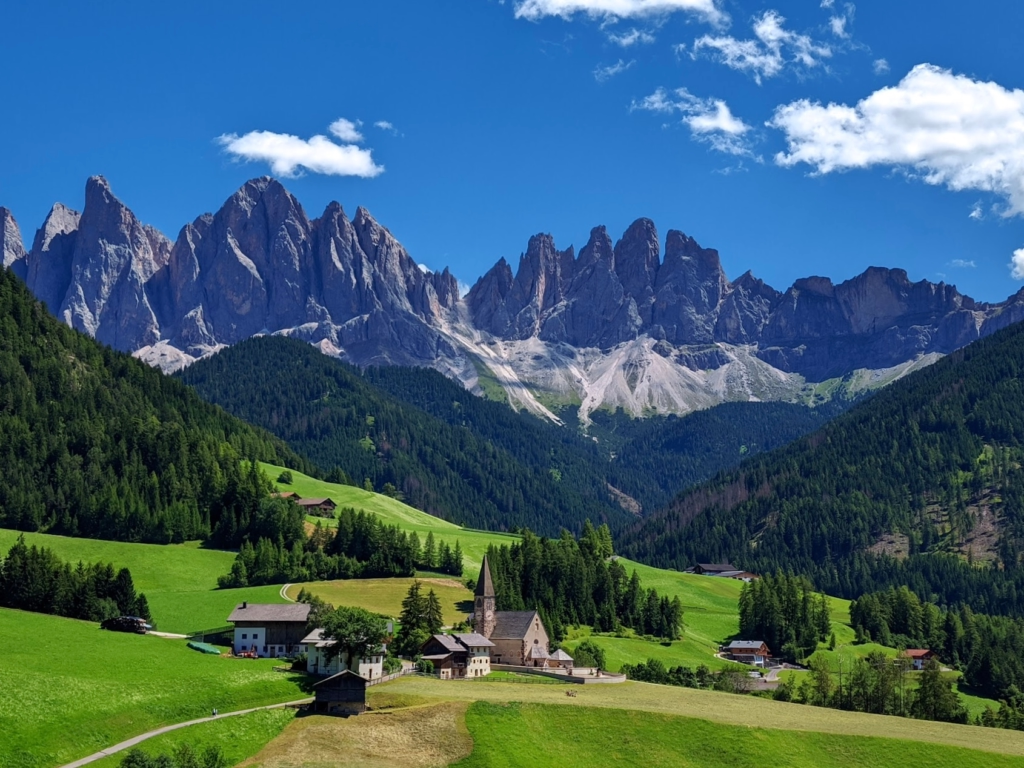
After one more push upward, the full panorama opened up – Santa Maddalena Church sitting peacefully in the meadow with those dramatic peaks towering behind it. It was worth every delayed train and missed bus connection.
The Reality of Day Tripping
Feeling satisfied with my photos and experience, I had to head back to catch my bus. Many visitors choose to stay overnight in the valley specifically to catch the sunset, when the peaks glow with that famous Dolomiti alpenglow. I confess I would have loved to stay, but it simply wasn’t possible with my schedule.
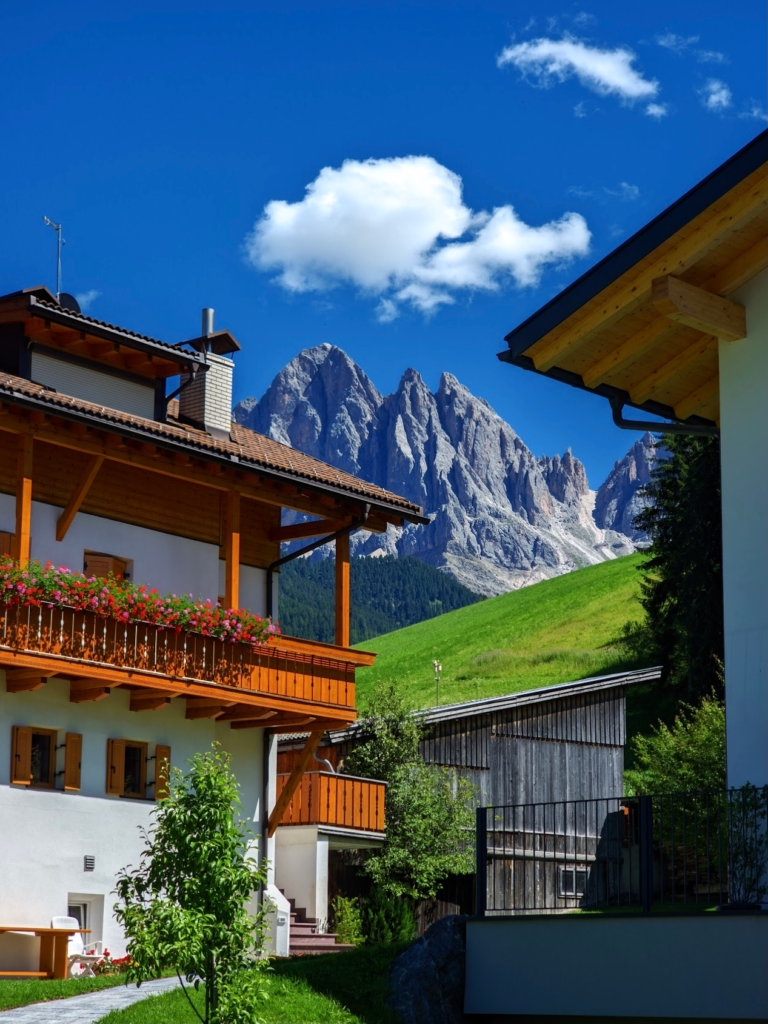
While waiting for the bus, I wandered through the village and noticed elderly residents going about their daily lives. One old lady sat on her balcony drinking coffee, and I felt genuinely envious of her peaceful mountain existence.
The return journey had its own drama. My bus came more or less on time, and I had a choice: take it directly to Brixen (Bressanone) or change buses back to Klausen. When my desired connection disappeared from the app, I decided to head toward Brixen. Then, of course, after I’d passed the transfer point, the app refreshed and showed the connection was actually available. Italian public transport apps can be incredibly frustrating!
Thankfully, there was another stop where the two bus routes overlapped, so I managed to catch the right bus to Klausen station without too much drama.
The trains continued their unreliability – just when I thought I’d catch my connection from Bolzano, our train stopped, making me miss it entirely. But while stuck there, I managed to photograph another famous Dolomiti formation: the Rosengarten (Catinaccio) Group, which glowed pink in the distance.
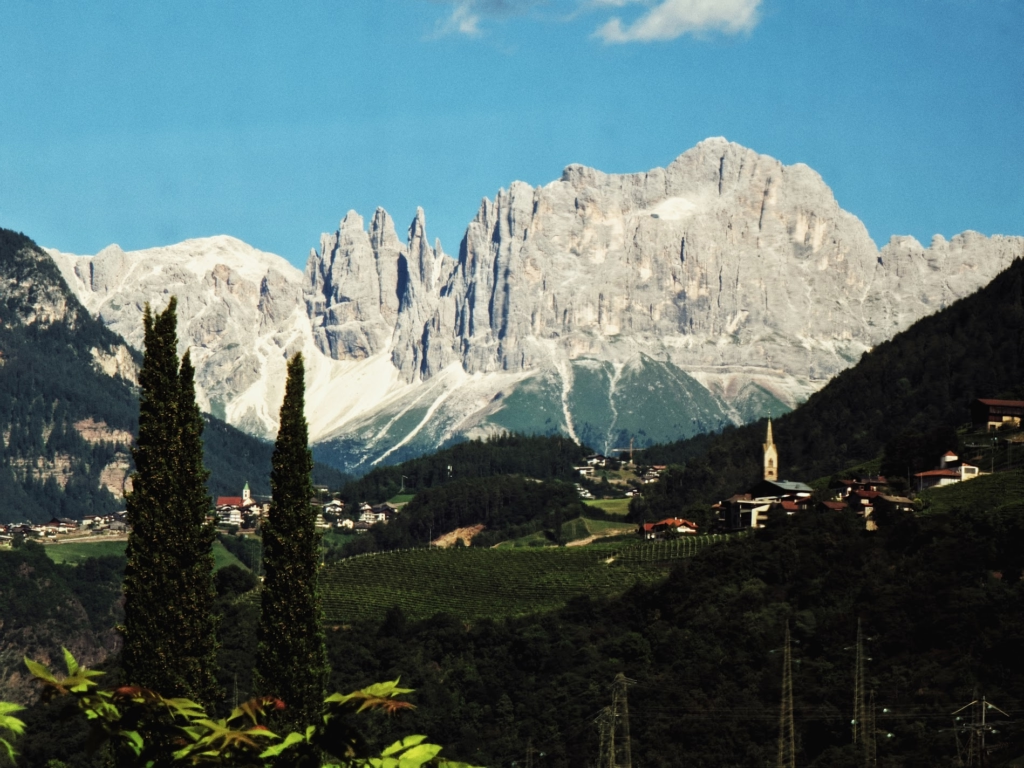
Missing two consecutive trains back to Trento was frustrating, but when I checked the departure board, I discovered one of them was delayed enough that I could still catch it. Italian trains – you never quite know what to expect.
Worth Every Complication
Despite all the transportation headaches, visiting Santa Maddalena in Val di Funes was absolutely worth it. Seeing the Odle peaks in person – those dramatic limestone spires that have graced countless Instagram feeds – exceeded even my high expectations. The combination of pastoral Alpine beauty with those impossibly dramatic mountains creates something truly special.
For anyone considering a day trip to the Dolomiti without a car, it’s definitely doable, though it requires patience, flexibility, and the acceptance that Italian regional transport runs on its own schedule. Bring snacks, download offline maps, and build in extra buffer time for connections.
The Dolomiti had been calling me through my social media feed, and I’m glad I answered. Sometimes the places that seem impossibly far away are worth every complicated bus transfer and missed connection to reach.
Social media has a way of making you feel like you’re missing out on something extraordinary. After seeing countless photos of the Dolomiti’s dramatic peaks pop up in my feed, I knew I had to see them for myself. The problem? I was based in Trento without a car, and the Dolomiti felt impossibly far away. But where there’s determination (and public transportation), there’s a way. That’s how I found myself on an ambitious day trip to Santa Maddalena in Val di Funes – a journey involving multiple trains, buses, and one very slow regional connection that tested my patience.
Discovering the Dolomiti
I’ll admit something embarrassing: I didn’t realize the Dolomiti were a massive mountain range until I started planning this trip. In my mind, “the Dolomiti” meant those famous jagged Odle Group peaks I’d seen in photos. Turns out, the Dolomiti stretches across 15,000 square kilometers of northeastern Italy, with the Odle (or Geisler) Group being just one of many spectacular mountain ranges in the region.
Val di Funes (Villnösstal in German) sits in South Tyrol, the German-speaking part of northern Italy, where the Odle peaks rise dramatically above pastoral villages and alpine meadows. The valley is part of Puez-Odle Nature Park, and the view of Santa Maddalena Church with the Odle mountains behind it has become one of the most photographed scenes in all the Dolomiti.
I chose Santa Maddalena because it was accessible by public transport and offered that postcard-perfect view without requiring a serious multi-hour hike. Perfect for a solo day trip with limited time.
The Journey: Trains, Buses, and Unexpected Delays
Getting there turned into quite an adventure. From Trento, I caught a train to Bolzano, then needed another train to Klausen followed by two buses to reach Santa Maddalena. Simple in theory, complicated in practice.
The regional train to Klausen was painfully slow, stopping constantly. When we finally arrived, I rushed out to catch my bus – only to watch it pull away. The next one wasn’t for another hour. Stranded and frustrated, I wandered around this quiet little town looking for a toilet, which naturally turned out to be right back at the bus station where I’d started. At least the bus transfer worked out – the driver waited for connecting passengers.
The Mountains Appear
As my final bus climbed higher into the valley, I kept checking Google Maps obsessively, watching the little blue dot get closer to my destination. At one point, I mistook another mountain for the Odle Group, but when I finally stepped off the bus and saw the real thing, I was genuinely stunned.
The Odle peaks rose up like giant sentinels watching over the valley – dramatic, jagged spires of pale limestone that look almost artificial in their sharpness. The main peak, Sass Rigais, reaches 3,025 meters and dominates the skyline with its distinctive rocky towers. These mountains earned the nickname “White Mountains” due to their high lime content, and they truly did stand out against the sky like massive sculptures.
I was amazed by how many Gasthöfe (guesthouses) filled the tiny village, all hosting tourists who’d come for exactly the same reason I had. I spotted quite a few Chinese tourists as well – the power of social media and the internet, I suppose.
Finding the Perfect View
Locating the famous viewpoint proved remarkably easy – signs pointing to the church and photo spots were everywhere. Before reaching Santa Maddalena Church itself, I walked up a slope with fields of cow parsley swaying beside me. What I saw nearly took my breath away.
The winding road connected the village to scattered houses and the church, all framed by layers of herb-filled meadows, trees, and the sky beyond. It was one of the most beautiful pastoral scenes I’ve ever witnessed – vibrant, colorful, and perfectly capturing Alpine summer. The Odle peaks weren’t even visible yet from this angle, but I still found myself thinking this was one of the most gorgeous views I’d ever seen.
After days of walking and hiking around Trento, my legs handled the climb easily. I felt no tiredness at all – maybe all that training was paying off!
When I finally reached the ideal spot, I understood why this particular angle is so famous. Through the fence, the Odle Group looked perfectly framed, almost like a painting hanging in nature’s gallery. The church doubles as a graveyard, though I had no interest in exploring that. Instead, I climbed a bit higher to find the perfect spot where I could photograph the mountains with the church in the foreground.
After one more push upward, the full panorama opened up – Santa Maddalena Church sitting peacefully in the meadow with those dramatic peaks towering behind it. It was worth every delayed train and missed bus connection.
The Reality of Day Tripping
Feeling satisfied with my photos and experience, I had to head back to catch my bus. Many visitors choose to stay overnight in the valley specifically to catch the sunset, when the peaks glow with that famous Dolomiti alpenglow. I confess I would have loved to stay, but it simply wasn’t possible with my schedule.
While waiting for the bus, I wandered through the village and noticed elderly residents going about their daily lives. One old lady sat on her balcony drinking coffee, and I felt genuinely envious of her peaceful mountain existence.
The return journey had its own drama. My bus came more or less on time, and I had a choice: take it directly to Brixen (Bressanone) or change buses back to Klausen. When my desired connection disappeared from the app, I decided to head toward Brixen. Then, of course, after I’d passed the transfer point, the app refreshed and showed the connection was actually available. Italian public transport apps can be incredibly frustrating!
Thankfully, there was another stop where the two bus routes overlapped, so I managed to catch the right bus to Klausen station without too much drama.
The trains continued their unreliability – just when I thought I’d catch my connection from Bolzano, our train stopped, making me miss it entirely. But while stuck there, I managed to photograph another famous Dolomiti formation: the Rosengarten (Catinaccio) Group, which glowed pink in the distance.
Missing two consecutive trains back to Trento was frustrating, but when I checked the departure board, I discovered one of them was delayed enough that I could still catch it. Italian trains – you never quite know what to expect.
Worth Every Complication
Despite all the transportation headaches, visiting Santa Maddalena in Val di Funes was absolutely worth it. Seeing the Odle peaks in person – those dramatic limestone spires that have graced countless Instagram feeds – exceeded even my high expectations. The combination of pastoral Alpine beauty with those impossibly dramatic mountains creates something truly special.
For anyone considering a day trip to the Dolomiti without a car, it’s definitely doable, though it requires patience, flexibility, and the acceptance that Italian regional transport runs on its own schedule. Bring snacks, download offline maps, and build in extra buffer time for connections.
The Dolomiti had been calling me through my social media feed, and I’m glad I answered. Sometimes the places that seem impossibly far away are worth every complicated bus transfer and missed connection to reach.