
There are places that exist in your imagination long before you visit them, built up by countless photos and travel stories until they feel almost mythical. Capri was one of those places for me – the legendary Mediterranean island floating in impossibly blue waters, where Roman emperors once ruled and international celebrities still retreat. After a short ferry ride from Ischia, I finally got to experience this famous slice of paradise firsthand, discovering that while Capri’s natural beauty is absolutely breathtaking, the reality of visiting during peak season is quite different from the postcard images.
An Island Born from Ancient Seas
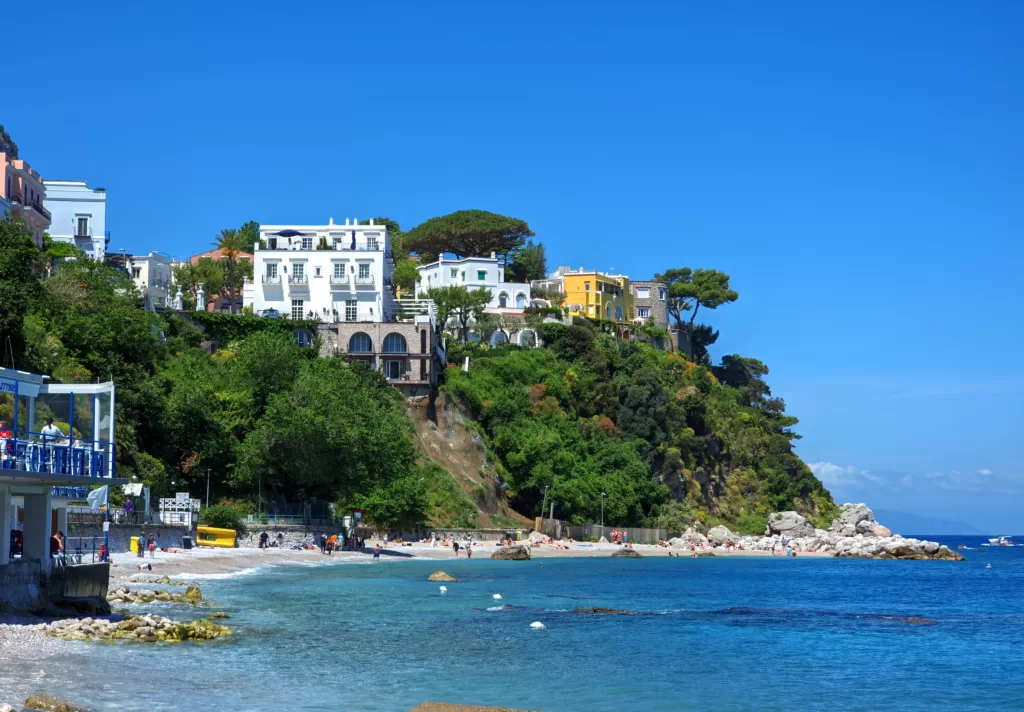
Capri’s dramatic beauty isn’t accidental – it’s the result of millions of years of geological forces. The island is essentially a single block of limestone dating back 65 to 190 million years, formed when this area was covered by a warm, shallow tropical sea. In prehistoric times, Capri was actually connected to the Sorrento Peninsula, which explains how large mammals like elephants and hippos once roamed here before the land bridge was submerged.
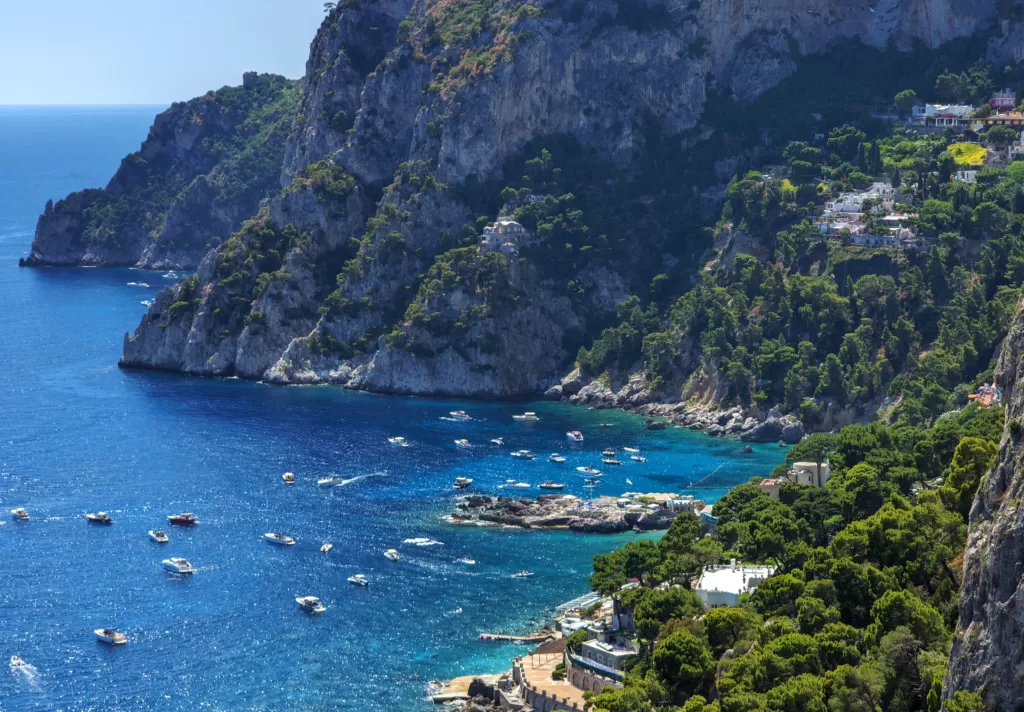
The island gets its name from either “capra” (goat) or “kapros” (wild boar), and it has been attracting visitors for millennia. Emperor Augustus developed Capri as a private resort, building villas, temples, and aqueducts, while his successor Tiberius constructed twelve villas according to historical accounts. From Roman emperors to 19th-century artists and writers, this 4-mile-long limestone paradise has always been a refuge for those seeking beauty and inspiration.
First Impressions: Beauty and Crowds
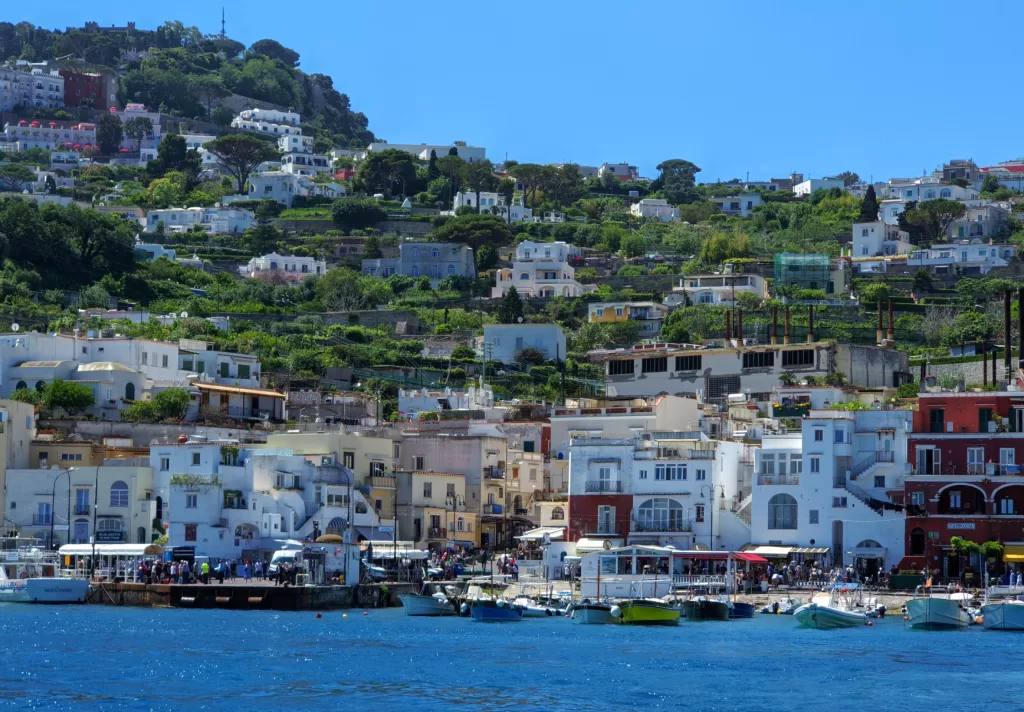
Watching Ischia fade into the deep Mediterranean blue during our 40-minute ferry ride built up the anticipation perfectly. When Capri’s dramatic coastline first came into view, I understood why this place has captured imaginations for thousands of years. The shallow waters around the island create the most incredible palette of blues – from tiffany blue right at the shore transitioning to baby blue and then deep turquoise, so clear and saturated that the water looks like liquid jewels.
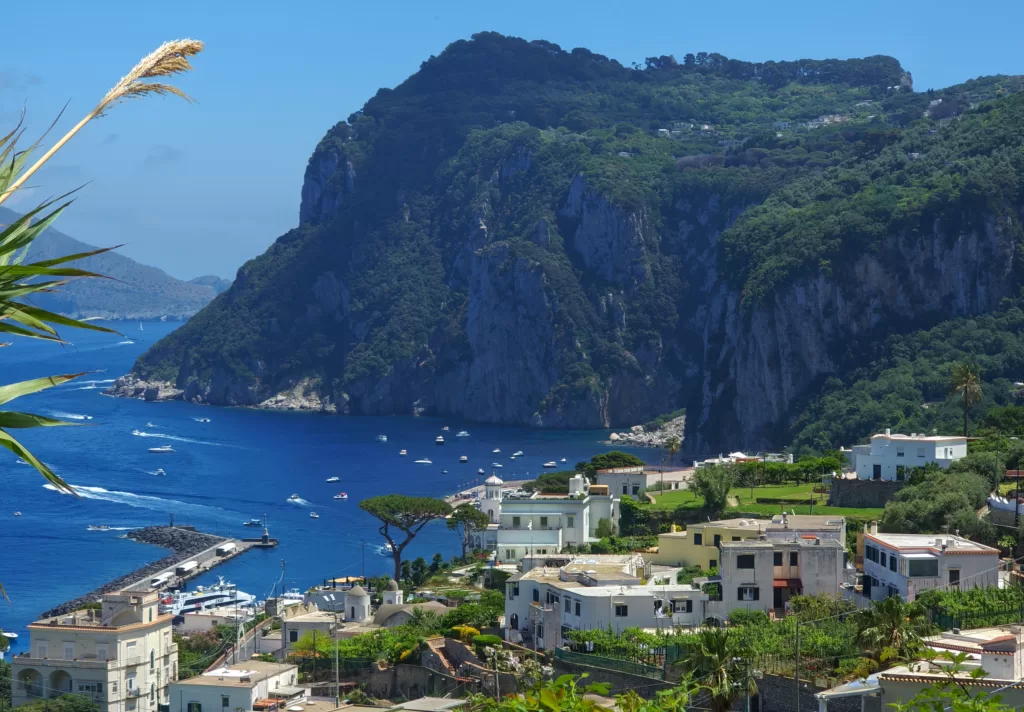
But here’s where reality hits: Capri during tourist season is absolutely packed. The streets were as crowded as the Champs-Élysées, with visitors flowing everywhere like a human river. After watching the ferry queue snake endlessly, I convinced Rachel that we should skip the uncertain bus wait and walk up to Anacapri ourselves. How hard could a 300-meter ascent be?
The Great Anacapri Climbing Disaster
Well, turns out I was overly optimistic about our hiking abilities. The path to Anacapri involves narrow walkways and then basically becomes a staircase carved into the mountainside. I was confident we could handle it, but after about a third of the climb, Rachel hit her limit. Even my emergency multivitamins couldn’t save the day!
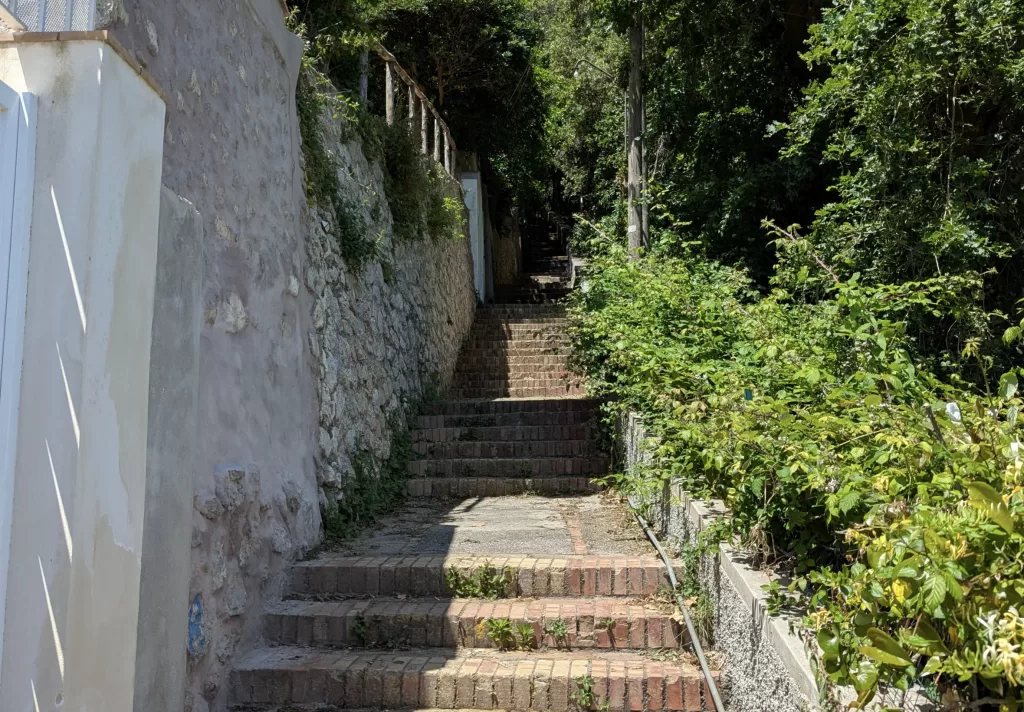
I’ll admit I was disappointed – the views from Villa San Michele in Anacapri are supposed to be spectacular, and we’d wasted time on the failed attempt. But sometimes travel teaches you to be flexible, and frankly, I should have been more considerate of my travel companion’s limits rather than my own ambitious plans.
What We Missed: Anacapri and the Blue Grotto
Since we couldn’t make it to Anacapri on foot, let me tell you about what we missed – because these are genuinely must-see spots if you visit Capri. Villa San Michele was built by Swedish physician Axel Munthe in the late 19th century on the ruins of a Roman villa, and features an impressive collection of ancient artifacts including a 3,200-year-old Egyptian sphinx. The villa’s gardens offer panoramic views over the island and the Bay of Naples.
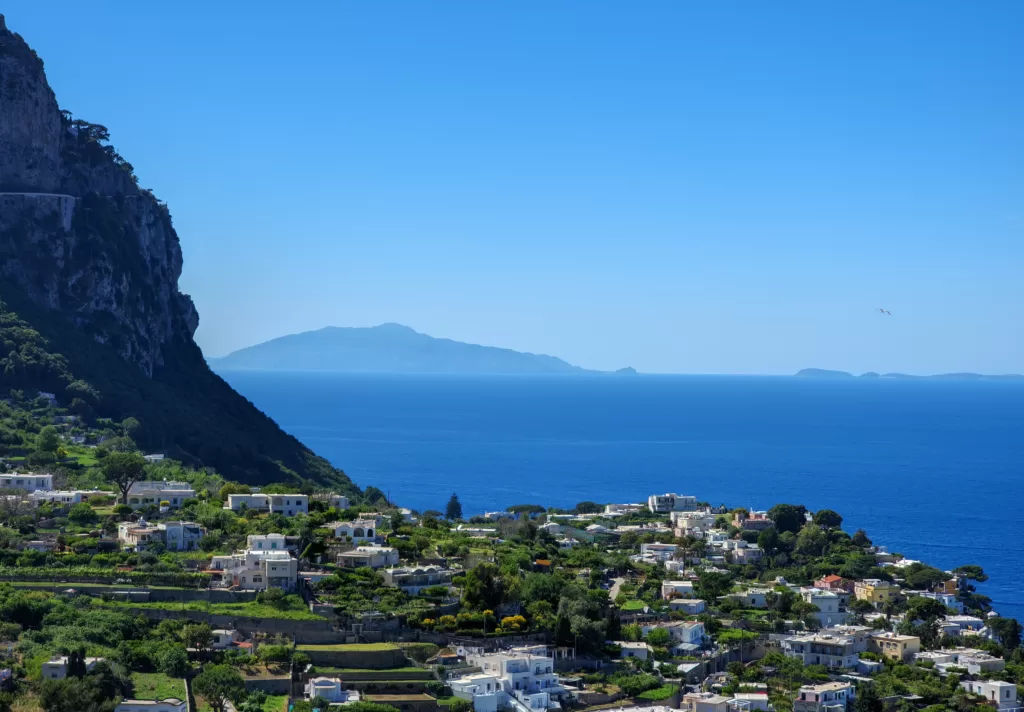
The famous Blue Grotto (Grotta Azzurra) is another iconic attraction we didn’t experience. This sea cave creates an extraordinary blue light when sunlight enters through underwater openings, and was rediscovered in 1826. Visitors transfer to small rowboats to enter the cave, and if you’re lucky, the boatmen might even sing opera while rowing you through the magical blue-lit cavern.
A Taxi Ride to Paradise
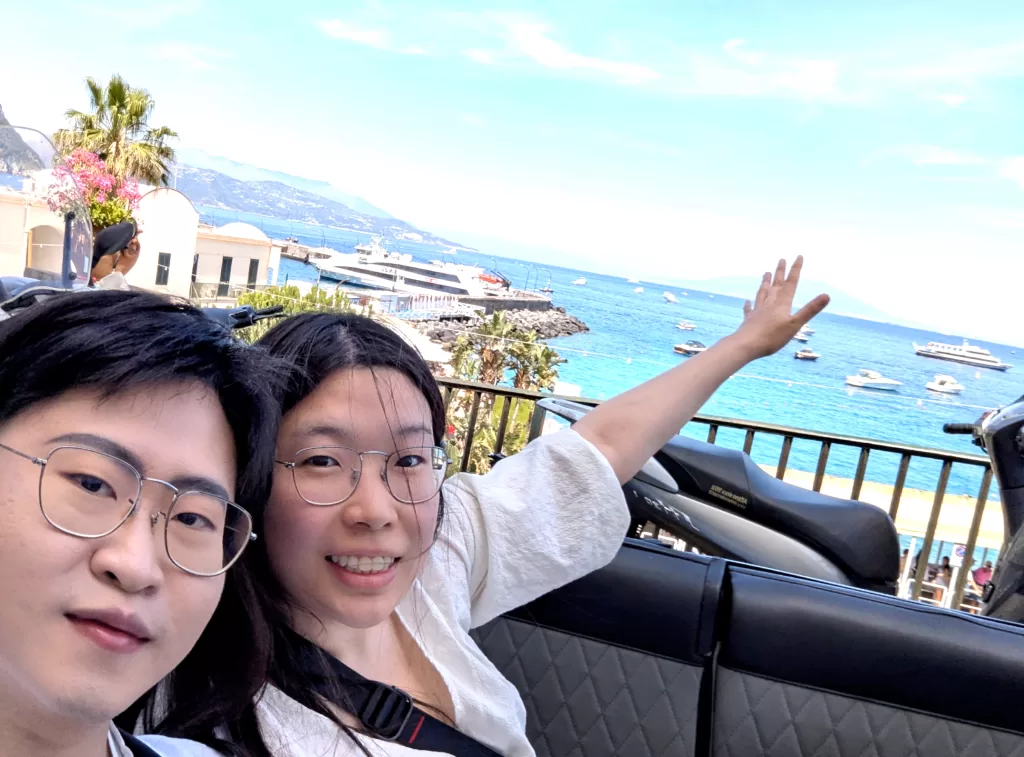
The open-top taxi ride was absolutely fantastic – like being transported into an old-money lifestyle. As we ascended the winding roads, the views of the sea became clearer and more spectacular. Once we reached the top, we could see Mount Vesuvius in the distance, creating one of those perfect Mediterranean panoramas that make all the tourist hassles worthwhile.
Capri Town: Luxury Shopping with a View
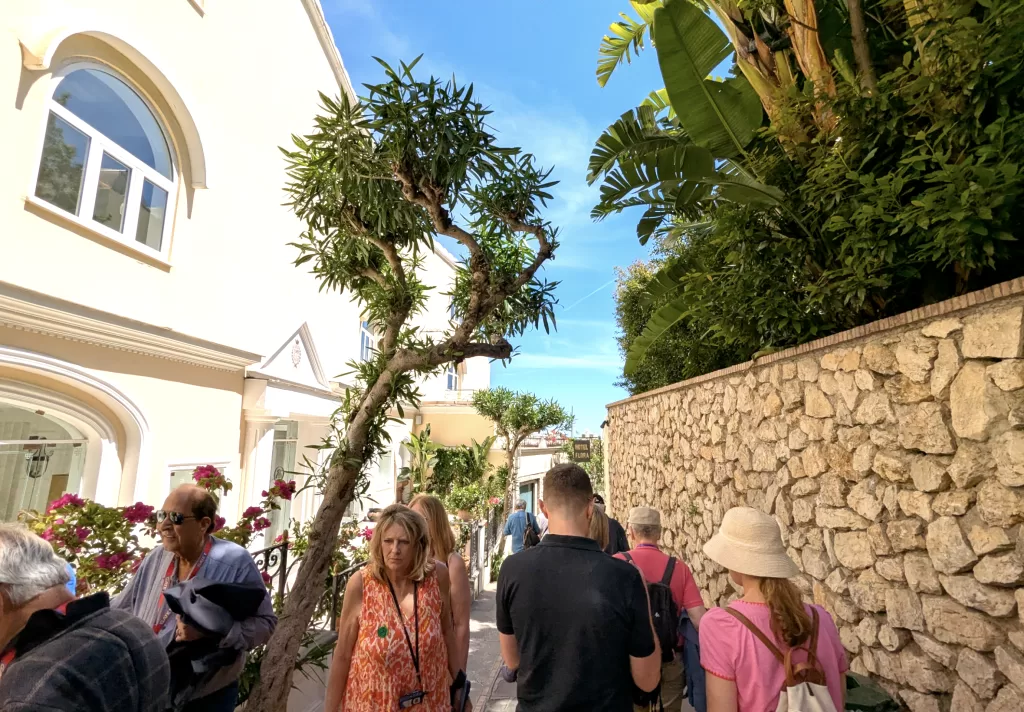
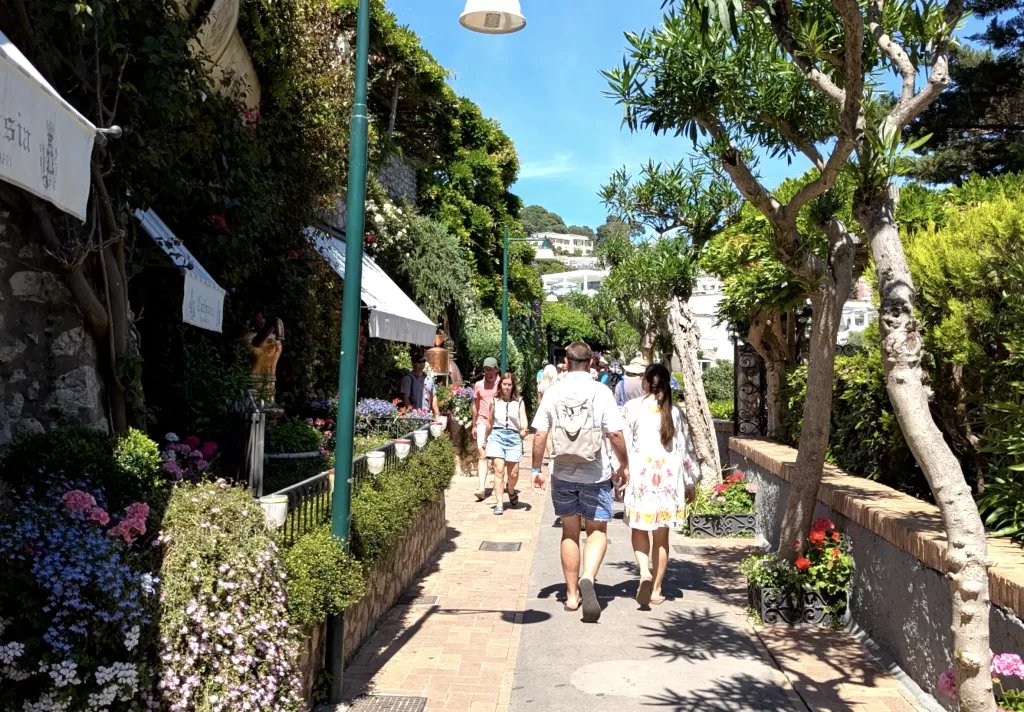
Capri town itself embodies traditional Italian Mediterranean style, but as I’d expected, it’s completely tourism-focused. Every building houses either restaurants or shops catering exclusively to visitors. The streets we’d seen packed at the port became the “Champs-Élysées of Capri” up in town – one luxury store after another. Hotels here can cost over 2000 euros per night, giving you an idea of the clientele this place attracts.
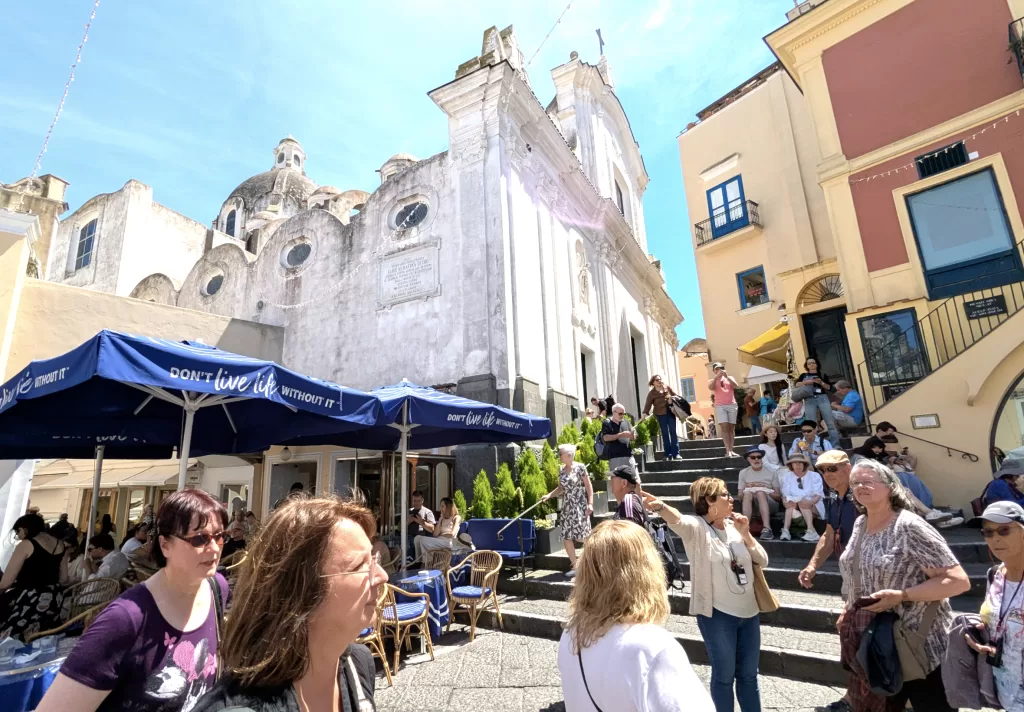
Despite the commercial atmosphere, I had to buy Rachel gelato because, well, you simply must eat gelato in Italy. It’s basically a law.
Giardini di Augusto: Where Beauty Triumphs
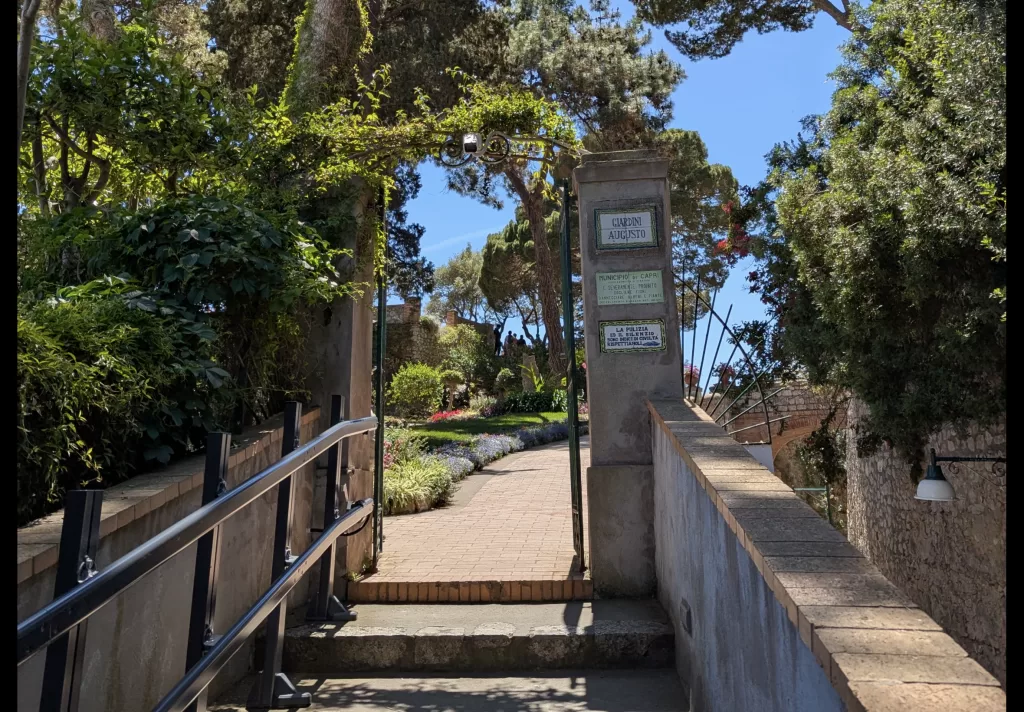
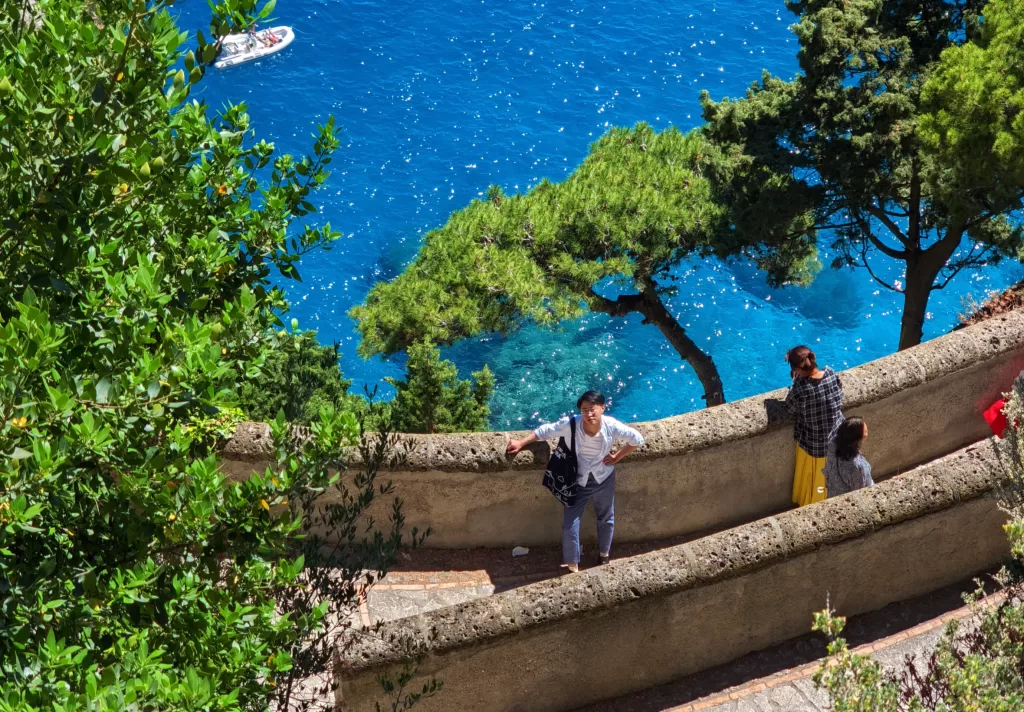
The Giardini di Augusto (Gardens of Augustus) proved that Capri’s natural beauty can still take your breath away, even amid all the tourist infrastructure. From the very beginning of the garden, the blend of brilliant blue sea with colorful Mediterranean vegetation was stunning.
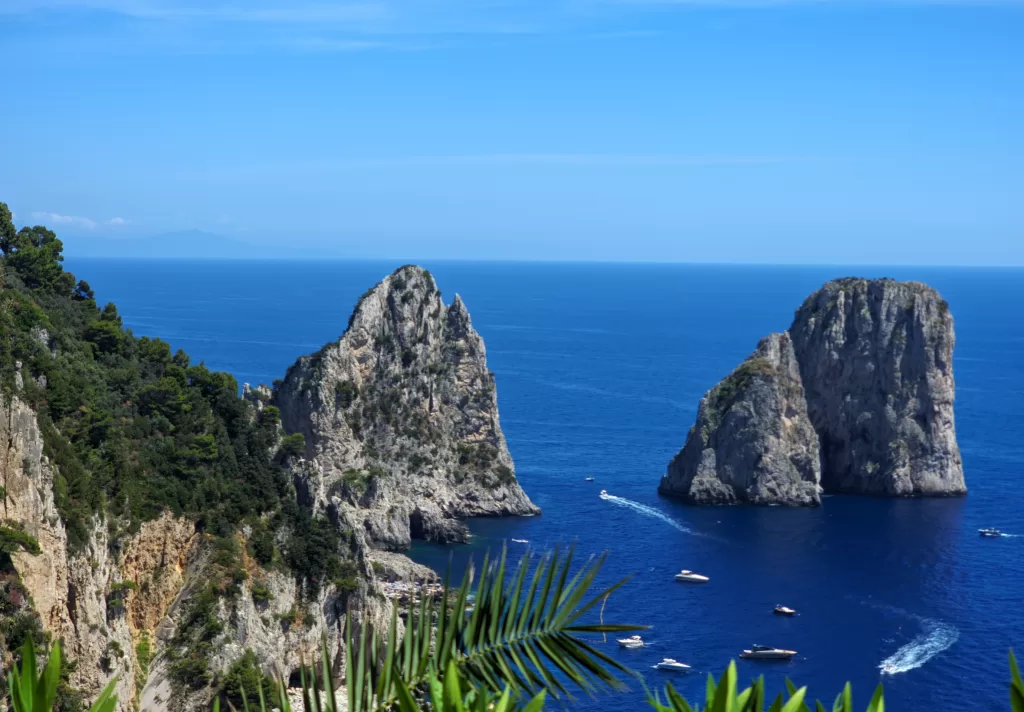
The garden features multiple levels with various platforms and viewing decks, each offering a different perspective on the island’s dramatic coastline. From this height, you can clearly see the different shades of blue in the water – the way the sea changes from shallow tiffany blue near the shore to deeper turquoise further out is mesmerizing. In the shallow areas, the water is so clear and saturated it literally looks like colored jelly.
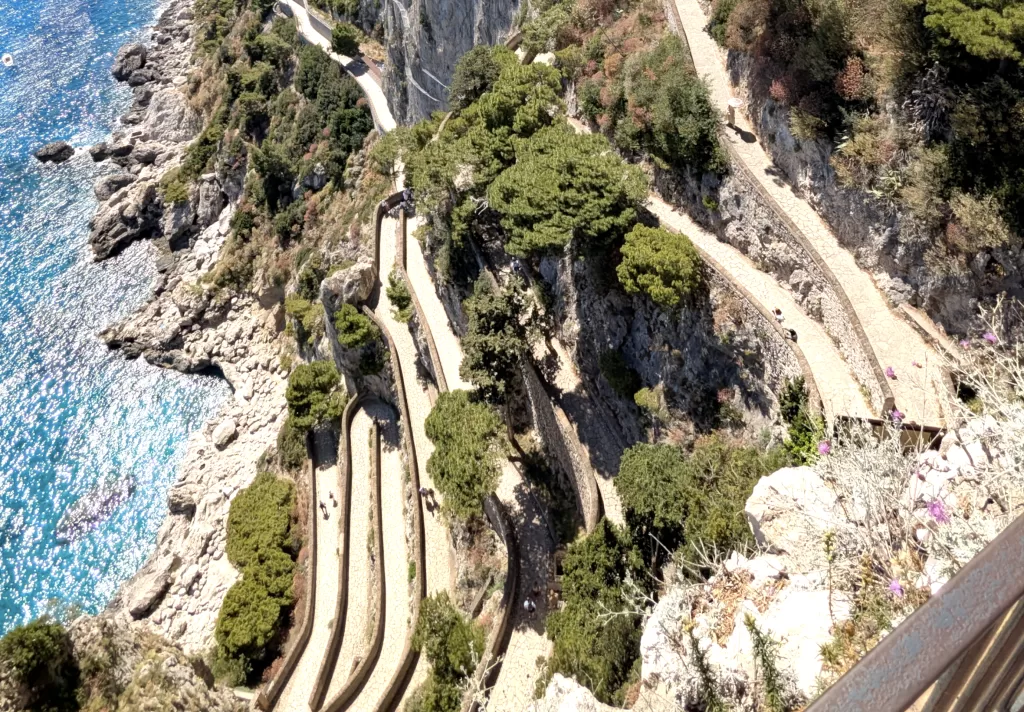
The famous Via Krupp winds down from the gardens in dramatic hairpin turns, offering views of the mostly shallow waters below where people swim and sunbathe on their yachts. While I was fascinated by the engineering of those serpentine turns, what really captivated me was watching this perfect Mediterranean scene unfold – the kind of view that makes you understand why people have been falling in love with this island for millennia.
The Reality of Paradise
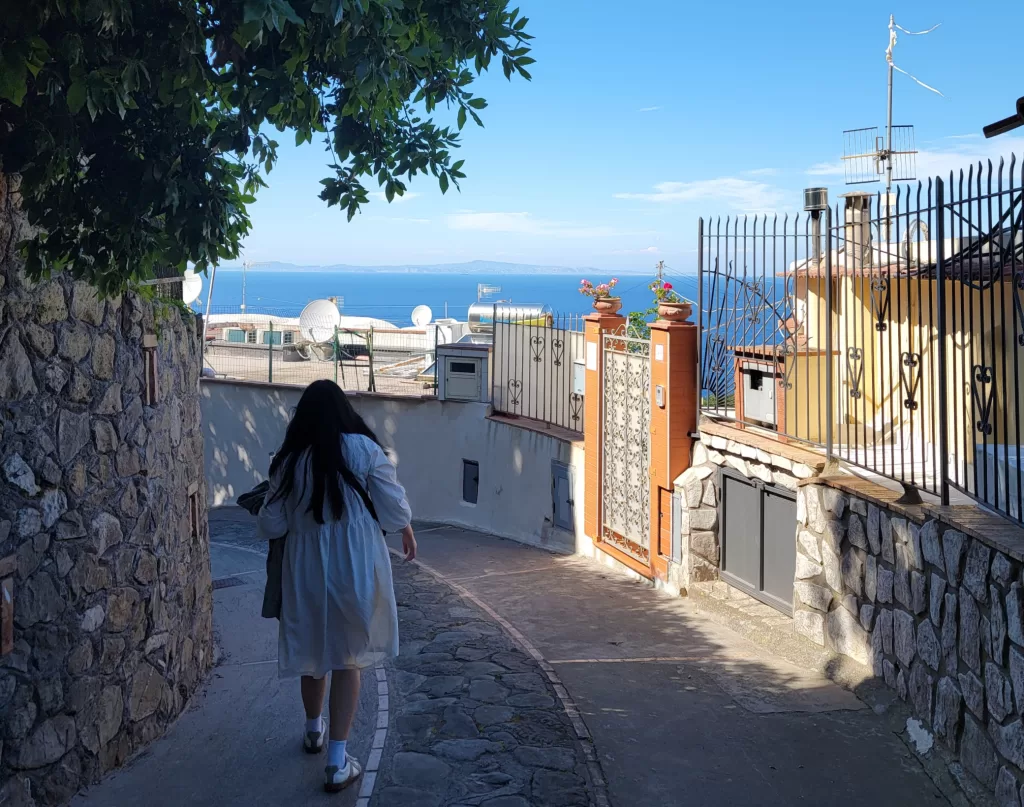
To avoid the worst crowds on our way back, we took what seemed like an unpopular path and finally got to see some authentic old town streets instead of just masses of tourists. We also encountered some cats, which always makes any destination better in my book.
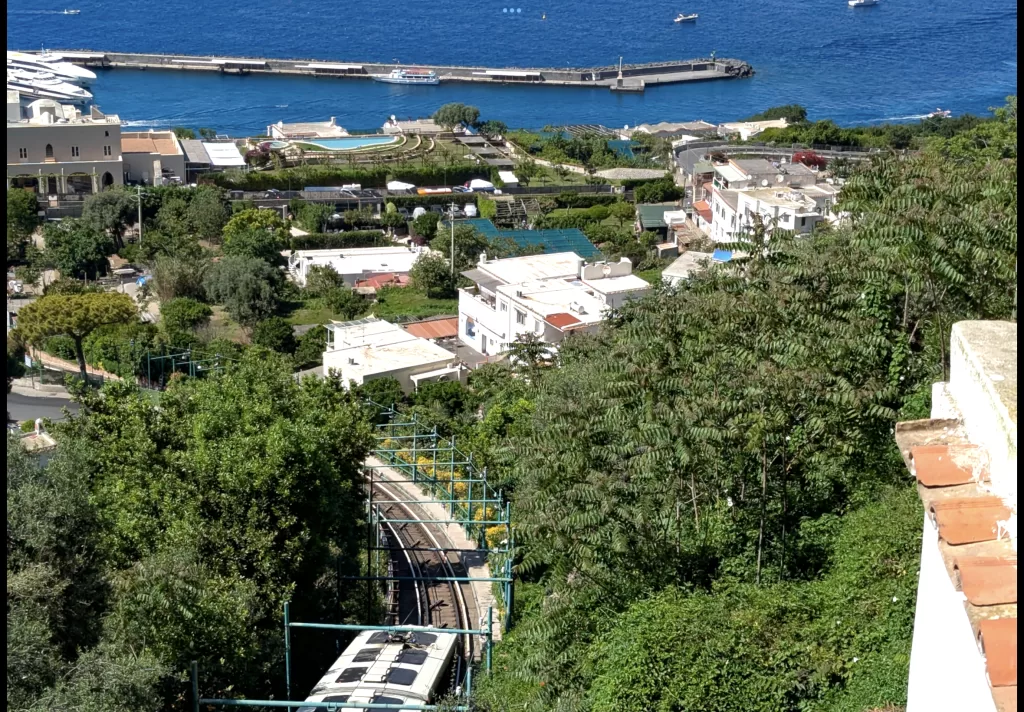
Getting back to the port proved more challenging than expected – several paths led to dead ends before we finally found our way down. At the port, I treated Rachel to the lemon gelato that everyone was eating, though by then she was already showing signs of not feeling well.
The Verdict: Beautiful but Overwhelming
Capri is undeniably one of the most beautiful places I’ve ever seen. The dramatic limestone cliffs, the incredible blue waters, the Mediterranean vegetation, and the historic significance all combine to create something truly special. The geological forces that shaped this island over millions of years have created a natural masterpiece.
But visiting during peak season requires serious mental preparation for crowds that rival major city centers. The commercialization is intense, the prices are high, and the infrastructure can feel overwhelmed by the sheer number of visitors. If you’re planning a visit, consider coming during shoulder season, or at minimum, start your day very early to beat the worst crowds.
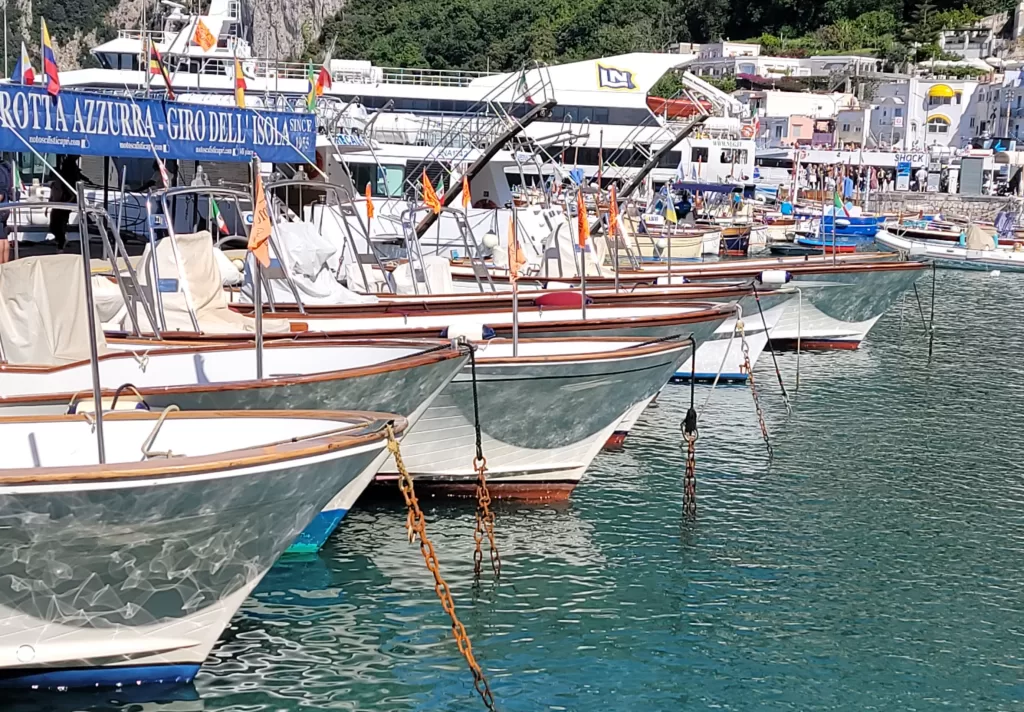
Despite the tourist chaos, those moments of pure beauty – watching the water change colors from the gardens, seeing the dramatic coastline unfold from a taxi window, enjoying authentic gelato while surrounded by centuries of history – reminded me why places became famous in the first place. Capri has been enchanting visitors since Roman times, and even with all the modern challenges of mass tourism, that magic is still there if you know where to look for it.
There are places that exist in your imagination long before you visit them, built up by countless photos and travel stories until they feel almost mythical. Capri was one of those places for me – the legendary Mediterranean island floating in impossibly blue waters, where Roman emperors once ruled and international celebrities still retreat. After a short ferry ride from Ischia, I finally got to experience this famous slice of paradise firsthand, discovering that while Capri’s natural beauty is absolutely breathtaking, the reality of visiting during peak season is quite different from the postcard images.
An Island Born from Ancient Seas
Capri’s dramatic beauty isn’t accidental – it’s the result of millions of years of geological forces. The island is essentially a single block of limestone dating back 65 to 190 million years, formed when this area was covered by a warm, shallow tropical sea. In prehistoric times, Capri was actually connected to the Sorrento Peninsula, which explains how large mammals like elephants and hippos once roamed here before the land bridge was submerged.
The island gets its name from either “capra” (goat) or “kapros” (wild boar), and it has been attracting visitors for millennia. Emperor Augustus developed Capri as a private resort, building villas, temples, and aqueducts, while his successor Tiberius constructed twelve villas according to historical accounts. From Roman emperors to 19th-century artists and writers, this 4-mile-long limestone paradise has always been a refuge for those seeking beauty and inspiration.
First Impressions: Beauty and Crowds
Watching Ischia fade into the deep Mediterranean blue during our 40-minute ferry ride built up the anticipation perfectly. When Capri’s dramatic coastline first came into view, I understood why this place has captured imaginations for thousands of years. The shallow waters around the island create the most incredible palette of blues – from tiffany blue right at the shore transitioning to baby blue and then deep turquoise, so clear and saturated that the water looks like liquid jewels.
But here’s where reality hits: Capri during tourist season is absolutely packed. The streets were as crowded as the Champs-Élysées, with visitors flowing everywhere like a human river. After watching the ferry queue snake endlessly, I convinced Rachel that we should skip the uncertain bus wait and walk up to Anacapri ourselves. How hard could a 300-meter ascent be?
The Great Anacapri Climbing Disaster
Well, turns out I was overly optimistic about our hiking abilities. The path to Anacapri involves narrow walkways and then basically becomes a staircase carved into the mountainside. I was confident we could handle it, but after about a third of the climb, Rachel hit her limit. Even my emergency multivitamins couldn’t save the day!
I’ll admit I was disappointed – the views from Villa San Michele in Anacapri are supposed to be spectacular, and we’d wasted time on the failed attempt. But sometimes travel teaches you to be flexible, and frankly, I should have been more considerate of my travel companion’s limits rather than my own ambitious plans.
What We Missed: Anacapri and the Blue Grotto
Since we couldn’t make it to Anacapri on foot, let me tell you about what we missed – because these are genuinely must-see spots if you visit Capri. Villa San Michele was built by Swedish physician Axel Munthe in the late 19th century on the ruins of a Roman villa, and features an impressive collection of ancient artifacts including a 3,200-year-old Egyptian sphinx. The villa’s gardens offer panoramic views over the island and the Bay of Naples.
The famous Blue Grotto (Grotta Azzurra) is another iconic attraction we didn’t experience. This sea cave creates an extraordinary blue light when sunlight enters through underwater openings, and was rediscovered in 1826. Visitors transfer to small rowboats to enter the cave, and if you’re lucky, the boatmen might even sing opera while rowing you through the magical blue-lit cavern.
A Taxi Ride to Paradise
The open-top taxi ride was absolutely fantastic – like being transported into an old-money lifestyle. As we ascended the winding roads, the views of the sea became clearer and more spectacular. Once we reached the top, we could see Mount Vesuvius in the distance, creating one of those perfect Mediterranean panoramas that make all the tourist hassles worthwhile.
Capri Town: Luxury Shopping with a View
Capri town itself embodies traditional Italian Mediterranean style, but as I’d expected, it’s completely tourism-focused. Every building houses either restaurants or shops catering exclusively to visitors. The streets we’d seen packed at the port became the “Champs-Élysées of Capri” up in town – one luxury store after another. Hotels here can cost over 2000 euros per night, giving you an idea of the clientele this place attracts.
Despite the commercial atmosphere, I had to buy Rachel gelato because, well, you simply must eat gelato in Italy. It’s basically a law.
Giardini di Augusto: Where Beauty Triumphs
The Giardini di Augusto (Gardens of Augustus) proved that Capri’s natural beauty can still take your breath away, even amid all the tourist infrastructure. From the very beginning of the garden, the blend of brilliant blue sea with colorful Mediterranean vegetation was stunning.
The garden features multiple levels with various platforms and viewing decks, each offering a different perspective on the island’s dramatic coastline. From this height, you can clearly see the different shades of blue in the water – the way the sea changes from shallow tiffany blue near the shore to deeper turquoise further out is mesmerizing. In the shallow areas, the water is so clear and saturated it literally looks like colored jelly.
The famous Via Krupp winds down from the gardens in dramatic hairpin turns, offering views of the mostly shallow waters below where people swim and sunbathe on their yachts. While I was fascinated by the engineering of those serpentine turns, what really captivated me was watching this perfect Mediterranean scene unfold – the kind of view that makes you understand why people have been falling in love with this island for millennia.
The Reality of Paradise
To avoid the worst crowds on our way back, we took what seemed like an unpopular path and finally got to see some authentic old town streets instead of just masses of tourists. We also encountered some cats, which always makes any destination better in my book.
Getting back to the port proved more challenging than expected – several paths led to dead ends before we finally found our way down. At the port, I treated Rachel to the lemon gelato that everyone was eating, though by then she was already showing signs of not feeling well.
The Verdict: Beautiful but Overwhelming
Capri is undeniably one of the most beautiful places I’ve ever seen. The dramatic limestone cliffs, the incredible blue waters, the Mediterranean vegetation, and the historic significance all combine to create something truly special. The geological forces that shaped this island over millions of years have created a natural masterpiece.
But visiting during peak season requires serious mental preparation for crowds that rival major city centers. The commercialization is intense, the prices are high, and the infrastructure can feel overwhelmed by the sheer number of visitors. If you’re planning a visit, consider coming during shoulder season, or at minimum, start your day very early to beat the worst crowds.
Despite the tourist chaos, those moments of pure beauty – watching the water change colors from the gardens, seeing the dramatic coastline unfold from a taxi window, enjoying authentic gelato while surrounded by centuries of history – reminded me why places became famous in the first place. Capri has been enchanting visitors since Roman times, and even with all the modern challenges of mass tourism, that magic is still there if you know where to look for it.